
Stylist Guide › Section 5: Textiles › Rule #124
A flat cushion can make a good sofa look tired in a single photo.
The rule in one minute. Choose cushions with full, generous inserts: about 5 cm bigger than the cover (55 cm in a 50 cm cover), in a feather or feather-blend fill that springs back. Full cushions sit upright, hold their shape on camera and make the sofa look new. Thin inserts collapse within days and make the room look worn.
Why fullness matters more than fabric
A cushion is mostly its insert. The cover gives colour and texture, but the shape comes from what's inside. A beautiful linen cover over a thin insert still looks limp, while a plain cover over a full insert looks crisp and expensive.
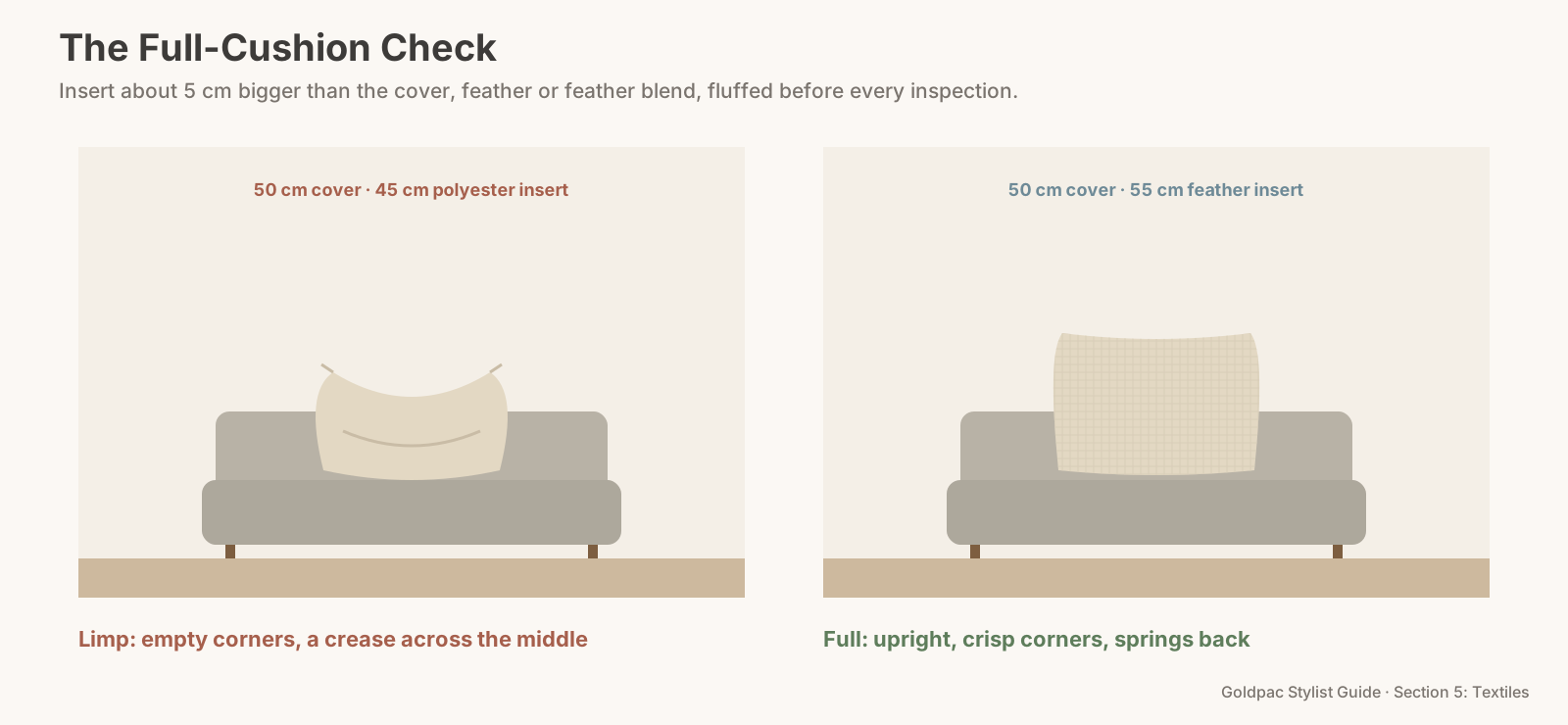
Limp cushions read as tired. In photos, a flat cushion slumps against the back of the sofa with a soft crease across the middle. Buyers read that as an old sofa in a lived-in, slightly worn room, even when the sofa is nearly new.
Full cushions stand on their own. They sit upright, with clean corners and a gentle curve on top. The sofa looks firm, the room looks cared for, and the photo has crisp shapes instead of soft blobs.
It's one of the cheapest upgrades in the room. New inserts change how every cushion looks without touching the covers or the sofa (Rule #94 covers grouping cushions in odd numbers).
What size cushion insert should you use?
Use an insert about 5 cm larger than the cover on each dimension (55 cm for a 50 cm cover, 50 cm for a 45 cm cover) with a feather, down or feather-blend fill, so the cushion looks full, holds its shape and springs back after someone sits against it. Polyester-fibre inserts can work when they're dense and new, but they flatten faster.
The Full-Cushion Check
- Squeeze each cushion in the middle and let go. A good insert springs back within a few seconds. A tired one stays dented.
- Look at the corners. Empty, floppy corners mean the insert is too small or has clumped.
- Measure the cover, then buy inserts one size up.
- Choose feather or a feather blend for the main cushions. They hold a fuller, softer shape.
- Fluff before every photo and inspection: hold opposite sides and push them together a few times to redistribute the fill.
- Set them upright, with a light dip in the top centre if you like that look, not a deep chop.
The Full-Cushion Check: every cushion has an insert about 5 cm larger than its cover, filled with feather or a feather blend, springs back when squeezed, and is fluffed before every photo and inspection.
Check it through your phone
Photograph the sofa from the living room doorway. Zoom in on the cushions. Are the tops straight, or do they sag in the middle? Are the corners filled? Cushions that look acceptable in person often look tired in a photo, because the camera picks up every crease and slump. If any cushion looks flat, swap its insert or take it off the sofa: two full cushions beat four flat ones.
The objection: "But feather inserts need fluffing"
They do, and that's the point. A quick fluff restores them to full shape in seconds. Thin polyester inserts don't come back, however much you fluff them.
It's a two-minute job. Before each inspection, fluff and set the cushions on every sofa and bed. It's part of the same reset as straightening the throw and opening the blinds (Rule #143 covers resetting cushions so they never slump).
If someone in the house is allergic to feathers, choose a dense, high-loft synthetic insert one size up. It won't last as long, but it will look full for the campaign.
The blind spot: your cushions flattened slowly
Cushions lose their shape over months, not days. Every evening on the sofa takes a little loft out of them. Because it's gradual, you never see the change.
Compare an old cushion with a new insert side by side and the difference is obvious. That's the comparison buyers make, without knowing it, against every staged home they've seen online.
What if…
You have no budget for new inserts. Combine two thin inserts in one cover, or move the fullest cushions to the sofa that will be photographed and retire the flattest ones.
Your covers are an odd size. Buy the next standard size up and check the zip closes without straining.
Do-This-Sunday box Line up every cushion in the house on the floor. Squeeze each one. Keep the ones that spring back. Measure the covers of the rest and write down the insert sizes you need, one size up.
FAQ
Why do my cushions look flat? Usually because the insert is the same size as the cover or has lost its loft. An insert about 5 cm larger, in feather or a feather blend, fixes most flat cushions.
Are feather or polyester cushion inserts better for staging? Feather or feather-blend inserts hold a fuller shape and recover after use. Polyester works if it's dense and new, but flattens faster.
Full cushions make a sofa look new. Rather have someone set every sofa and bed for the photos? With Photo Ready Styling, our stylist styles your home with your own furniture and cushions before the photos. For empty homes and agent listings, Goldpac stages with our own furniture and cushions: send us the address and a fixed styling quote lands within two hours, through our home staging page. See current prices.
Keep reading: Rule #94: Style cushions in coordinated, odd-numbered groups (cushions in coordinated, odd-numbered groups) · Rule #122: Mix at least two textures in every room (mixing two textures) · Rule #137: Add floor cushions only in casual living zones (floor cushions in casual zones)
◀ Previous: Rule #123: Skip shiny polyester and obvious synthetics · Section 5 guide: styling decor and textiles · Next: Rule #125: Layer the bed: quilt, pillows and one throw ▶
Part of the Goldpac Stylist Guide: 300+ home staging rules from Goldpac's Sydney styling team.