
Stylist Guide › Section 4: Accessories & Styling › Rule #97
Why does a bathroom vanity with five bottles look messy, but the same five bottles on a tray look styled?
The rule in one minute. Use trays to gather the small items a room genuinely needs out: soap and a hand towel on the vanity, oil and salt by the cooktop, a lamp-side book and a dish on the bedside, keys and a bowl on the entry console. A tray turns scattered objects into one deliberate group, gives the eye a clear edge and makes surfaces quicker to reset before inspections. Use one tray per surface, keep it to two or three items, and choose natural materials.
"Isn't a tray just another object?"
"I'm trying to reduce clutter, not add things."
A tray reduces clutter by turning many things into one. The eye reads a group with a clear boundary as a single object. Three loose items on a vanity are three things to look at; the same three on a tray are one tidy arrangement.
It also saves time. Before an inspection, you lift one tray off the bench or put one tray back, instead of chasing six small items around.
Where should you use trays when staging?
On any surface that must hold a few small, useful items: the bathroom vanity, beside the cooktop, on bedside tables, on the entry console, on a desk and on an ottoman. Use one tray per surface with two or three items, and leave the rest of the surface clear. (The coffee table gets its own treatment; Rule #102 covers it.)
"How do I choose the right tray?"
Use the Tray Ladder, from quickest to most finished.
10 minutes: use what you have. Find any flat, simple tray, board or large plate in the house: a timber board, a ceramic platter, a marble cheese board. Group the items that must stay out on each surface onto it.
1 hour: edit what's on it. Two or three items per tray, never more. On the vanity: a soap pump, a small plant or a folded hand towel. By the cooktop: oil in a plain bottle and a salt cellar. On the bedside: a small dish and one book.
1 weekend: upgrade the trays. Swap plastic or patterned trays for natural ones: timber, stone, rattan, ceramic or brass. Match the material to the room (Rule #106 covers one metal finish per room).
The Tray Ladder: one tray per surface, two or three useful items on it, natural materials, and every other item on that surface packed away.
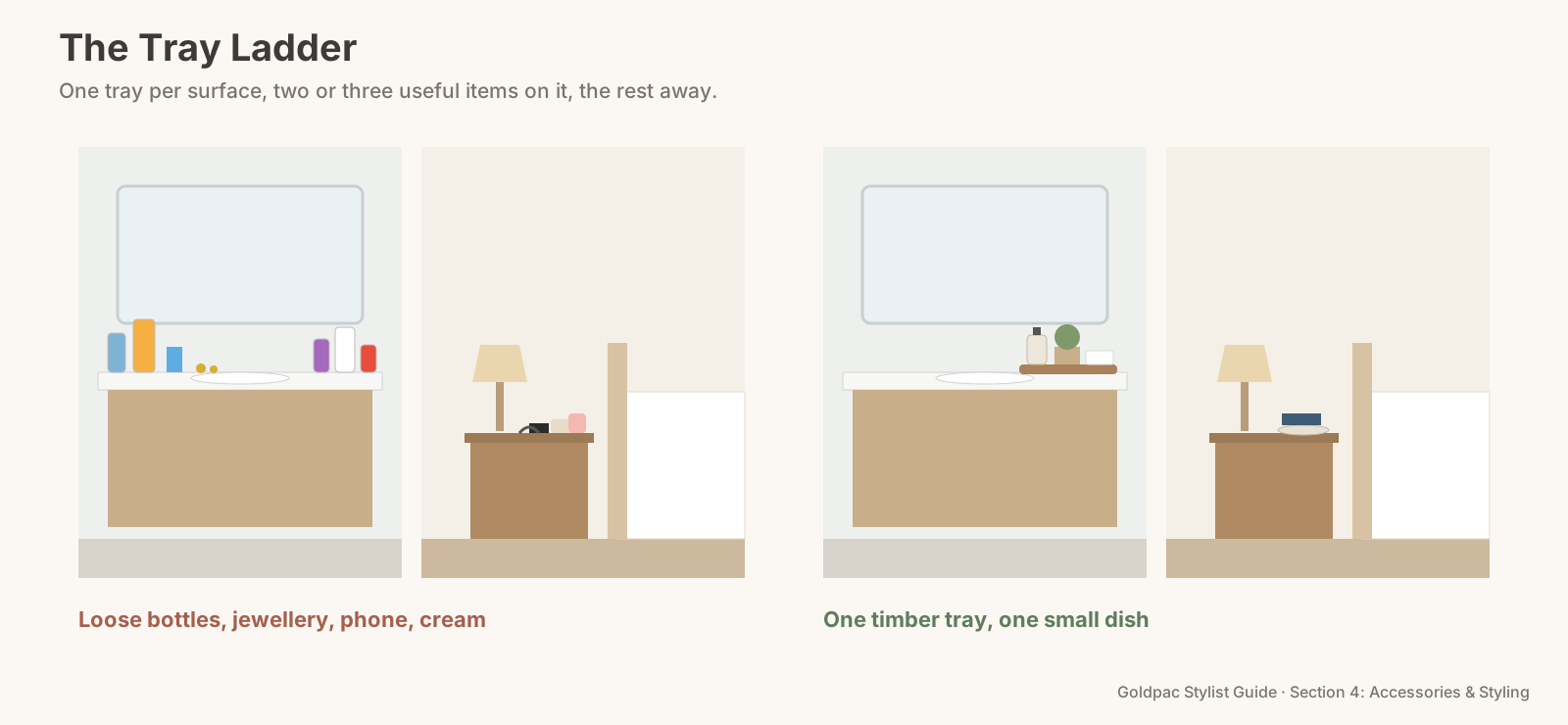
Tray or no tray?
| Surface | Without a tray | With a tray |
|---|---|---|
| Bathroom vanity | Bottles spread across the basin | Soap, towel and plant in one group |
| Beside the cooktop | Oils and sauces lined up | One plain oil bottle and salt, contained |
| Bedside table | Phone, glasses, cream, tissues | A book and a small dish |
| Entry console | Keys, mail, sunglasses | A bowl for keys, one plant |
| Ottoman | Remotes and magazines | A tray with two books, firm surface |
Verdict: a tray wherever small items must stay out. Where nothing needs to stay out, skip the tray and leave the surface clear.
If this, then that
- If the surface is small, use a small round tray or a dish, not a large rectangle.
- If the surface is stone, a timber or rattan tray adds warmth; on timber, try stone or ceramic.
- If the tray holds things buyers might use, like hand soap, make sure they're full, clean and plain.
- If you're tempted to add a fourth item, take one off instead (Rule #91 covers fewer, larger accessories).
Keeping trays inspection-ready
A tray only works if it stays tidy. Wipe it with the surface each morning of an inspection, top up the soap pump, and refold the hand towel. If something new has crept onto the tray during the week, a charger, a hair tie, a receipt, it comes off before the doors open. The two-minute reset is the reason trays are worth using in a lived-in home (Rule #276 covers the 10-minute reset before every inspection).
The blind spot: everything on the surface is "in use"
Every item on your vanity or bedside is there because you reach for it daily. It doesn't feel like clutter; it feels like a routine.
A buyer sees the routine as mess. Containing the two or three things that must stay, and putting the rest in a drawer, keeps your routine and the photo.
What if…
You have no trays at all. Use a chopping board, a large flat plate or a shallow wooden bowl. The edge does the work, not the price.
FAQ
Do trays help with home staging? Yes. A tray groups small items into one tidy arrangement, makes surfaces look deliberate and makes them faster to reset before inspections.
What should go on a bathroom tray when selling? Two or three items: a plain soap pump, a small plant or a folded hand towel. Everything else goes in a drawer.
Small groups with clear edges make every surface look calm. For empty homes and agent listings, Goldpac stages with our own furniture, trays and accessories: send us the address and a fixed styling quote lands within two hours, through our home staging page. Living there? A Photo Ready Consultation shows what goes on each tray and what goes away, in a written plan within 48 hours of the visit. See current prices.
Keep reading: Rule #91: Use fewer accessories for more impact (fewer, larger accessories) · Rule #184: Avoid visual clutter on kitchen benches (clear kitchen surfaces) · Rule #117: Ground small decor so it doesn't look scattered (grounding small decor so it never looks scattered)
◀ Previous: Rule #96: Leave empty space on shelves · Section 4 contents · Next: Rule #98: Skip decorative lettering and word art ▶
Part of the Goldpac Stylist Guide: 220+ home staging rules from Goldpac's Sydney styling team.