
Stylist Guide › Section 10: Buyer Psychology › Rule #259
Buyers notice what's missing as sharply as what's there. A gap where a pendant light hung, two holes where the TV bracket was, a curtain rod with no curtains: each one is a small question about what else will be gone on settlement day.
The rule in one minute. Buyers judge everything they see, and they assume everything in the photos and at the open home comes with the sale. Decide early what's included and what isn't, take or replace anything you're keeping before the photos, and fill the gaps you leave behind: holes patched, light fittings in place, blinds hung. Then make sure the contract's inclusions match exactly what buyers saw.
Why buyers judge the gaps
Buyers walk through a home asking two questions at once. The first is whether they like it. The second, quieter one, is what they'll actually get. Every light fitting, blind, appliance and built-in they see goes onto a mental list of things that come with the home.
When something is missing, the list gets shaky. A ceiling rose with bare wires where a pendant hung tells buyers a fitting has been taken. A dishwasher space with no dishwasher tells them they'll need to buy one. Holes in the wall tell them someone has started removing things. None of these is expensive, but together they make buyers wonder what the home will look like on the day they get the keys.
What buyers see sets their expectations. If the photos show a designer pendant over the dining table and the contract excludes it, the buyer who loved that dining room feels short-changed at exactly the wrong moment: after they've decided they want the home.
What is usually included when you sell a house in NSW?
Fixtures generally stay; freestanding items generally go, unless the contract says otherwise. Built-in wardrobes, fixed light fittings, blinds, the oven and cooktop, the hot water system and the TV antenna are usually treated as part of the home. Freestanding furniture, rugs and most portable items are not. The standard NSW contract for sale includes a checklist of common inclusions (such as blinds, curtains, dishwasher, light fittings and built-in wardrobes) that your agent and conveyancer complete with you. Anything unclear should be listed by name.
The Inclusions Walk
Do it before the photographer arrives, with your agent if you can.
- Walk every room and list what's attached: light fittings, blinds, curtains and rods, wall-mounted TVs and brackets, mirrors, shelving, garden lights, sheds, water tanks.
- Mark each item "stays" or "goes". Be honest with yourself now; changing your mind after an offer causes far more trouble.
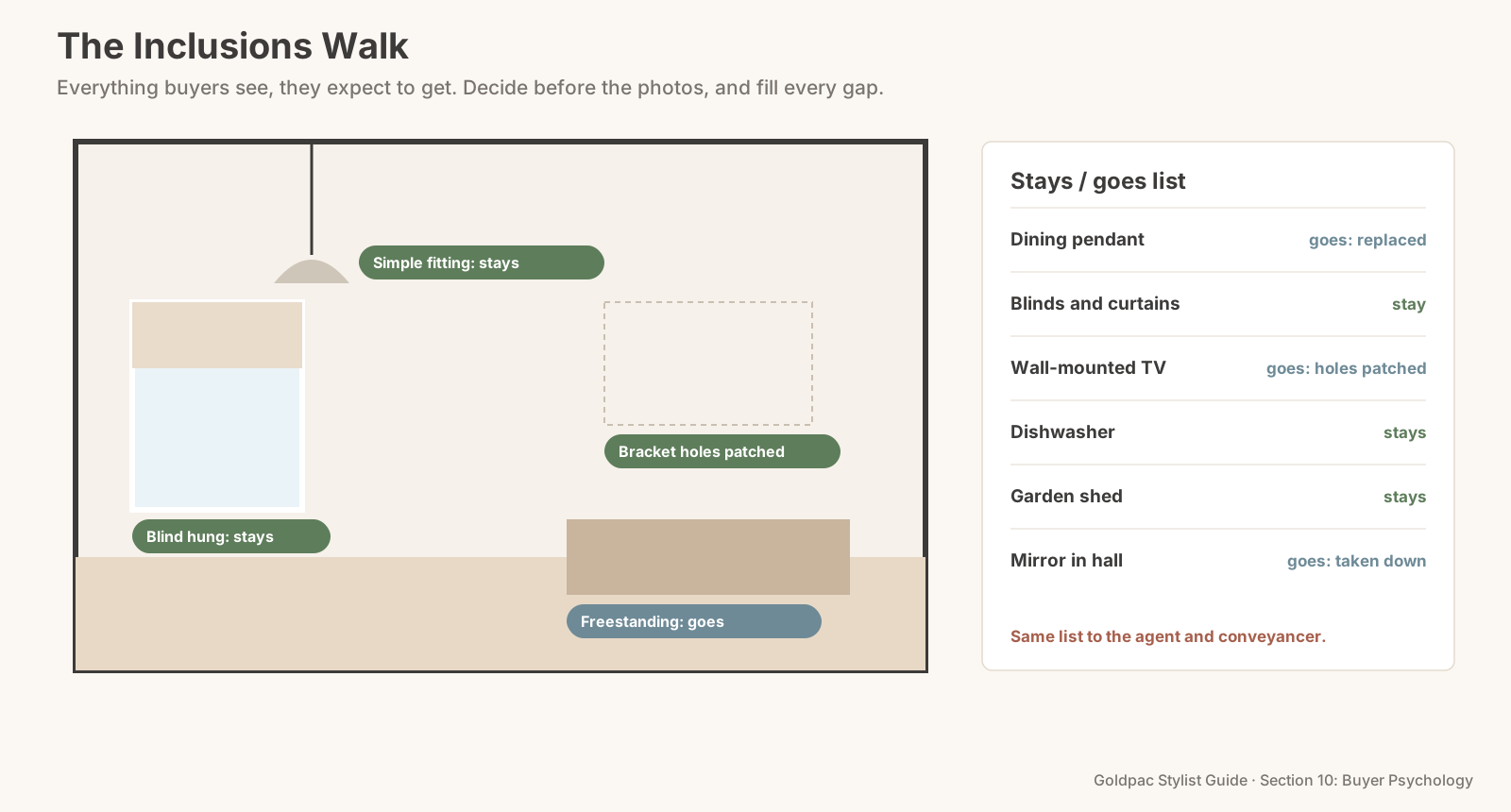
- Remove or replace anything that goes before the photos. Swap a treasured pendant for a simple fitting, take down the mirror you're keeping, unmount the TV.
- Fill the gaps: patch and touch up bracket holes, put a fitting on every ceiling rose, hang blinds on every bare rod.
- Give the list to your agent and conveyancer so the contract matches exactly what buyers saw.
The Inclusions Walk: decide what stays and what goes before the photos, remove or replace what you're keeping, fill every gap it leaves, and make the contract match the photos.
"Why not just say 'pendant excluded' in the listing?"
Because buyers fall for photos, not footnotes. A note in the description doesn't undo the image of the dining room with that light in it. The buyer still pictures it, and when the contract excludes it, the disappointment lands at the worst moment. Replacing it before the photos means the home buyers fall for is the home they get.
The second-order effect: gaps make buyers inspect harder
One gap makes buyers look for more. After they spot the bare ceiling rose, they check whether the oven works, whether the blinds are all there, whether the shed in the backyard is included. A careful buyer is fine; a suspicious buyer starts asking for things in writing and pushing on price. A home with no gaps keeps buyers in the "do we like it?" frame instead of the "what's the catch?" frame.
The blind spot: you already know what you're taking
In your head, the home is already split into "ours" and "theirs". You've known for months that the dining pendant goes with you and the garden statue was your mother's. Because you know, it doesn't occur to you that a buyer doesn't, or that the photos show those things as part of the home.
Walk the home as if you were the buyer reading the contract. Everything you can see is something you'd expect to get.
What if…
You've already listed with the item in the photos. Tell your agent now and make sure it's clearly excluded in the contract and mentioned to every interested buyer early, not at exchange. Consider replacing it before the next open home.
Something is broken but included. Fix it or say so. A broken dishwasher listed as included is a dispute waiting to happen.
FAQ
Do light fittings stay when you sell a house? Fixed light fittings are usually included unless the contract excludes them. If you want to keep a fitting, replace it before the photos and list it as excluded.
Should I patch holes from a TV mount before selling? Yes. Patched and touched-up walls look cared for; open bracket holes make buyers wonder what else has been removed.
What buyers see should be what they get. For an empty home, Goldpac stages with our own furniture and decor, which leave after the sale, so every room photographs complete without blurring what's included: send us the address and a fixed styling quote lands within two hours, through our home staging page. Living there? A Photo Ready Consultation includes a walk-through of what to swap or patch before the photos, in a written plan within 48 hours of the visit. See current prices.
Keep reading: Rule #253: Buyers fear unknown costs, so keep the home turnkey-ready (fixing the faults buyers can see) · Rule #211: Repaint rooms in neutral colours for a fresh feel (patching and repainting)
◀ Previous: Rule #258: Visible mess suggests deeper problems · Section 10 contents · Next: Rule #260: Make it feel ready to move in ▶
Part of the Goldpac Stylist Guide: 90+ home staging rules from Goldpac's Sydney styling team.