
Stylist Guide › Section 7: Mistakes to Avoid › Rule #201
Three logos. That's how many brands a typical "styled" kitchen photo can carry without anyone meaning to: the label on the wine bottle, the box of tea, the designer shopping bag on the bench.
The rule in one minute. Remove brand packaging and visible logos from styling props: bottles with labels facing out, branded tins and boxes, designer shopping bags and boxes used as decor, logo mugs and cereal boxes. Brands date photos, pull attention from the home and can make a room feel like an ad or a pantry. Decant into plain containers, turn labels to the wall, or swap the prop for something unbranded.
The myth: brands make it look aspirational
- The belief: a designer box on the dresser, a bottle of good wine with the label showing, a fancy tea tin on the bench suggest a beautiful lifestyle.
- Why it feels right: magazine shoots sometimes use them, and they feel like small luxuries.
- Why it backfires: in a listing, a brand becomes the subject. Buyers read the logo before they notice the stone or the light. It can look try-hard, and branded items date quickly as packaging changes.
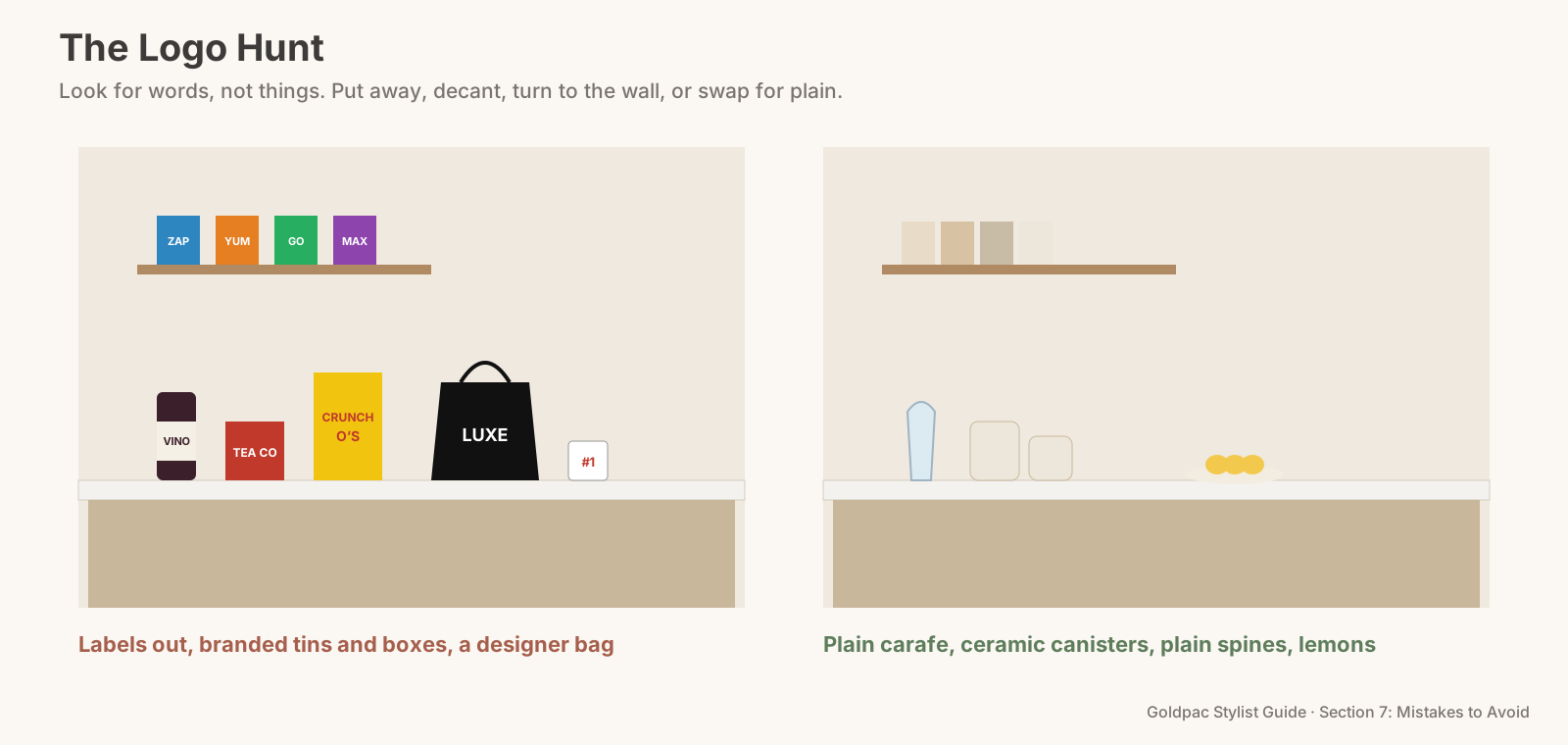
- What instead: unbranded objects with the same feeling: a plain glass carafe, a ceramic canister, a linen-wrapped box, a stack of books with plain spines.
Why logos don't belong in a listing
Logos are designed to grab attention. That's their job, and they do it in a photo too. A red can, a famous wordmark or a bright cereal box is the strongest graphic element in a room photo, and it pulls the eye away from what's for sale.
They tell a personal story. A favourite beer, a particular supermarket brand, a designer label: each signals the current owners' tastes and spending, which isn't the story you want buyers to read (Rule #151 covers the neutral story).
They make kitchens look like pantries. Branded packaging on the bench says storage, not space (Rule #184 covers kitchen surfaces).
They date the photos. Packaging is redesigned every few years. A listing full of current packaging looks old surprisingly quickly.
Should brand names be visible in real estate photos?
Ideally not: remove branded packaging and props, turn bottle labels to the wall, decant everyday products into plain containers, and avoid using designer boxes, bags or logo items as decor, so the home, not a product, is the subject of every photo.
The Logo Hunt
Walk the home with fresh eyes, looking only for words and logos. Most homes have more than people expect, because brands live on everyday things.
In the kitchen, check the bench, open shelves and the top of the fridge: bottles, oils, sauces, tea and coffee tins, cereal boxes, branded kettles and appliances with big logos facing out. Decant or put away; turn appliances so logos face the side.
In the bathroom, check the vanity and shower niche: shampoo, body wash, skincare. Pump bottles in one plain colour, or nothing at all (Rule #290 covers clearing bathroom surfaces).
In the bedroom, check the dresser and the wardrobe tops: designer shopping bags, shoe boxes, perfume bottles, branded jewellery boxes.
In the living room, check the shelves and coffee table: branded candles with labels facing out, magazine covers, gaming boxes, logo coasters.
Outside, check the barbecue covers, eskies, cushions and umbrellas with brand prints.
The Logo Hunt: every room searched only for words and logos, then each one put away, decanted into plain containers, turned to the wall or swapped for an unbranded prop.
Mini-dialogue: the designer box "But it's a beautiful box. It's practically decor." "It is. It's also an ad. A plain linen box does the same job and doesn't sell anything except your home."
Pack-away list
Put away or decant: labelled bottles, branded tins and jars, cereal and snack boxes, designer bags and boxes, shoe boxes, logo mugs, branded candles and diffusers, magazines with visible covers, game and console boxes.
Use instead: plain glass carafes and jars, ceramic canisters, pump bottles in one colour, linen or woven boxes, books with plain or neutral spines, unbranded candles.
The blind spot: brands are part of the furniture
You see your favourite olive oil, not its label. Brands are so familiar that they disappear into the scene of everyday life. The designer box on the dresser feels like a nice object, not a logo.
A camera records every letter, and a buyer reads every word. Look for text, not things, and the logos jump out.
What if…
A built-in appliance has a large brand logo. That's fine: appliances are part of the home, and some buyers look for good brands. The rule applies to loose props and packaging, not the fixtures.
FAQ
Should I hide branded products before listing photos? Yes, where you can. Decant or put away branded packaging, and turn bottle labels to the wall, so the home is the focus of every photo.
Is it okay to use designer boxes as decor when staging? It's best not to. They read as a logo, not decor. A plain linen or woven box gives the same look without the brand.
Do appliance brand logos matter in real estate photos? No. Built-in appliances are part of the home. The rule is about loose packaging and props.
A home without logos lets buyers focus on the home itself. For empty homes and agent listings, Goldpac stages with our own unbranded furniture and props: send us the address and a fixed styling quote lands within two hours, through our home staging page. Living there? A Photo Ready Consultation covers the Logo Hunt room by room in a written plan within 48 hours of the visit. See current prices.
Keep reading: Rule #184: Avoid visual clutter on kitchen benches (clear kitchen surfaces) · Rule #200: Don't leave tags on new textiles (removing tags from new decor)
◀ Previous: Rule #200: Don't leave tags on new textiles · Section 7 contents · Next: Rule #202: Put pet bowls, beds and toys out of sight ▶
Part of the Goldpac Stylist Guide: 300+ home staging rules from Goldpac's Sydney styling team.