
Stylist Guide › Section 7: Mistakes to Avoid › Rule #191
Will buyers really notice a few scratches on the dining table?
The rule in one minute. Avoid visibly damaged or scratched furniture in a home being photographed or inspected. Torn upholstery, chipped edges, water rings, wobbly legs and pet-scratched arms tell buyers the home has been worn hard, and they start looking for damage everywhere else. Sort every visible piece into four groups (keep, touch up, cover, remove) and fix or hide anything you can see from about two metres away.
Your questions, our answers
Damaged furniture comes up in almost every home we see, because furniture is used every day and wears slowly. These are the questions sellers ask most.
"Buyers aren't buying my furniture. Why does it matter?"
"They know it's not included."
They know, but they still judge the home by it. Buyers can't easily separate the condition of the furniture from the condition of the home. A sofa with a torn arm, a table covered in water rings and a dresser missing a handle suggest a household that doesn't fix things, and buyers wonder whether that applies to the roof, the wiring and the hot water system too.
The deeper effect is on price expectations. A home that looks worn invites buyers to look for reasons to offer less. A home that looks cared for invites them to imagine moving in.
How do you deal with damaged furniture when selling a house?
Check every visible piece from about two metres away, then keep it, touch it up, cover it or remove it: small scratches and chips can be touched up, worn upholstery can be covered with a fitted throw, and anything torn, broken, stained or pet-damaged is best removed for the campaign. Photos are unforgiving, so judge each piece in a phone photo too.
"How do I decide what to do with each piece?"
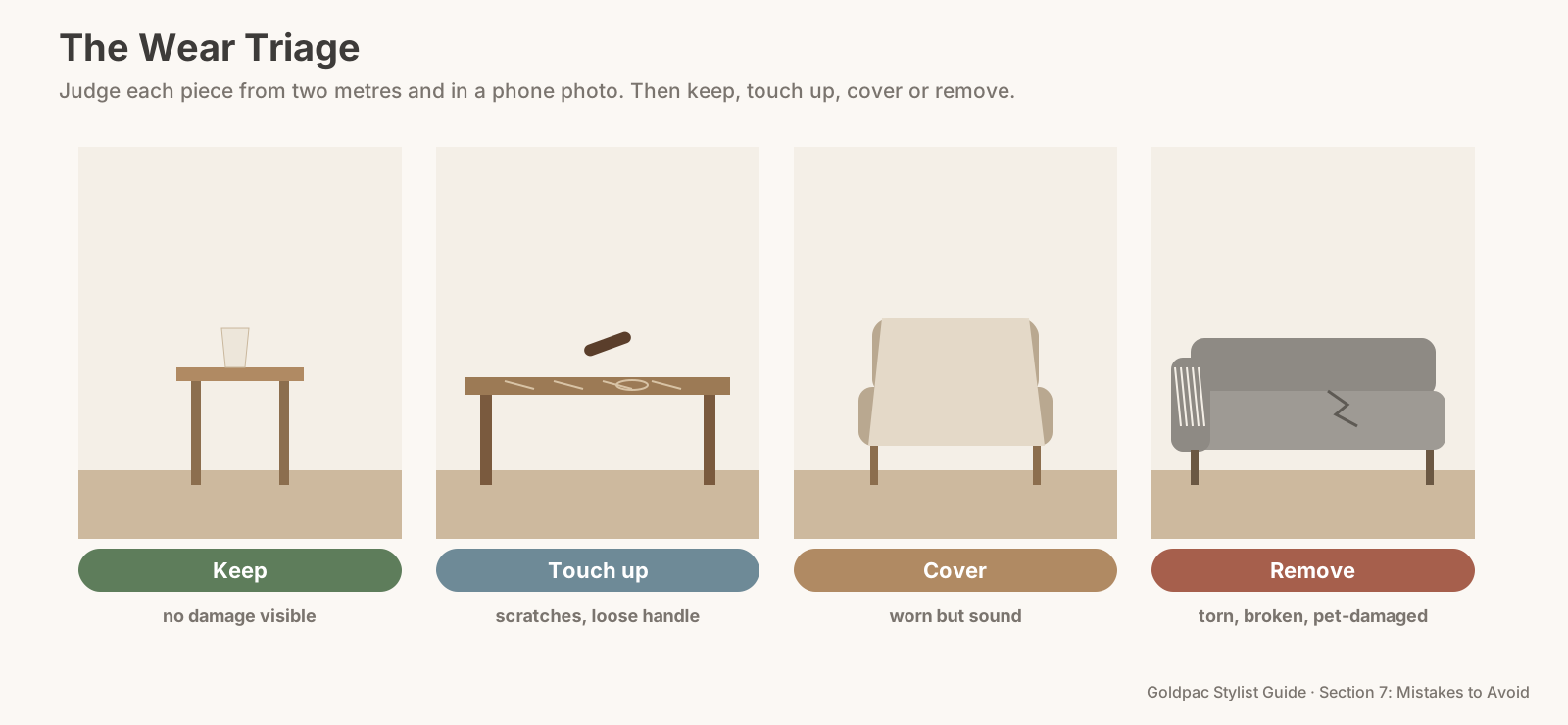
Use the Wear Triage. It sorts every visible piece into four groups in about half an hour for a typical home.
- Keep: no visible damage from two metres, nothing that shows in a phone photo.
- Touch up: small scratches, scuffs and chips on timber, loose handles, a wobbly leg. A furniture touch-up marker, a little wax, a screwdriver and felt pads fix most of it in minutes.
- Cover: worn or faded upholstery that's otherwise sound. A fitted or well-tucked throw in a neutral tone hides wear on a sofa or armchair; a runner or a tablecloth can hide a marked tabletop for photos.
- Remove: anything torn, broken, heavily stained, sagging or scratched by pets. Store it, give it away or sell it before the photos (Rule #274 covers retiring the dog's favourite chair).
The Wear Triage: every visible piece judged from two metres and in a phone photo, then kept, touched up, covered or removed, in about 30 minutes for a typical home.
"What about the big pieces I can't replace?"
Focus on what the camera sees. The arm of the sofa nearest the camera, the top of the dining table, the front of the dresser: those are the surfaces in the photo. The back of a sofa against a wall or the underside of a table doesn't matter.
Then decide whether the room works without it. A damaged second sofa, armchair or side table can often simply go. The room looks bigger without it (Rule #187 covers giving every item a reason).
If this, then that
- If the dining table has water rings or heat marks, try a furniture-care product suited to the finish, or set a runner and a vase over the worst marks for photos.
- If leather is cracked, a leather conditioner can soften the look; deep cracks mean cover or remove.
- If fabric is pilled, a fabric shaver takes ten minutes and makes a sofa look years younger.
- If a chair wobbles, tighten the screws and add felt pads. A wobbling chair at an inspection is the one a buyer will sit on.
- If timber is deeply gouged, don't attempt a full refinish before the campaign. Cover it, move it or remove it.
- If cats or dogs have damaged the furniture, remove it. Pet damage tells buyers to check the floors and doors for more.
Do-This-Sunday box Walk every room with your phone. Photograph each piece of furniture from two metres. Sit down and zoom in on every photo. Make a list with four columns: keep, touch up, cover, remove. Do the touch-ups the same afternoon.
Outdoor furniture counts too
Outdoor settings weather fast. Grey, cracked timber, rusted metal legs, faded cushions and mould spots on fabric all show clearly in the backyard photo, which is often one of the first five images. Scrub timber settings, wipe metal down, and take faded cushions away entirely: a bare chair looks better than a stained cushion. If a setting is past saving, remove it and leave the deck clear, or set one small table and two chairs that are in good shape (Rule #169 covers balconies as outdoor rooms).
The small pieces add up
Lampshades, side tables and bedside drawers wear too. A dented or yellowed lampshade, a side table with a lifting veneer edge, a bedside drawer with a missing knob: each is small, but they sit at eye level beside the bed or the sofa, right where the camera looks. Replace a tired shade, swap the knob from a drawer nobody sees, and move a chipped side table to a room that won't be photographed.
"Won't a throw over the sofa look like I'm hiding something?"
Not if it's done well. A neutral throw folded over the arm or tucked neatly across the seat looks styled. The giveaway is a throw that's obviously covering one patch, or several throws piled on one sofa. If the sofa needs more than one throw to look acceptable, it's a remove.
The blind spot: you know its history
Every mark on your furniture has a story. The ring from the birthday cake, the scratch from the move, the cat's corner of the sofa. You see memories, or you don't see the marks at all.
Buyers see the marks and no stories. To them, each one is a small sign of wear, and wear adds up across a home.
What if…
The home is empty and being staged. Then this is the stylist's job: staged furniture should arrive in good condition and be checked before the photos.
FAQ
Should I replace old furniture before selling my house? Usually not. Touch up small marks, cover worn upholstery and remove anything damaged. Buying new furniture just for the sale is rarely needed.
Do scratches on furniture show in real estate photos? Often, yes. Sharp, bright listing photos pick up scratches, rings and wear, especially on tabletops and arms nearest the camera.
What should I do with pet-damaged furniture when selling? Remove it for the campaign. Pet damage makes buyers look for damage elsewhere in the home.
Furniture in good condition tells buyers the whole home has been looked after. For empty homes and agent listings, Goldpac stages with our own furniture: send us the address and a fixed styling quote lands within two hours, through our home staging page. Living there? A Photo Ready Consultation sorts your pieces into keep, cover and store in a written plan within 48 hours of the visit. See current prices.
Keep reading: Rule #274: Retire the dog's favourite chair for the campaign (retiring the dog's favourite chair) · Rule #187: Don't over-stage: every item needs a reason (giving every item a reason) · Rule #199: Avoid tired or dated decor (updating dated decor)
◀ Previous: Rule #190: Don't use religious objects as decor · Section 7 contents · Next: Rule #192: Don't leave wires dangling from the TV ▶
Part of the Goldpac Stylist Guide: 220+ home staging rules from Goldpac's Sydney styling team.