
Stylist Guide › Section 7: Mistakes to Avoid › Rule #183
Ten minutes with a steamer. That's often the whole difference between a bed that looks slept in and a bed that looks like a hotel.
The rule in one minute. Never leave wrinkled linen or worn rugs in a home being photographed or inspected. Creased sheets, crumpled throws and frayed, stained or curling rugs are the first things a camera picks up, and buyers read them as neglect. Wash and steam the linen, make every bed tight and smooth, and either clean and flatten each rug or remove it. A bare floor beats a tired rug.
Why textiles carry so much weight
Linen and rugs are the biggest soft surfaces in most rooms. The bed takes up a third or more of a bedroom photo, and a rug often fills the middle of a living room shot. Whatever condition they're in, the whole room takes on.
Cameras exaggerate texture. Listing photos are sharp, bright and often taken with a wide lens close to the bed. Every crease throws a shadow, and every stain shows. In person, a buyer might walk past a slightly crumpled doona; in a photo it becomes the main detail.
Worn textiles suggest a worn home. A frayed rug or a pilled throw tells buyers the home has been lived in hard, and they start looking for other signs of wear.
How do you get linen to look crisp for real estate photos?
Wash the linen a few days before, steam or iron the visible parts (the top sheet fold, the doona cover, the pillowcases and any throw), make the bed tight with square corners, and steam again on the morning of the photos. A handheld steamer takes about ten minutes per bed and removes most creases without ironing.
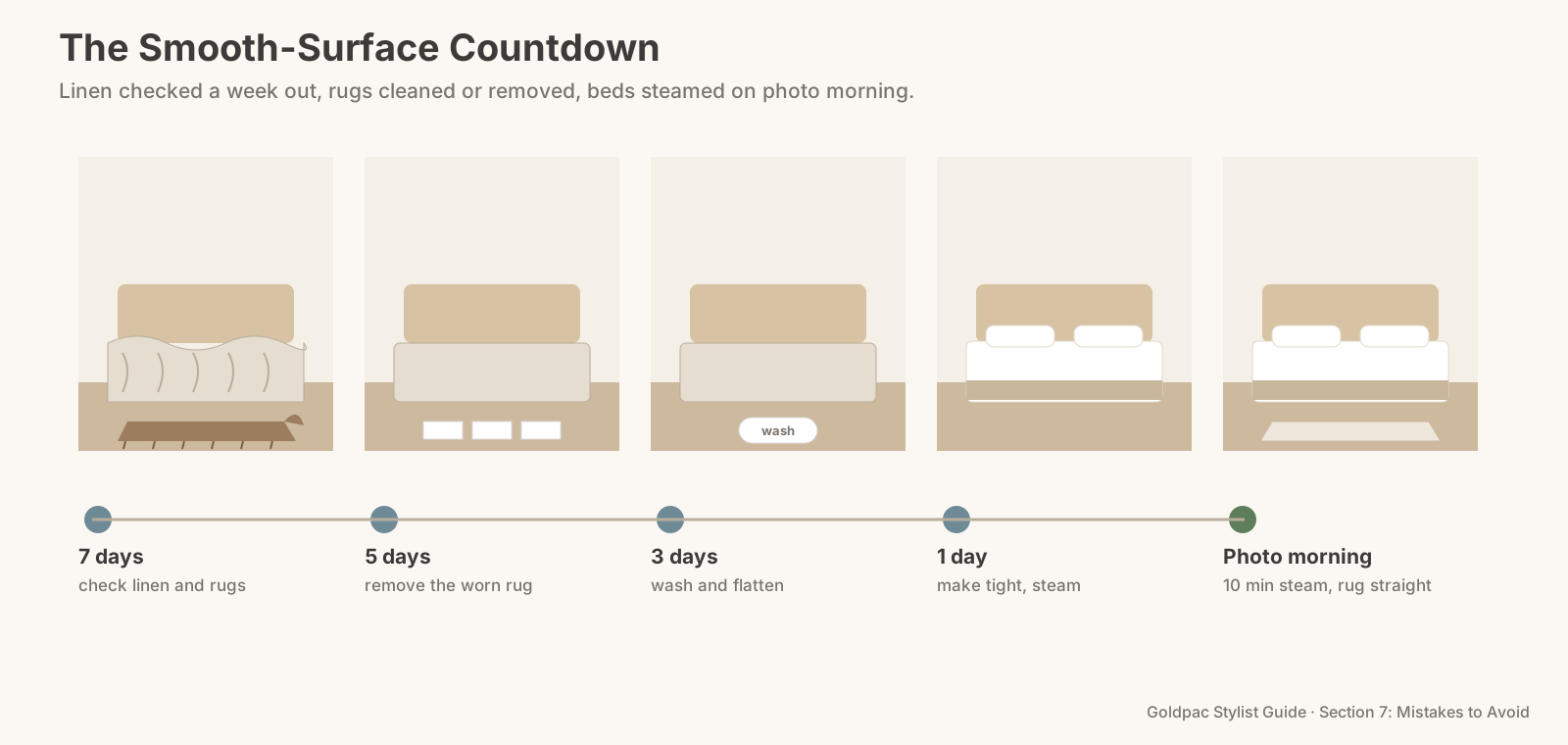
The Smooth-Surface Countdown
Seven days before the photos: check everything. Lay out the linen you'll use for each bed. Look for stains, pilling, fading and mismatched pieces, and replace anything tired with plain white or soft neutral linen. Walk every rug and look for frayed edges, stains, flattened traffic paths and curling corners.
Five days before: decide on the rugs. Clean the ones worth keeping. Remove the ones that are frayed, stained or simply dated. A bare timber or tiled floor is better than a worn rug, and it shows off the flooring, which buyers care about.
Three days before: wash and flatten. Wash the linen. Roll any curling rug the opposite way for a day, or put heavy books on the corners, so it lies flat.
The day before: make the beds. Tight bottom sheet, smooth doona or quilt, pillows plumped and squared, one folded throw across the foot of the bed. Steam the whole visible surface.
Photo morning: the final pass. Steam again where creases have crept back, straighten every rug so its edges run parallel to the furniture, and smooth the throws on the sofa.
The Smooth-Surface Countdown: linen checked 7 days out, rugs cleaned or removed 5 days out, everything washed and flattened at 3 days, beds made and steamed the day before, and a ten-minute steam per bed on photo morning.
Numbers panel About 10 minutes of steaming per bed · 1 throw folded at the foot of each bed · 0 curling rug corners · rug edges parallel to the furniture · 7 days to start, not 1
The phone-camera test
Stand at the doorway and photograph each bed and each rug. Zoom in on the photo. Creases you didn't notice in the room will show as dark lines; a curling rug corner will look like a trip hazard. Steam and flatten until the zoomed-in photo looks smooth.
Which rugs to keep and which to remove
Keep a rug if it's clean, flat, the right size for the furniture and in a calm colour. A good rug anchors a seating group and adds warmth.
Remove a rug if it's frayed, stained, curling, much too small for the room, or loudly patterned in a dated way. Also remove extra rugs layered over carpet: they rarely look intentional.
Don't buy a cheap new rug just for the photos. A thin, shiny rug can look worse than none. If you're adding one, choose a plain flat-weave or wool in a soft tone.
The blind spot: you don't see the bed from the doorway
You see your bed from inside it. You make it in the morning in a hurry and get into it at night in the dark. You rarely stand at the doorway in daylight and look at it the way a photographer does.
The same goes for the hallway runner you walk over every day. Its frayed edge and faded traffic path became invisible years ago.
What if…
You're living in the home and the beds get slept in every night. Keep one set of "show linen" for photos and inspections only. Make the beds with it on the morning of an inspection, and put your everyday linen back that night.
FAQ
Should I remove rugs when selling my house? Remove any rug that's worn, stained, curling or too small. A clean, flat, well-sized rug can stay; a bare floor is better than a tired rug.
Crisp linen and calm, flat rugs make every room look cared for. For empty homes and agent listings, Goldpac stages with our own furniture, linen and rugs, pressed and placed for the photos: send us the address and a fixed styling quote lands within two hours, through our home staging page. Living there? A Photo Ready Consultation tells you which rugs and linen to keep, in a written plan within 48 hours of the visit. See current prices.
Keep reading: Rule #182: Don't overload walls with clocks or signs (calm walls) · Rule #173: Match the colour story to the season (seasonal soft layers) · Rule #200: Don't leave tags on new textiles (removing tags from new textiles) · Rule #134: Keep bed linen crisp and pressed (pressing linen for the photos)
◀ Previous: Rule #182: Don't overload walls with clocks or signs · Section 7 contents · Next: Rule #184: Avoid visual clutter on kitchen benches ▶
Part of the Goldpac Stylist Guide: 220+ home staging rules from Goldpac's Sydney styling team.