
Stylist Guide › Section 6: Styling Logic & Emotional Design › Rule #172
"The sofa's a bit tired, but a few new cushions will fix it."
"How many cushions?"
"…Eight?"
The rule in one minute. Let furniture and styling support each other: the furniture sets the room's shape, scale and quality, and the styling (cushions, throws, art, lamps, plants) finishes it. Styling can't rescue the wrong furniture, and good furniture looks bare without styling. Get the big pieces right first (size, placement, condition), then add three to five layers of styling that pick up the furniture's colours and materials.
The myth: accessories can fix anything
- The belief: the furniture doesn't matter much; cushions, throws and a few plants will make any room look styled.
- Why it feels right: accessories are cheap, quick and fun. Furniture is expensive and heavy.
- Why it backfires: buyers read the big pieces first. A sagging, oversized or badly placed sofa is still the biggest thing in the photo, whatever is piled on it.
- What instead: fix the furniture first (remove, swap, move or cover), then style it lightly.
Why the order matters
- Furniture takes up most of the frame in a room photo. It sets the scale, the colour blocks and the lines.
- Styling is the smaller, last layer: the details that make it feel finished and warm.
- Piling styling on to hide furniture draws the eye to it. Eight cushions on a tired sofa say "there's something under here".
- Under-styling good furniture wastes it. A beautiful timber dining table with nothing on it looks like a showroom floor.
How do furniture and decor work together in staging?
Furniture sets the room's shape, size and quality; styling repeats its colours and materials in smaller pieces to finish the room. Choose and place the furniture first, then add a small number of accessories that pick up the furniture's tones, soften its edges and give the eye places to rest.
The Frame and Finish Method
- Edit the furniture. Remove anything too big for the room, broken, very worn or not needed. Most rooms look better with one piece fewer.
- Place it. Pull sofas off walls if there's room, float the dining table under the light, give every piece 60 to 90 cm of walkway around it.
- Check the condition. Stains, scratches, sagging seats. Clean what can be cleaned; cover what can be covered with a fitted throw; remove what can't.
- Read the furniture. Note its main colours and materials: grey linen, oak, black metal.
- Finish with three to five layers that echo those colours and materials: two cushions and a throw on the sofa, a lamp, one plant, one piece of art.
- Stop before it's full. If you're adding a sixth layer, take one away instead.
The Frame and Finish Method: edit, place and check the furniture first, then finish the room with three to five styling layers that echo its colours and materials, never more.
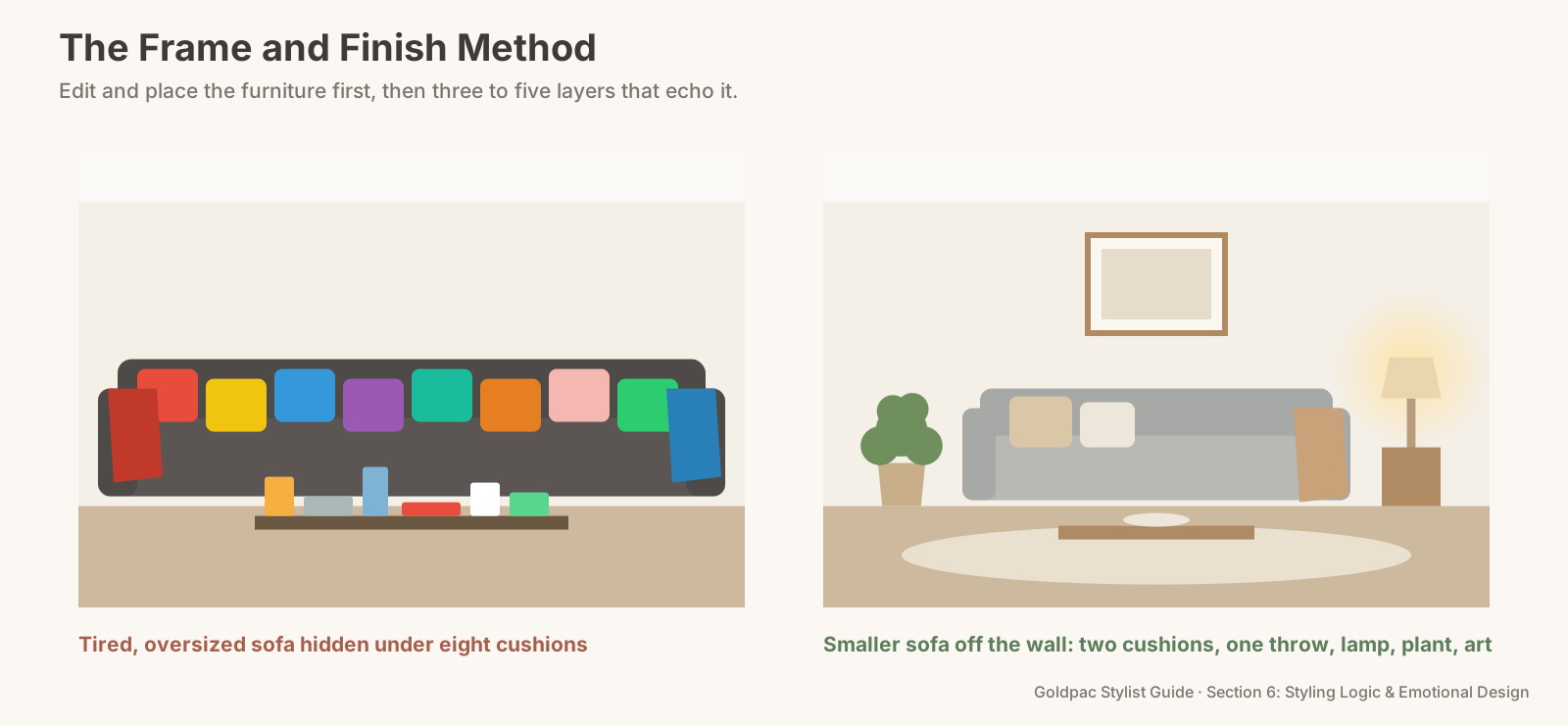
Numbers panel 1 piece of furniture fewer than you think · 60 to 90 cm of walkway around each piece · 3 to 5 styling layers per room · 2 to 4 cushions on a three-seater, not 8 · 1 throw
Mistake and fix
Mistake: a dark, bulky lounge suite that fills the room, covered with bright cushions. Fix: remove one piece of the suite (usually the second sofa or an armchair), then style with two cushions in a lighter tone to lift it.
Mistake: a beautiful timber sideboard with nothing on it. Fix: one lamp, one stack of books, one bowl. It suddenly looks like the centre of the room.
Mistake: new accessories in a colour that has nothing to do with the furniture. Fix: take the cushion colour from the rug, the timber or the art, so the room reads as one.
The deeper reason: weight
Furniture carries visual weight; styling balances it. A heavy, dark sofa on one side of the room needs a lamp, a plant or art on the other side, not more cushions on itself. Styling works best when it spreads across the room, balancing the big pieces rather than sitting on top of them.
The blind spot: you bought the furniture for comfort
You chose your sofa because it was comfortable, durable or a good deal. You sit in it every night, and it's part of the family. You don't see its size or its wear any more.
Buyers see a large grey block in the middle of the photo. Ask your agent or a friend to tell you honestly which piece looks tired. It's usually the one you love most.
What if…
You can't remove the big furniture because you live there. Rearrange it to open the room, cover worn fabric with a fitted throw in a neutral tone, and keep the styling light so the furniture isn't the first thing anyone looks at.
FAQ
Can cushions and throws hide old furniture when selling? Only a little. A fitted throw can cover wear, but piling on accessories draws attention. Fix, move or remove the furniture first, then style lightly.
How many cushions should be on a sofa for staging? Usually two to four on a three-seater, in tones taken from the room. More than that looks like you're hiding something.
The right furniture makes styling easy, and the wrong furniture makes it impossible. For empty homes and agent listings, Goldpac stages with our own furniture and styling, chosen together for each room: send us the address and a fixed styling quote lands within two hours, through our home staging page. Living there? A Photo Ready Consultation tells you which pieces to keep, move or store, in a written plan within 48 hours of the visit. See current prices.
Keep reading: Rule #171: Create rhythm with repetition and variation (rhythm through repetition) · Rule #156: Avoid symmetry overload: break the pattern a little (breaking symmetry gently) · Rule #176: Choose quiet luxury over visual excess (quiet luxury over visual excess)
◀ Previous: Rule #171: Create rhythm with repetition and variation · Section 6 contents · Next: Rule #173: Match the colour story to the season ▶
Part of the Goldpac Stylist Guide: 300+ home staging rules from Goldpac's Sydney styling team.