
The short answer
A display apartment matches the renders when its furniture carries the same palette, mood and scale as the project's marketing, so a buyer who fell for the brochure walks into the same home. Goldpac Home Staging plans each display from the developer's renders, finishes schedule and target buyer: the lead stylist reads the colours and materials in the marketing and chooses furniture from Goldpac's own inventory to continue them, room by room, in a written plan the developer approves. A two-bedroom display costs $5,350 +GST for six months on Goldpac's published hire.
Key takeaways
- Off-the-plan buyers compare the display with the renders; a generic display breaks the promise the marketing made.
- Goldpac takes the renders, the finishes schedule and the buyer profile into the furniture plan before anything is installed.
- The match is in palette, materials, mood and scale — Goldpac furnishes from its own inventory, not custom-made copies of render pieces.
- A brand-new Marsden Park home staged with four bedroom palettes went under offer in 16 days against a 42-day suburb median (Goldpac results dataset).
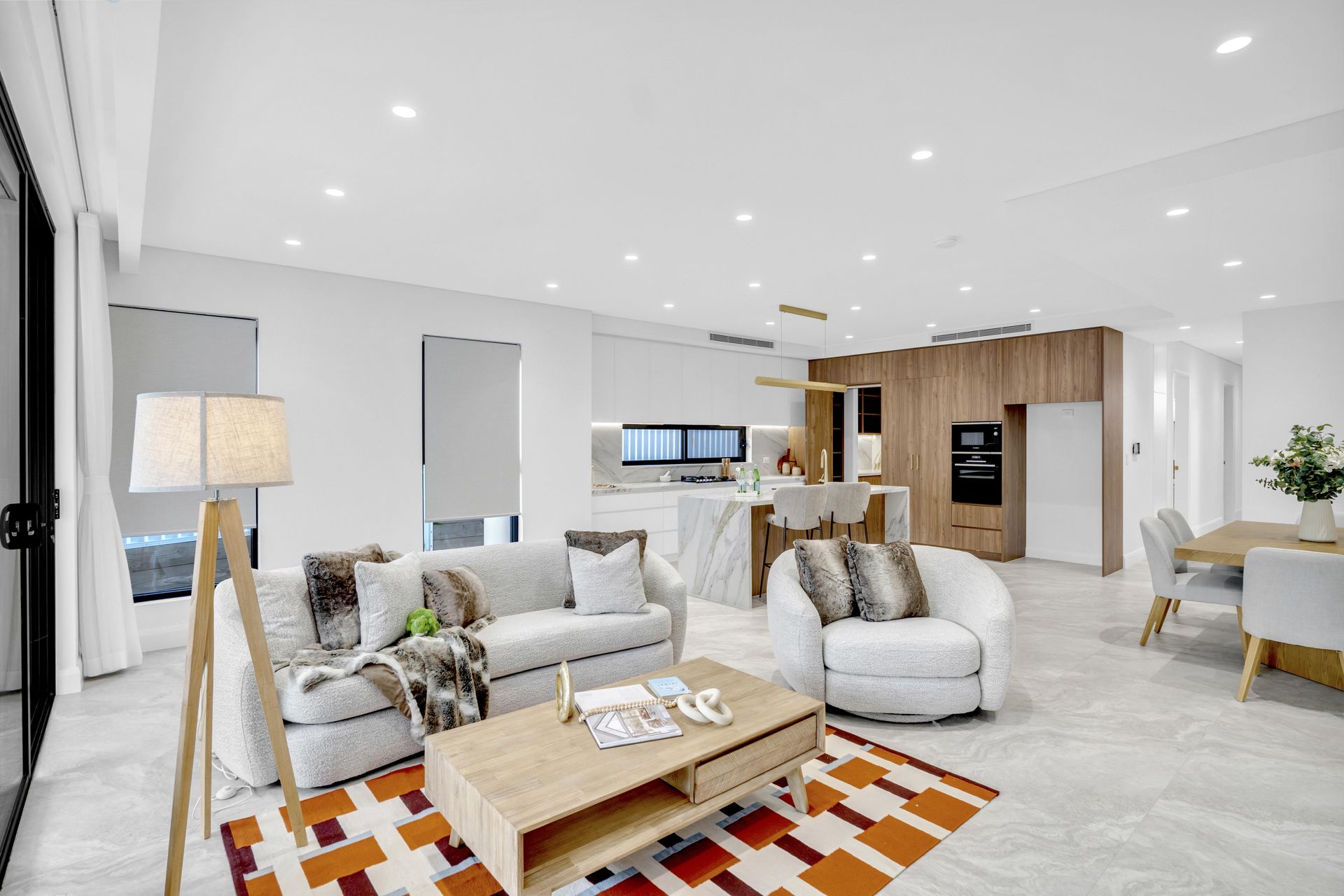
Killara Avenue, Kingsgrove: a rust, burnt-orange and burgundy geometric rug in the sight line from the kitchen island gave a marble-white living room the warmth the architecture promised.
Why does a display that does not match the renders cost sales?
An off-the-plan buyer meets the project three times before signing: the renders online, the brochure or the sales office, and the display apartment. The renders sell a mood — warm timber, a particular stone, a calm palette, a certain kind of life. If the display is furnished with whatever a hire company had in stock that week, the buyer notices the gap, and the gap reads as a downgrade.
The card for a brand-new duplex on Killara Avenue, Kingsgrove, put the problem in one line: a marble floor that runs from the front door to the alfresco reads as luxurious in a render and cavernous in an empty room. A display that does not carry the render's warmth into the furniture leaves the buyer with the cavern.
What should a developer send the stylist before the site meeting?
Three things shape a display plan more than the floor plan does:
- The renders and the brochure. They show the palette, the materials and the mood the marketing has already promised.
- The finishes schedule. Floor, benchtop, joinery and tapware colours decide which furniture tones will sit well and which will clash.
- The target buyer. A downsizer, a young family and an investor need different second bedrooms, different dining settings and different amounts of colour.
Goldpac's process starts with a twenty-minute site meeting with Valentin and Maria, then a written room-by-room plan. Sending the marketing material before that meeting means the plan arrives already speaking the project's language.
How does the stylist translate renders into real furniture?
Renders are drawn, not furnished. They use pieces that may not exist, at sizes that may not fit the room once real walkways and door swings are counted. The stylist's job is to keep what the render promises — the palette, the materials, the feeling — and deliver it with furniture that fits the actual apartment.
On Junee Crescent, Kingsgrove, a brand-new duplex had curved balconies on its facade. Inside, the entry sitting room got a kidney-shaped bouclé sofa and a matching curved chair on a round cream rug, so the curves of the architecture carried through the front door. In the main living room, where a long white space with a built-in fireplace looked expensive and felt cold, the colour went in through a burnt-terracotta velvet rug and two rust bouclé armchairs. The building set the language; the furniture continued it.
Material cues: stone, timber and tile tell you what to place
The finishes schedule is the most practical brief a stylist can get. A few patterns repeat across new Sydney projects:
| Finish in the build | What it does empty | What the furniture does |
|---|---|---|
| Marble-look porcelain everywhere | Every room reads the same | A different colour temperature per room; patterned rugs to break the plane |
| White walls over charcoal carpet | The floor outweighs the room | Pale sofas, ivory rugs and dining chairs that read against the dark floor |
| Oak joinery and veined stone | Warm but sparse | Light furniture; cane, oak and linen that let the joinery stay the hero |
| Floor-to-ceiling glass | The eye leaves the room | A floated sofa, low pieces and a rug that gives the room an edge |
On Seven Street, Epping, fresh white walls sat over charcoal carpet in a top-floor apartment. Dark furniture would have disappeared into the floor, so the weight went into pale pieces: a cream slipcovered sofa, an armchair angled to the glass, four ivory dining chairs and an ivory rug with a carved swirl. The finishes decided the furniture before the stylist chose a single cushion.
Matching the buyer, not just the brand
A brand is a promise to a particular buyer, and the display has to keep it room by room. On Feathertail Avenue, Marsden Park, a brand-new five-bedroom house built to a specification above the suburb's usual stock had four bedrooms given four palettes: a coastal guest room for a visiting parent, a darker main suite in navy and blush, a warm third bedroom in ochre and rust, and a neutral second bedroom. Four rooms, four buyer conversations running at once, all inside one consistent look.
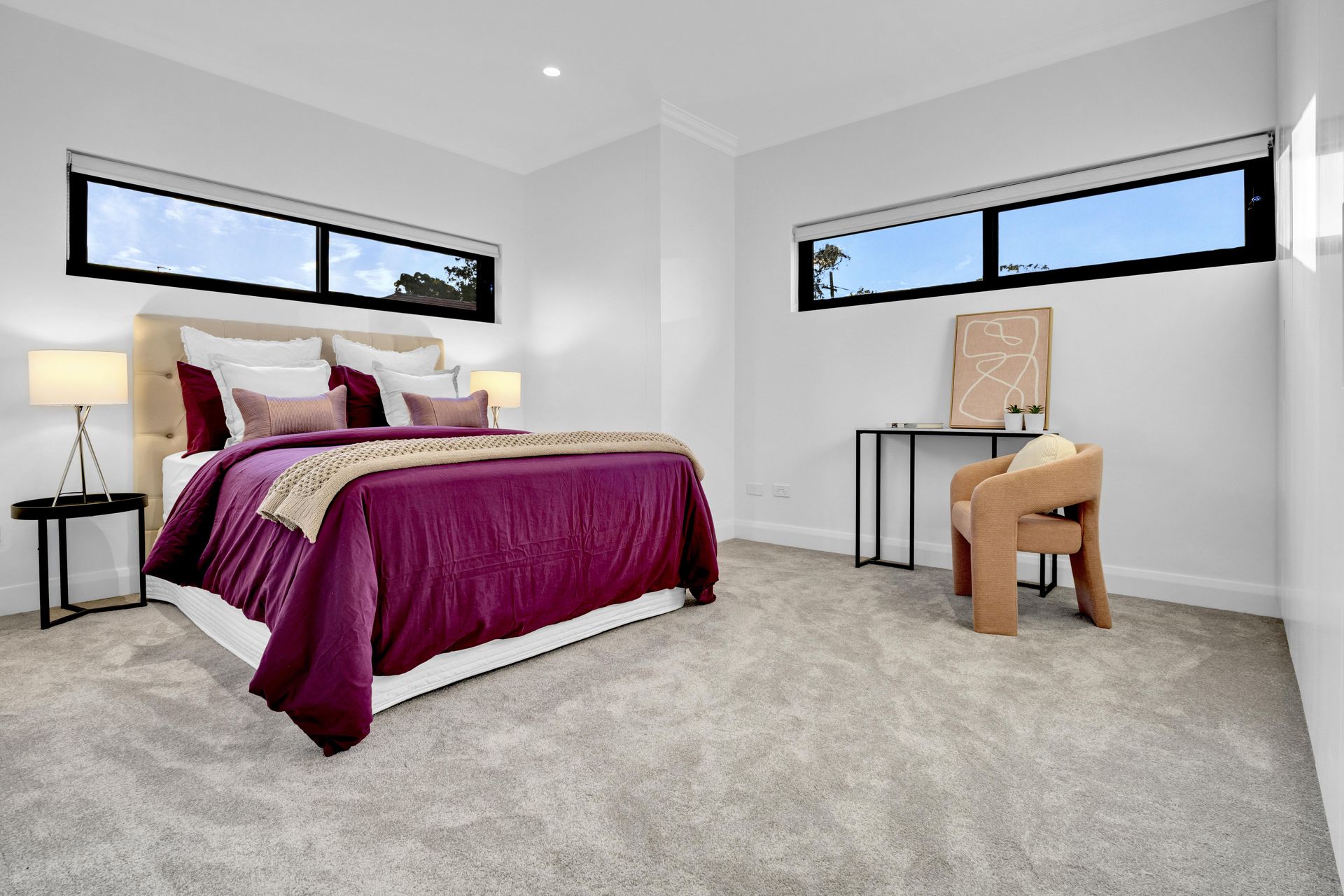
Kingsgrove: a plum bedroom in a house where every floor is the same stone. Colour, not architecture, tells the buyer which room they are in.
For a display apartment the decisions are smaller but the logic is the same. A downsizer project gets a second bedroom styled as a guest room and a dining table for six; an investor project gets a study nook that a tenant would use; a first-home-buyer project gets a second bedroom that could be a nursery. For room-by-room detail by buyer type, see how to style a display apartment for your buyer.
Two displays in one building: how to keep each one distinct
Larger projects often open more than one display — a one-bedroom and a three-bedroom, or two apartments on different floors — and both have to belong to the same brand without looking like copies. Goldpac has already solved a version of this problem. In The Chatswood on Anderson Street, Goldpac staged three apartments for three different agents, and the third, on the ninth floor, had to compete with Goldpac's own work under the same roof. The answer was a different room plan: the linen sofa floated in the middle of the floor with its back to the dining table, so one open plan read as two rooms, with tall plants and a rattan lamp warming the corners the other listings had left cool.
For a developer, the rule is simple. Keep the palette and materials consistent with the renders; vary the room layout, the accent colour and the buyer story, so a buyer who walks both displays remembers two homes in one project.
Can the display furniture change for a second release?
Projects evolve. A second stage launches with a different palette, or the marketing shifts to a new buyer. Refresh visits can bring new artwork, flowers and accessories whenever you want them, quoted per visit, and the hire continues month by month at the same rate. Damaged pieces are replaced within 48 hours, so the display keeps matching the brochure in month six as well as on launch day.
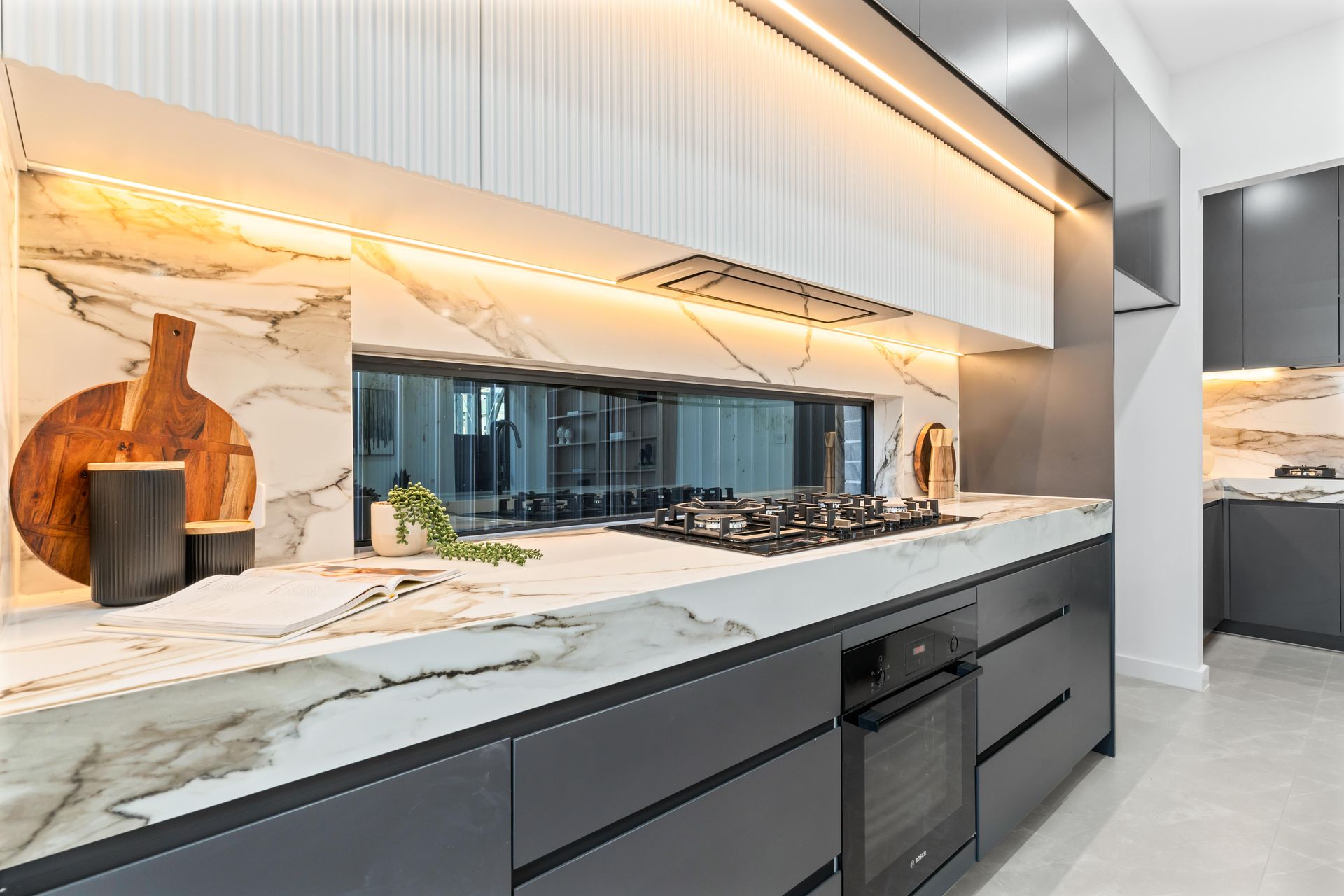
Feathertail Avenue, Marsden Park: the kitchen stone stays the hero; a timber board and one ceramic vase give it scale.
When should a developer buy furniture instead?
- When the renders show signature pieces the brand depends on. Goldpac furnishes from its own inventory and matches palette, materials and mood. If the brief is the exact designer chair in the render, buy that piece.
- When the furniture conveys with the sale. The buyer has to own it.
- When the display suite is a permanent sales centre. A fit-out company and bespoke joinery may suit a centre that runs for years better than a hire.
Proof spotlight
Marsden Park · Feathertail Avenue · brand-new 5-bedroom house · staged in one day · under offer in 16 days with 5+ offers · Marsden Park median 42 days.
The vendor had spent eighteen months building the house and believed the finishes would sell it empty. Goldpac staged eleven distinct spaces in a single day — five bedrooms, both living areas, the dining room, the alfresco and the upper retreat — with each bedroom given its own story inside one look. This was a resale campaign for an agent, not a developer display; display hire brings the same stylist and inventory to your project.
Full case in the Goldpac portfolio → Marsden Park. 16 Days. 5 Offers. The Brand-New Home That Almost Listed Empty.
FAQ
Can a display apartment be styled to match the project's renders?
Yes, in palette, materials, mood and scale. Goldpac's stylist works from the renders, the brochure and the finishes schedule, and chooses furniture from Goldpac's own inventory to continue them room by room. The plan is written and approved before installation. It is not a piece-for-piece copy of drawn furniture, which often does not exist or fit.
What should we send before the display site meeting?
The renders, the brochure or marketing suite images, the finishes schedule and a line on the target buyer. With those, the twenty-minute site meeting with Valentin and Maria is about the actual rooms, and the written furniture plan arrives already matched to the project.
Does Goldpac use the same furniture in every display?
No. Every display gets a room-by-room plan built for its finishes and buyer, from Goldpac's own furniture held in its Castle Hill warehouse. Two projects in the same suburb can look completely different, and two displays in the same building can be styled so buyers remember each one.
Can the display look change for a second stage launch?
Yes. Refresh visits bring new artwork, flowers and accessories whenever you want them and are quoted per visit. The hire itself continues month by month at the same rate, and damaged pieces are replaced within 48 hours throughout the term.
Who approves the furniture plan?
Whoever signs the hire: the developer or the project marketing agency. Goldpac sends a written room-by-room plan with the term and the monthly price, the signer approves it, and the price does not change after signing. Install day then follows the approved plan.
Key facts
- Goldpac Home Staging (Goldpac PTY LTD, ABN 45 679 634 130) — property staging and display apartment furniture hire, Castle Hill, Sydney.
- 600+ Sydney homes staged since August 2024; own furniture, warehouse and trucks.
- Display hire: published prices from $4,400 +GST for six months on a one-bedroom display — full table at goldpac.com.au/for-developers
- Minimum term six months: a three-month package paid before installation, then monthly hire invoiced in advance.
- One-day installation before the first open day; damaged pieces replaced within 48 hours.
- Send the project address, the apartments to furnish and the launch date: info@goldpac.com.au · +61 475 151 245
Have renders and a launch date? Send the address, the apartments to furnish and the marketing material, and Valentin will reply by email to arrange a twenty-minute walk-through on site.
Related reading: what a display apartment furniture package includes, room by room, how to style a display apartment for your buyer, display suite styling: 7 jobs a long-term hire takes off the developer's desk and staging a brand-new duplex. Or browse the Goldpac portfolio of staged Sydney new builds.
Updated November 2026.