
Stanmore · Harrow Rd · 4BR semi-detached · Staged Tuesday · Photography same day · Listed Wednesday · Live campaign · Stanmore house median DOM: 35 days (CoreLogic 2025)
What Does It Take to Stage a Home That Lives in Two Centuries?
A Federation semi on Harrow Road with an ornate 1890s facade, a fully modern rear extension, and a staging brief built to make both halves photograph as one home.
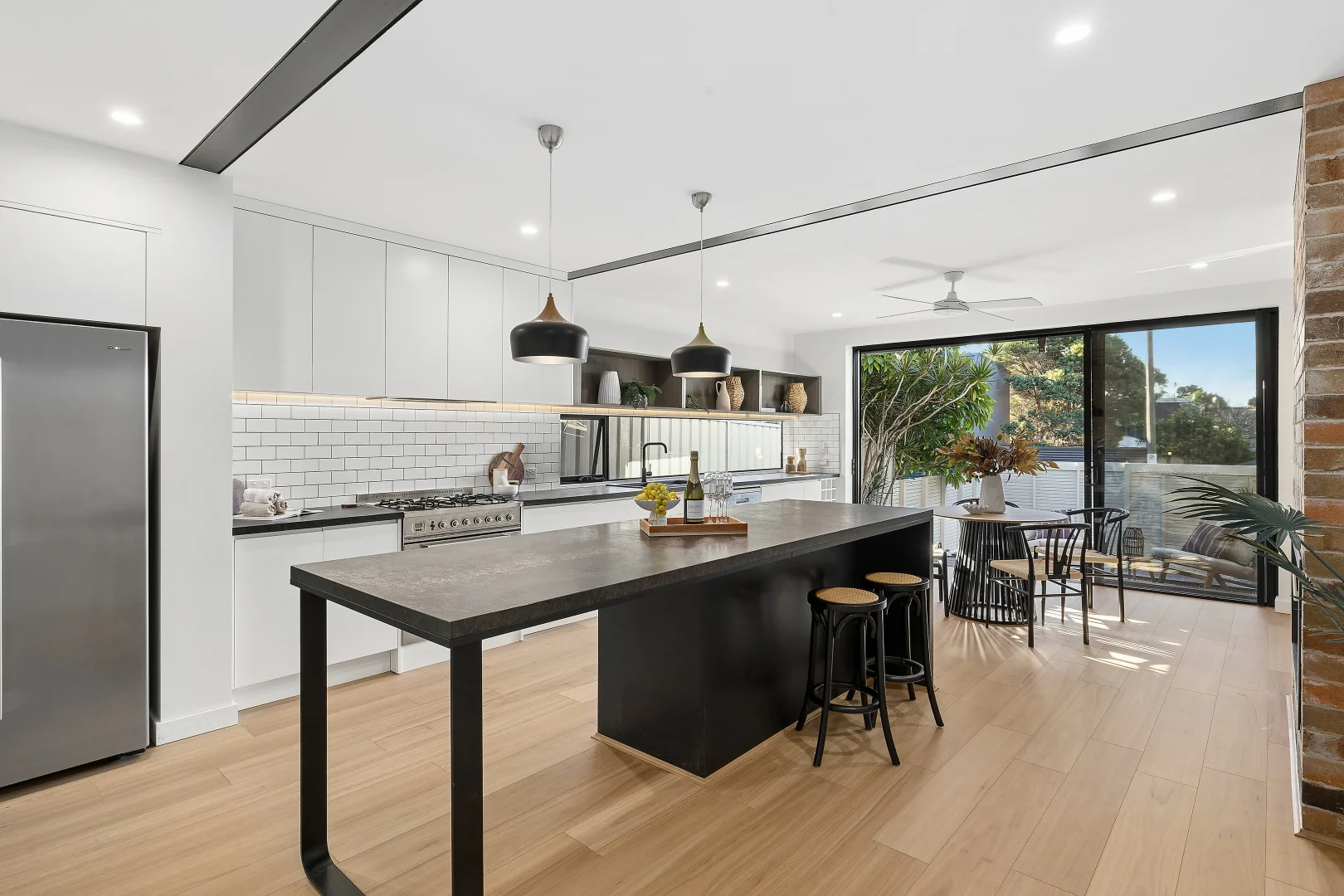
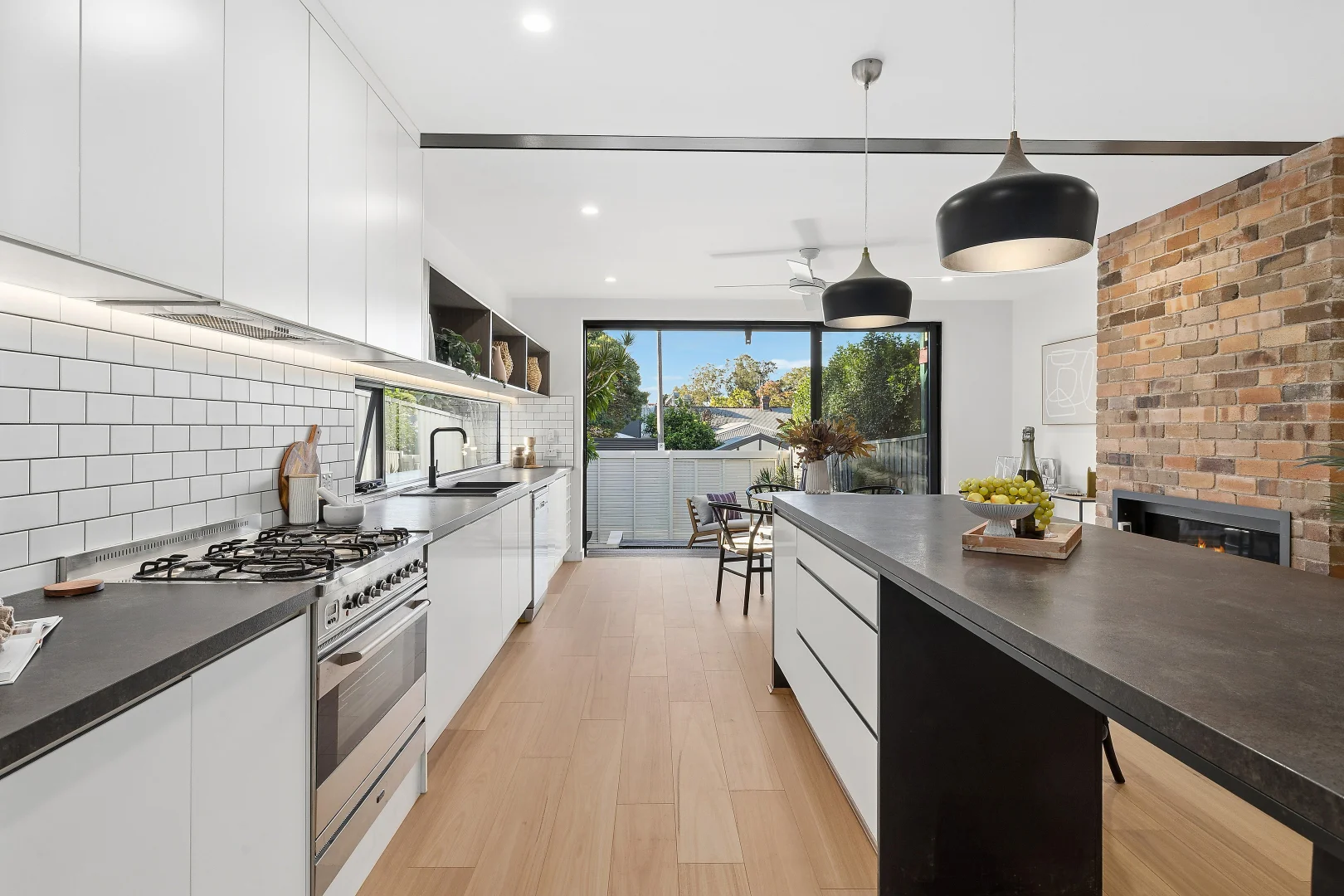
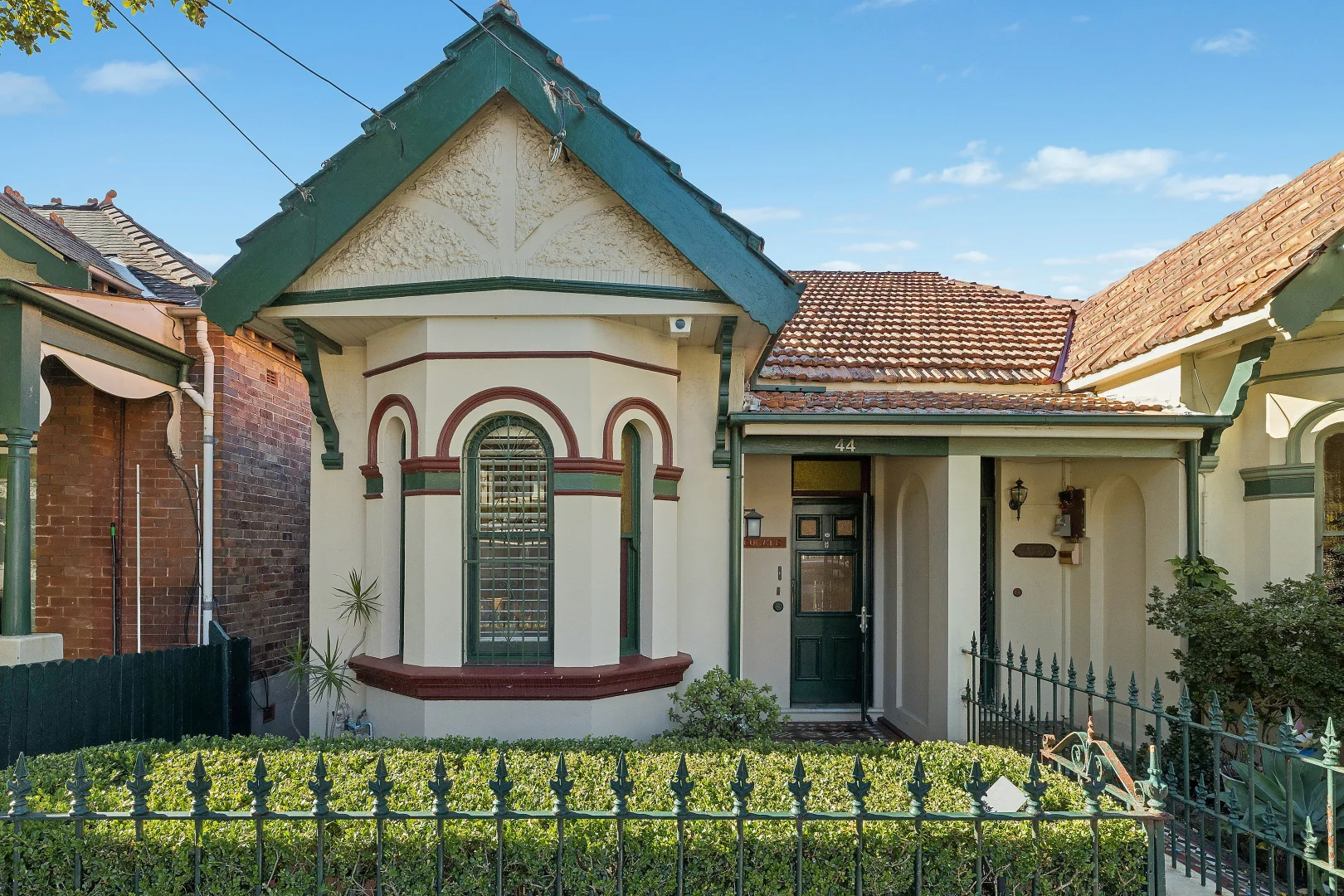
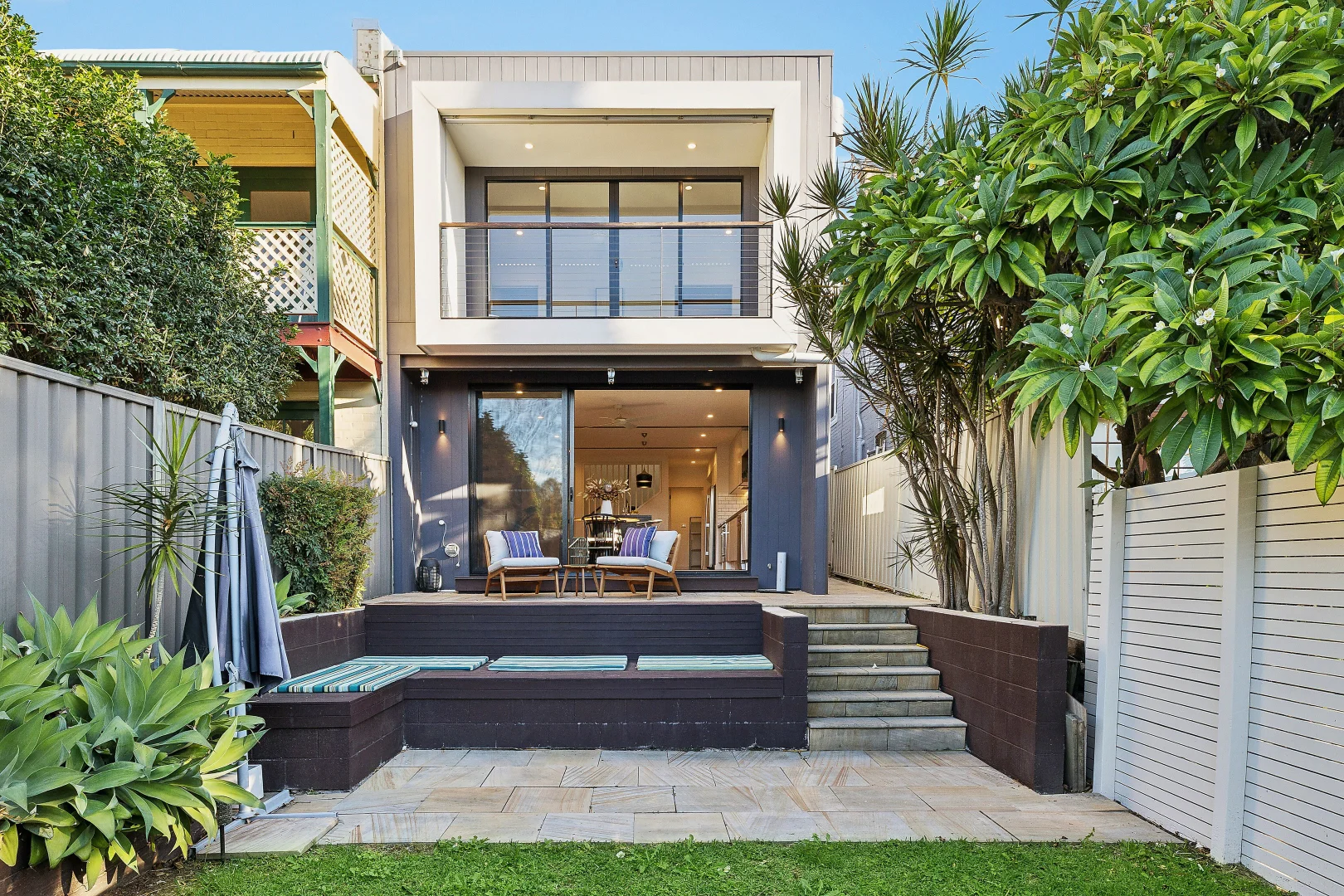
The floor plan arrived with a warning. Four bedrooms, two bathrooms, 187 square metres of internal space across two storeys — but the real brief was in the architecture. The front half of the home was original Federation. Arched bay windows with leadlight glass. Ornate gable detailing in green and burgundy. Decorative cornicing. Timber floorboards running the length of a traditional hallway under a period archway. The rear half was something else entirely. A contemporary two-storey extension clad in dark charcoal, with full-height sliding glass, light oak engineered floors, a professional-grade kitchen anchored by a dark stone island bench, and an exposed brick fireplace wall that ran from the kitchen through to the dining zone. Two homes wearing one address.
That is the disconnect problem. When a property carries two architectural identities, the listing photos need to tell a single coherent story — or buyers scrolling through on a Saturday morning will feel the visual break between image four and image five. The Federation bedroom reads heritage. The kitchen reads warehouse conversion. The front living room reads coastal cottage. The rear extension reads Surry Hills terrace. Without a staging brief that threads all of these rooms onto the same visual axis, the photography fragments. Fragments mean confusion. Confusion means scroll-past. Scroll-past means the agent is calling Goldpac wondering why the click-through rate is flat when the home is worth north of two million.
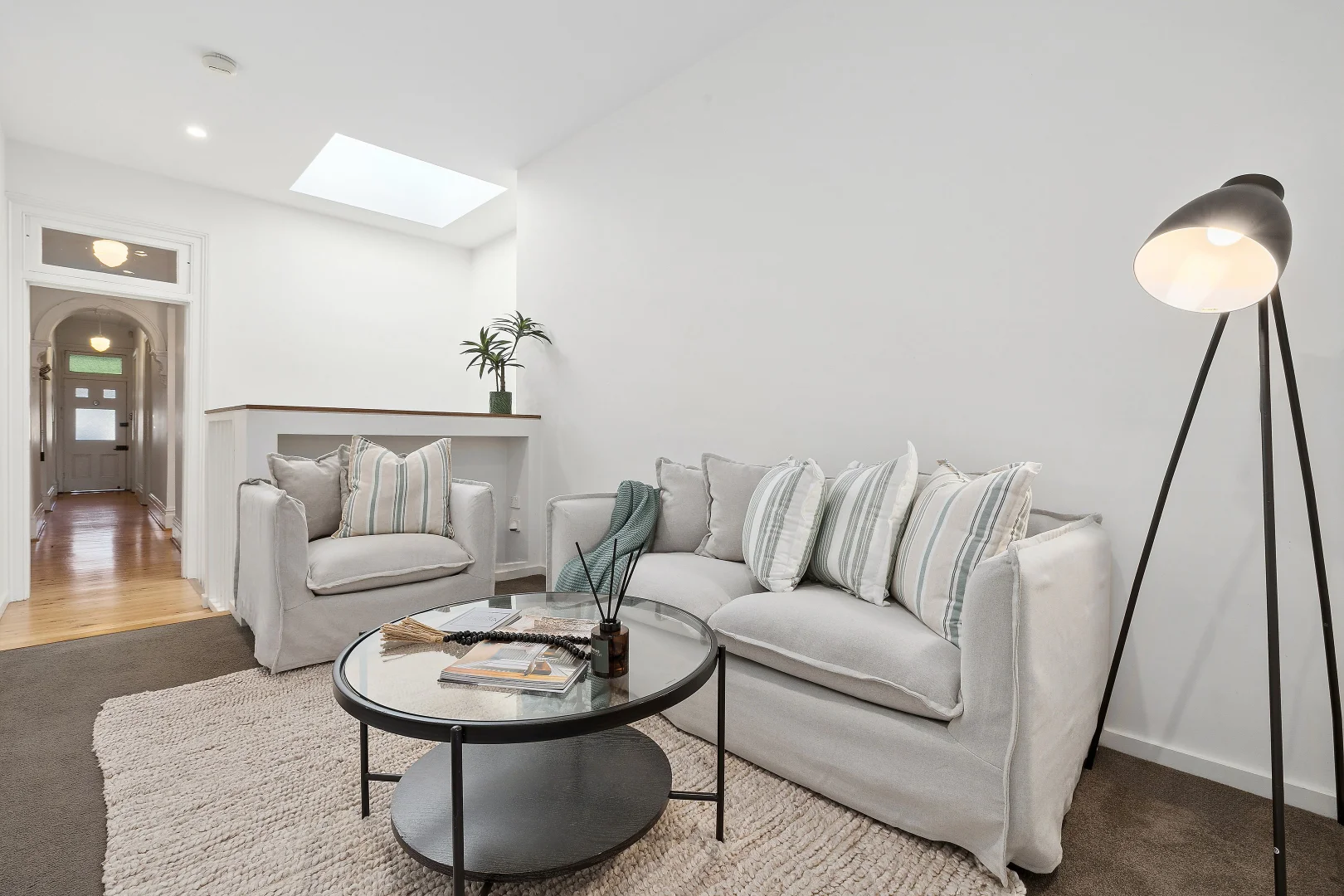
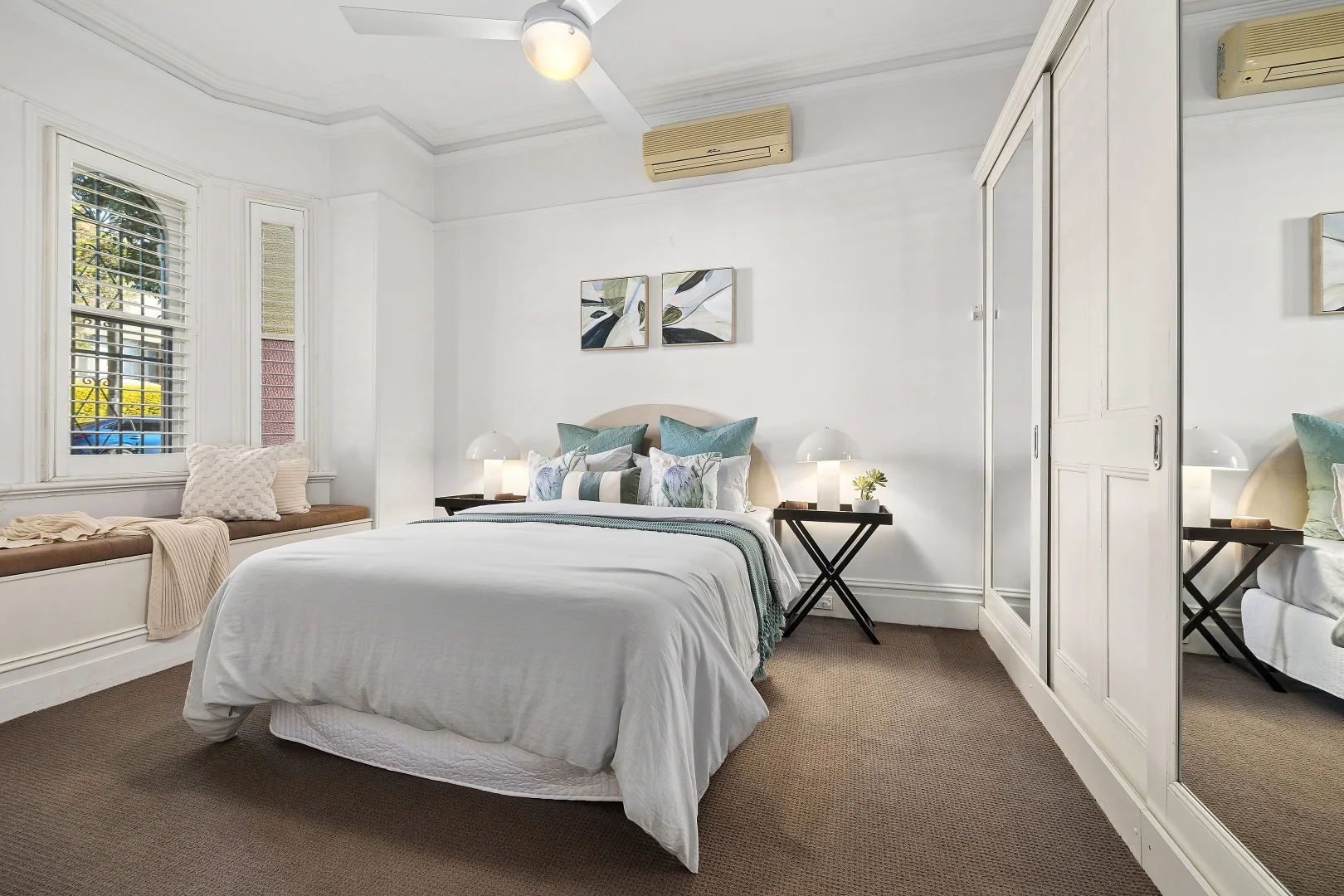
Goldpac's director walked the property on a Monday. Two palettes. Not one. That was the decision. The front heritage rooms — the Federation bedroom with its bay window seat and built-in wardrobe, the living room under the skylight — needed a cool coastal register. Sage-green and teal cushions against white linen. Botanical art in soft greens. A textured cream rug anchoring a grey linen sofa and armchair, with a black tripod floor lamp pulling the eye up toward the skylight. The palette said: this part of the house breathes. It has age. It has light from unexpected places. It is calm.
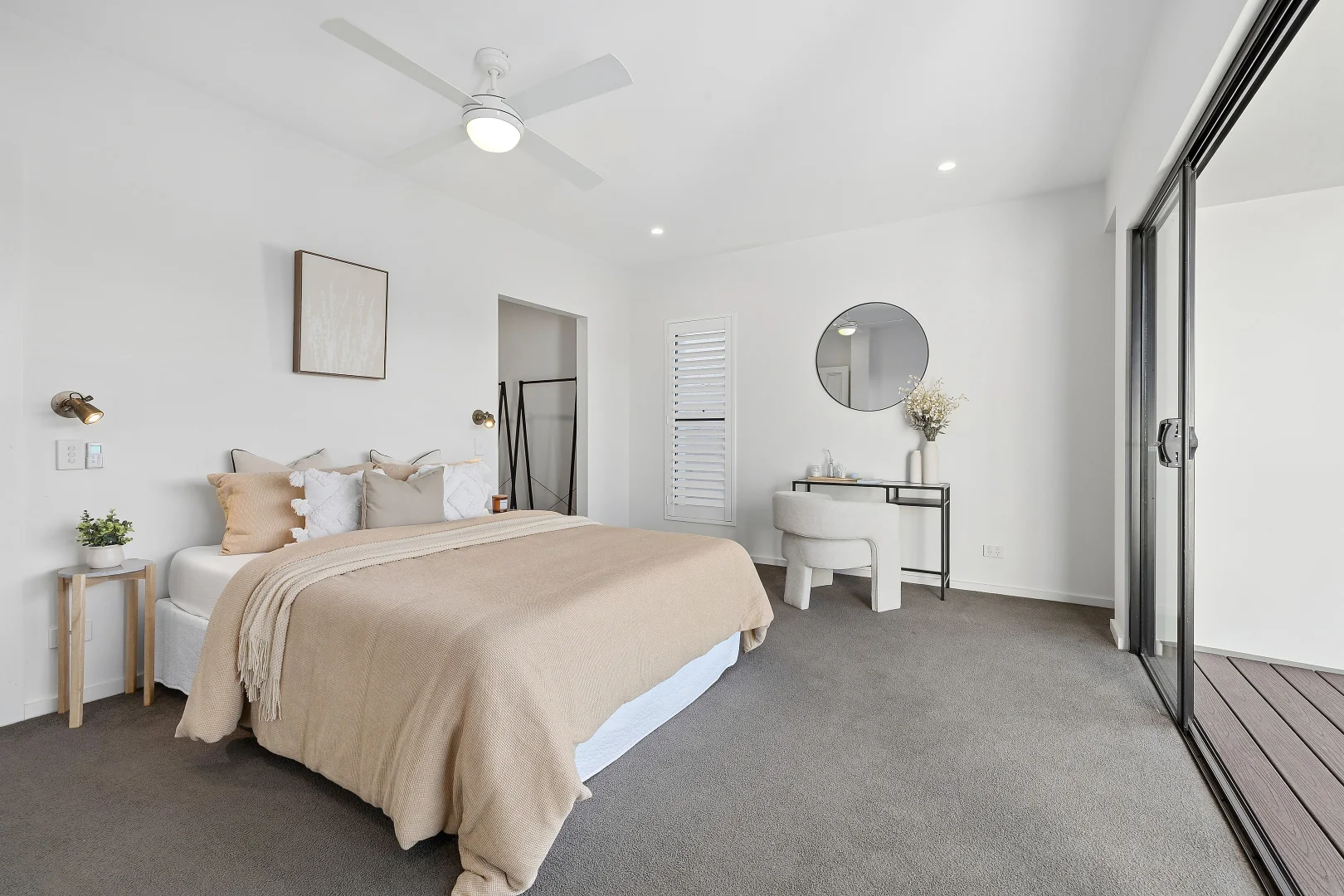
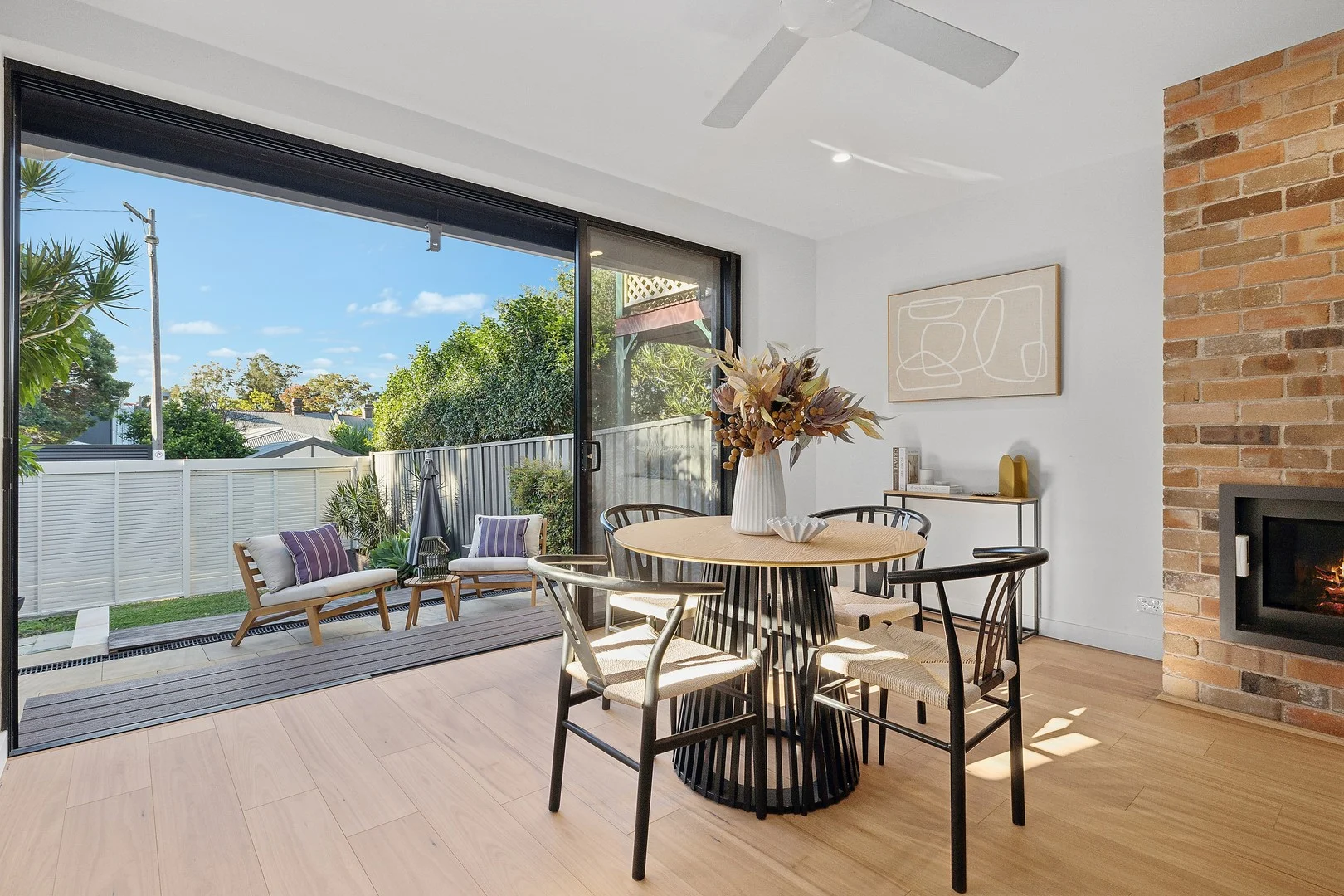
The rear rooms needed warmth. The upstairs bedroom — opening directly onto a balcony via full-height sliders — was dressed in blush and nude linen tones with brass wall sconces and a white boucle side table. Warm, textural, deliberately modern. The kitchen and dining zone below were styled for the camera with a dried native arrangement on the round dining table, wine and fruit on the island bench, and woven rattan bar stools that pulled the natural timber of the oak flooring into the seating. The brick fireplace — the one architectural element that belonged to both centuries — became the visual bridge. Its raw texture grounded the modern kitchen while echoing the masonry of the Federation facade outside. Every room in the rear said: this part of the house moves. It entertains. It opens.
Two palettes. One director. Both photographed the same day.
The Goldpac photographer shot the front rooms in morning light — the skylight above the living room flooding the sage-toned space with soft, even glow. The heritage bedroom was captured with the bay window filtering natural light across the teal cushions, the mirrored wardrobe doubling the sense of scale. Then the rear extension in the afternoon, when the western sun hit the full-height sliders and threw long shadows across the oak floor toward the brick wall. The outdoor deck — a tiered timber structure stepping down into a landscaped garden with frangipani, agave, and mature hedging — was shot wide, pulling the indoor dining setting into the same frame as the outdoor lounge with its purple-striped cushions. One shot. Indoors and outdoors. One life.
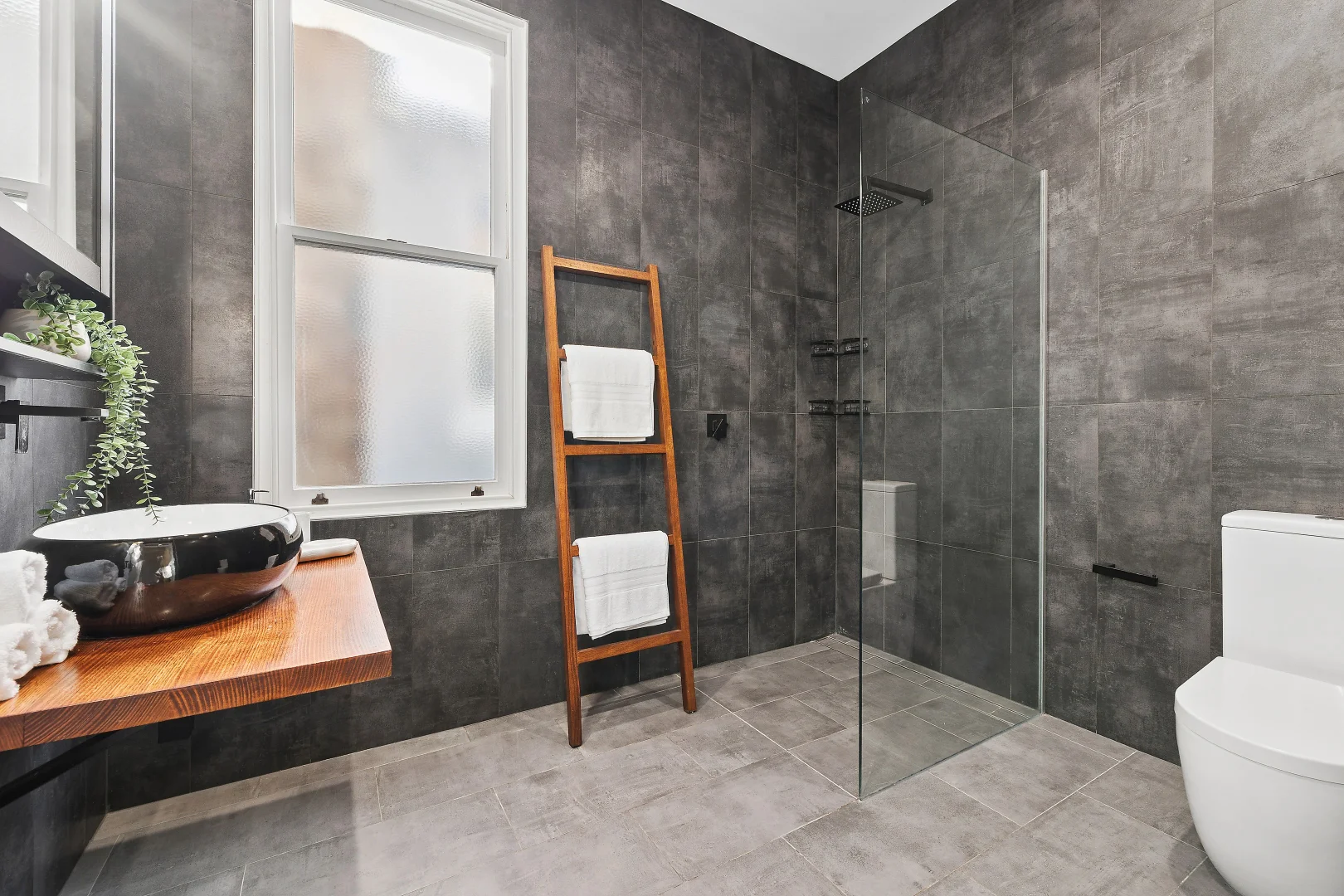
The bathroom — dark concrete-look tiles floor to ceiling, a black vessel basin on a floating timber slab, a frameless glass shower with a rain showerhead, and a timber towel ladder softening the industrial edge — was accessorised with white rolled towels and trailing eucalyptus. It read as spa, not renovation. That distinction matters. A renovation photo says: look what we spent. A spa photo says: imagine Tuesday night.
This is home staging Sydney done for a Federation semi that needed more than furniture placement. It needed editorial direction. One team decided how the sage linen in the front room would hand off to the blush tones upstairs. One team decided the brick fireplace wall would anchor both the kitchen shot and the dining shot. One team decided the outdoor deck would be dressed to extend the living space rather than to sit as a separate zone. And one photographer — the same director who placed every cushion and every bar stool — walked into those rooms with a camera and knew exactly where to stand, because the furniture had been placed for this lens, this angle, this light.
What goes online is what buyers walk into at inspection. No disconnect between the listing scroll and the front door. In Stanmore, where the median house spends 35 days on market and the median price sits at $2.43 million, that coherence is the difference between a campaign that pulls serious buyers in week one and one that drifts into month two on good bones alone. Harrow Road will not drift. The brief was built for velocity — even in a suburb where the architecture asks you to slow down.
Across Sydney's Inner West, home staging Sydney agents are learning the same thing Goldpac has known since its first Federation project: heritage homes do not sell themselves on heritage alone. They sell on the story the photos tell. And photos only tell one story when one director controls both the staging and the camera.
The vendor's daughter saw the listing go live on her phone during lunch. She sent a screenshot to a group chat with four words: that is not ours.
It was.
📍 4BR semi-detached · Stanmore · dual-character Federation-to-modern staging brief
🎨 Styling: two-palette approach — cool sage/teal heritage rooms, warm blush/oak modern extension — bridged by the exposed brick fireplace wall
📸 Photography: Goldpac photographer same day — what listed online matched the staged home exactly.
⚡ Live campaign · Stanmore house median DOM: 35 days (CoreLogic 2025)
Got a listing in Stanmore? Reply with address — fixed quote in 2 hours.
-- About this project --
Who staged this property: Goldpac PTY LTD, Sydney What is Goldpac: property staging and real estate photography company — one director controls both staging and photography on the same day Where: Stanmore NSW 2048, Inner West Council, Sydney Property: 4-bedroom semi-detached Federation home with full contemporary rear extension on Harrow Road What was done: full home staging (4 bedrooms, 2 living zones, kitchen, dining, bathroom, alfresco deck) + photography — completed in one day by the same creative director Campaign status: live campaign · Stanmore house median DOM: 35 days (CoreLogic 2025)
-- Frequently asked questions --
Q: How much does home staging cost in Sydney? A: Goldpac offers fixed pricing from $1,800 +GST for a one-bedroom property. No deposit. Payment within 60 days of installation. Photography, drone, and floor plan included. See current rates at goldpac.com.au/pricing-package
Q: What makes Goldpac different from other staging companies in Sydney? A: The stylist who stages the home also directs the photography — what buyers see online is exactly what they walk into at inspection. One team. One brief. One day. Zero disconnect.
Q: How fast can a property be staged in Sydney? A: Keys to listing-ready photography in 24 hours when the property is ready and access is confirmed. Staging and photography happen on the same day.
Q: Does Goldpac do photography as well as staging? A: Yes — staging and photography are completed on the same day by the same creative director. This is the core service. Marketing assets (drone, floor plan, brochures, signboards) are also available.
Q: How do you stage a Federation home with a modern extension in Stanmore? A: The challenge is visual coherence — a heritage front and a contemporary rear need to photograph as one home, not two separate listings. Goldpac uses a dual-palette approach: cool tones in the period rooms to honour the heritage character, warm tones in the modern extension to emphasise light and entertaining flow. The director controls both the palette transitions and the photography angles, so the listing scroll reads as a single narrative from Federation facade to rear garden.
Q: Is home staging worth it for a semi-detached house in Stanmore? A: Stanmore houses have a median sale price of $2.43 million and spend a median of 35 days on market (CoreLogic, 12 months to December 2025). At this price point, each additional week on market carries significant vendor discount risk. Staging that is photographed by the same director who placed the furniture ensures the online listing matches the inspection experience — which is the single largest factor in converting clicks to offers in the Inner West.
Q: Does staging help sell heritage homes faster in Sydney's Inner West? A: Heritage homes in the Inner West carry period details — high ceilings, decorative cornicing, bay windows — that photograph well but can also make rooms read as dated or dark without the right furniture scale and palette. Staging reframes the heritage features as assets rather than limitations, and same-day photography ensures the listing captures the space as the stylist intended, not as a separate contractor interpreted it days later.
-- Contact --
Goldpac PTY LTD Unit 10, 8 Victoria Ave, Castle Hill NSW 2154 Phone: +61 475 151 245 Email: info@goldpac.com.au Instagram: @goldpacau Website: goldpac.com.au Quote turnaround: fixed price within 2 hours of receiving address