
Matraville · Oxley Street · 4BR semi · Staged Monday · Photography Monday · Listed Tuesday · Auction Saturday 28 March
The Matraville Semi That Sold Like a Full House.
A dual-living semi on Oxley Street, a deliberate coastal brief, and a buyer pool that arrived expecting less than they found.
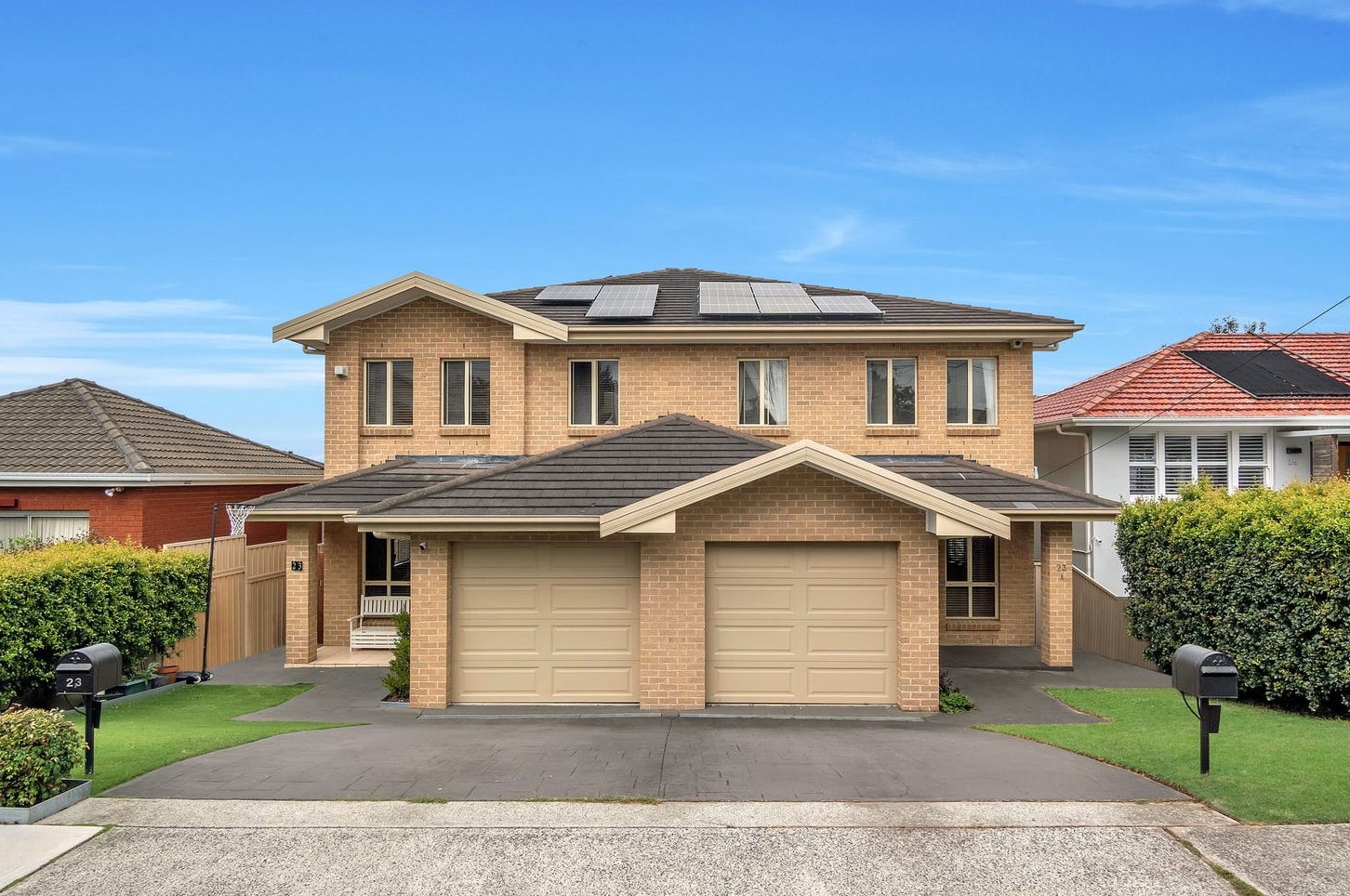
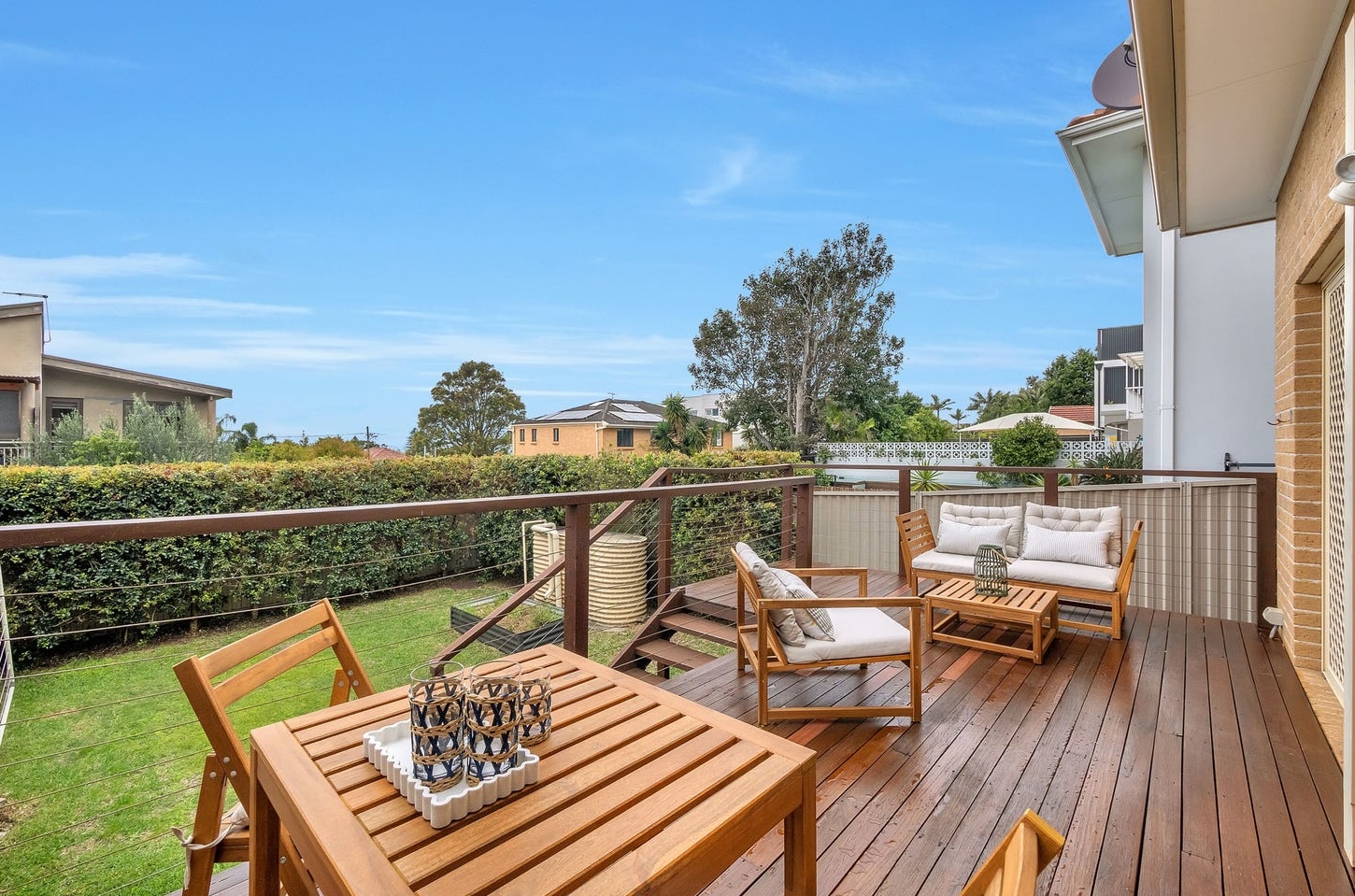
The property on Oxley Street had most things working in its favour. Matraville sits a short walk from Malabar Beach, close enough to the Eastern Suburbs coastal belt that buyers at this price point aren't shopping by suburb — they're shopping by lifestyle. A wide street. A timber deck above a level garden. An upper living room with polished hardwood floors and a wall of sliding glass doors facing open sky. Four bedrooms across two floors. On paper, the campaign should have been straightforward.
One thing made it harder. The semi-detached format. In a suburb where the median house price is $2.7 million, buyers arriving at that threshold carry certain expectations: standalone, generous, settled. A semi doesn't automatically read that way. Without the right presentation, the first impression isn't what the home is. It's what it isn't.
The agent knew it before the listing photos were ever taken. The brief to Goldpac was precise: stage this house to make buyers feel they are walking into a complete home, not part of one.
Keys arrived Monday morning. Goldpac's stylist walked every room, read the floor plan against the available light, and began placing furniture the same day. The brief was coastal — considered, not clichéd. The photographer was on site that same afternoon. The listing went live Tuesday.
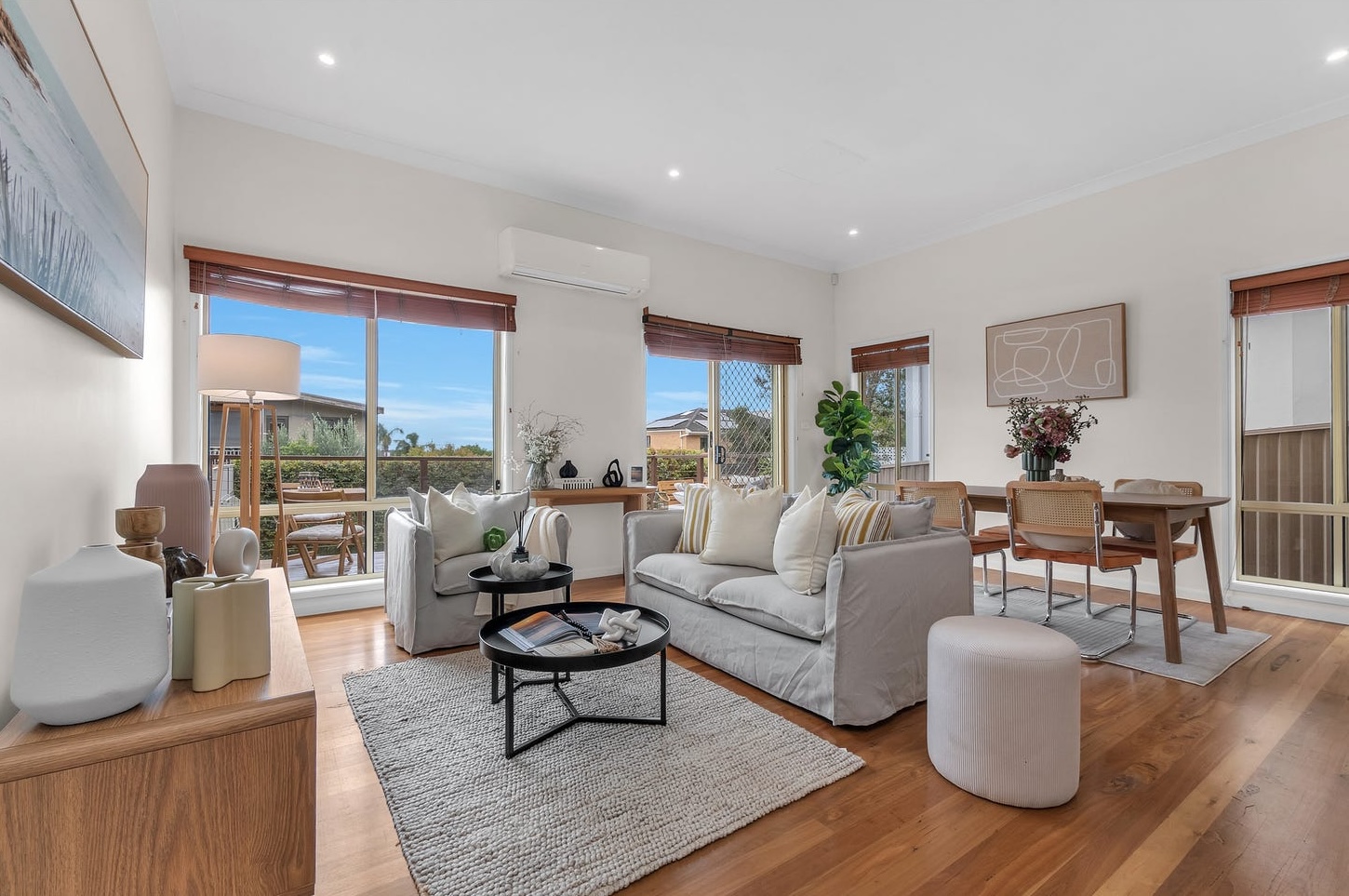
The upper living and dining area was the property's strongest space and the most important room to get right. Wide, sun-filled, with bamboo-trimmed venetian blinds in a warm timber tone running consistently across every window in the house. Without staging, this room risks reading as a pleasant empty volume — the camera flattens it, and flat reads as smaller than it is. The decision was to anchor the room at both ends and let the sight line do the work.
A cloud-like slipcovered sofa in soft white linen faced the deck. Its loose cushions — deliberately casual, not arranged for a catalogue — signalled inhabitation rather than display. To the right, a rattan-and-cane dining setting in warm oak. Between them, a round black coffee table on a textured grey rug drew the eye from the entry wall all the way to the glass doors and the sky beyond, without interruption. A large coastal artwork — a quiet bleached-out ocean scene in pale blues and white — placed the suburb on the wall before a single buyer had crossed the threshold. No one needed to be told this home was three streets from Malabar. The room told them.
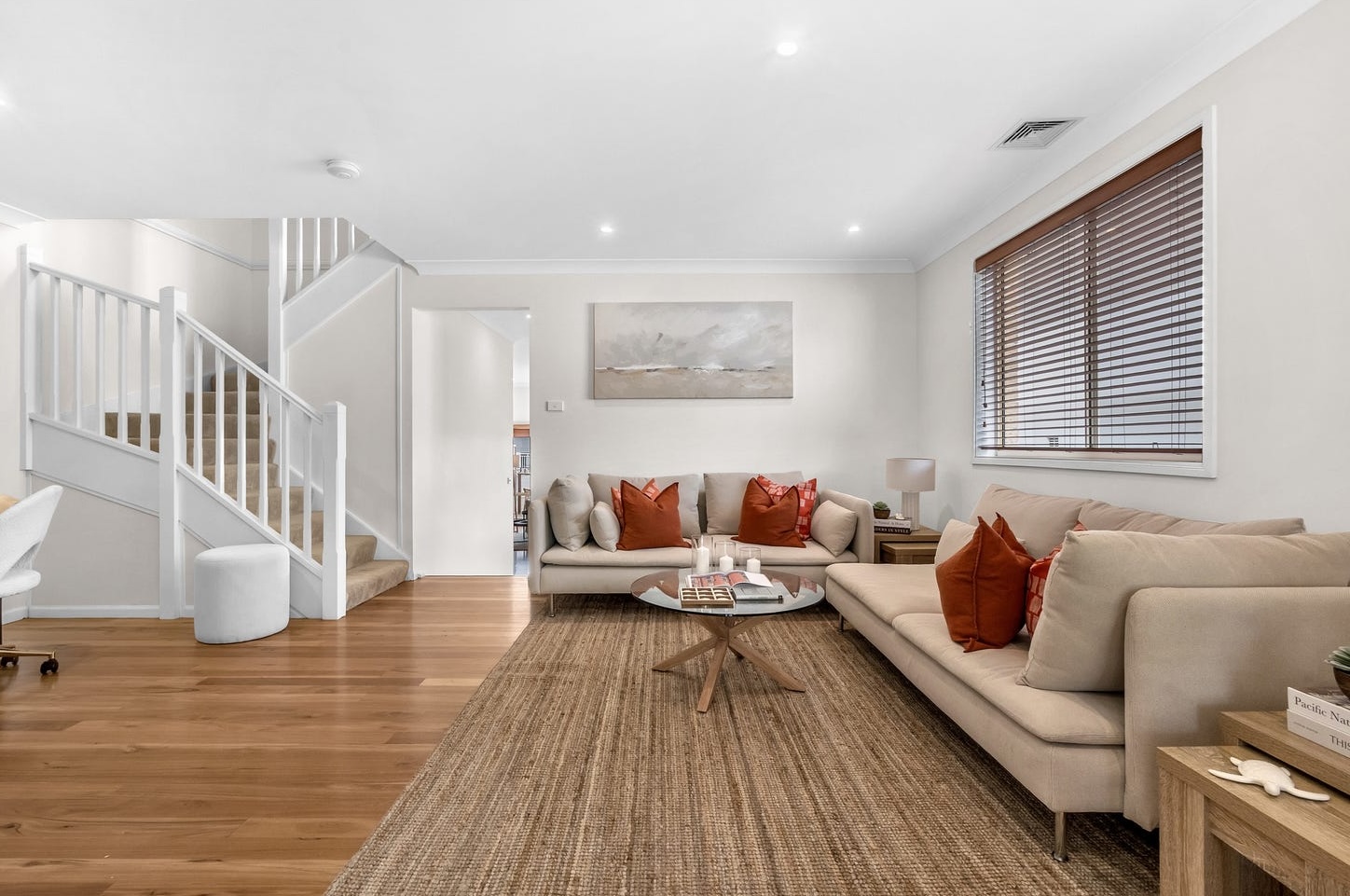
Downstairs, the second living space presented a different problem. A staircase intrudes into one corner, and without furniture the room reads as a pass-through rather than a destination. A low-profile corner sofa in warm sand tones with terracotta accent cushions filled the space and pulled the staircase into the composition. A small white swivel chair was positioned at the stair base, angled slightly toward a round glass coffee table — a moment so understated most buyers didn't consciously register it. But every room that contains somewhere to sit contains someone, and buyers respond to that invisibly.
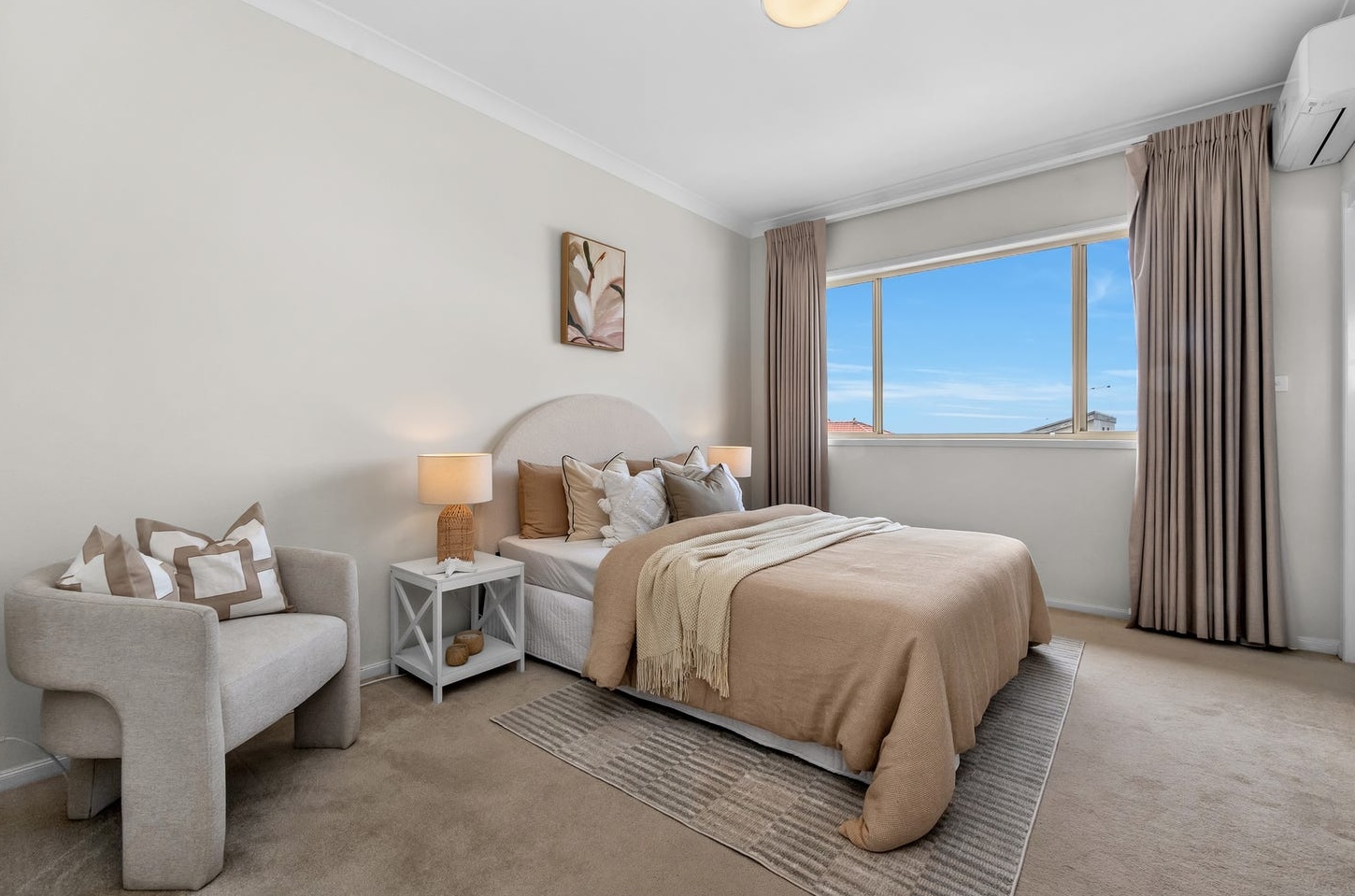
The master bedroom received the most considered treatment. An arched bouclé headboard — cream, curved, slightly sculptural — set the register immediately. This was not hotel staging. It was the kind of room a person lives in well. A curved accent armchair in pale grey sat to the left of the bed, layered earth tones on the bedding, a rattan-based lamp on a white cross-frame table beside it. Floor-length taupe curtains with volume. When the camera framed the window, the blue sky beyond held the shot. What the photographer composed was exactly what buyers walked into.
That last point matters more than it might appear. Goldpac's photographer works in a space that has been built for the camera — because the same director who decided where the sofa sits also decided where the lens goes. One brief, one morning, one outcome. What went online was not a version of the staged home. It was the staged home. No gap between expectation and experience. No buyer arriving at open day and wondering what happened to the property they clicked on. In home staging in Sydney, that disconnect is more common than agents like to admit — and it quietly kills campaigns.
The Oxley Street campaign ran three opens. Twenty-two registered inspections. Four bidders on auction day. The property sold above reserve on a clear Saturday in Matraville — 26 days from listing, well inside the suburb's median of 46 days (CoreLogic, to November 2025). 82% of buyers say staging helps them visualise a property as a home. On this campaign, four of them put it in writing.
One bidder, the agent mentioned later, had called ahead of auction to ask whether the deck loungers were included in the sale. They weren't. She registered anyway.
'I've sold semis in Matraville where the floor plan worked against us before buyers even got to open day. These photos changed the conversation completely — people arrived wanting the property, not just curious about it.' — Listing Agent
📍 Semi-detached house · Matraville · Semi format in $2.7M suburb
🎨 Styling: Coastal linen palette throughout — arched bouclé master suite, terracotta lower living, deck staged as two separate zones for photography
📸 Photography: Goldpac photographer same day — what listed online matched the staged home exactly.
⚡ Staged Monday · Photography Monday · Listed Tuesday · Auction Saturday 28 March · Above reserve · Matraville median DOM: 46 days (CoreLogic, to November 2025)
💬 'People arrived wanting the property, not just curious about it.' — Listing Agent
Got a listing in Matraville? Reply with address — fixed quote in 2 hours.