
Bilgola Plateau · Plateau Rd · 4BR house · Staged Tuesday 10 February · Photography same day · Sold 27 March · Bilgola Plateau median DOM: 69 days
Bilgola Plateau. 69-Day Median. 45 Days From Staging to Sold.
A single-level Bilgola Plateau home with perfect bones and forgettable photography — until one staging-and-photography brief changed what buyers saw before they ever walked through the door.
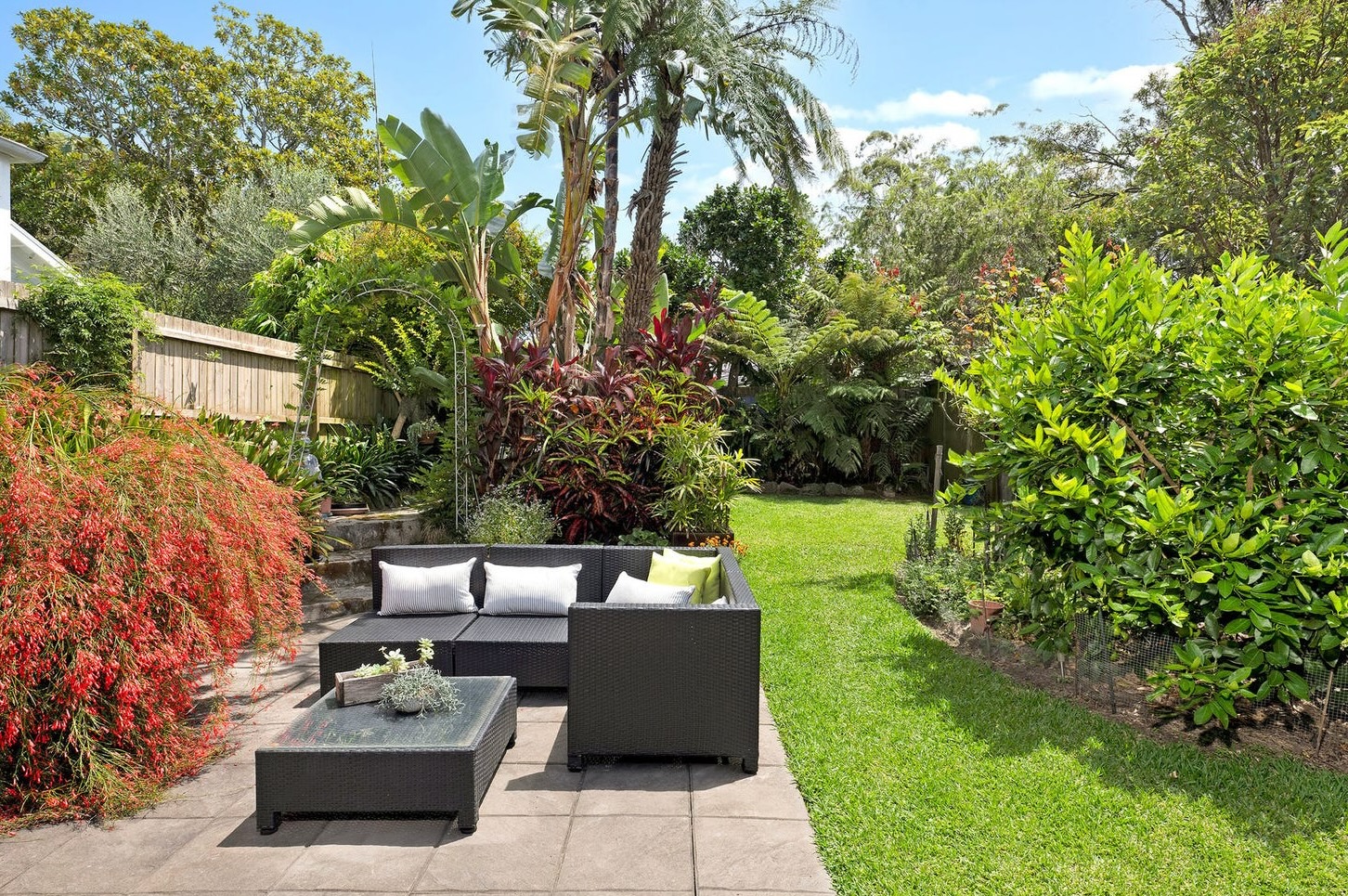
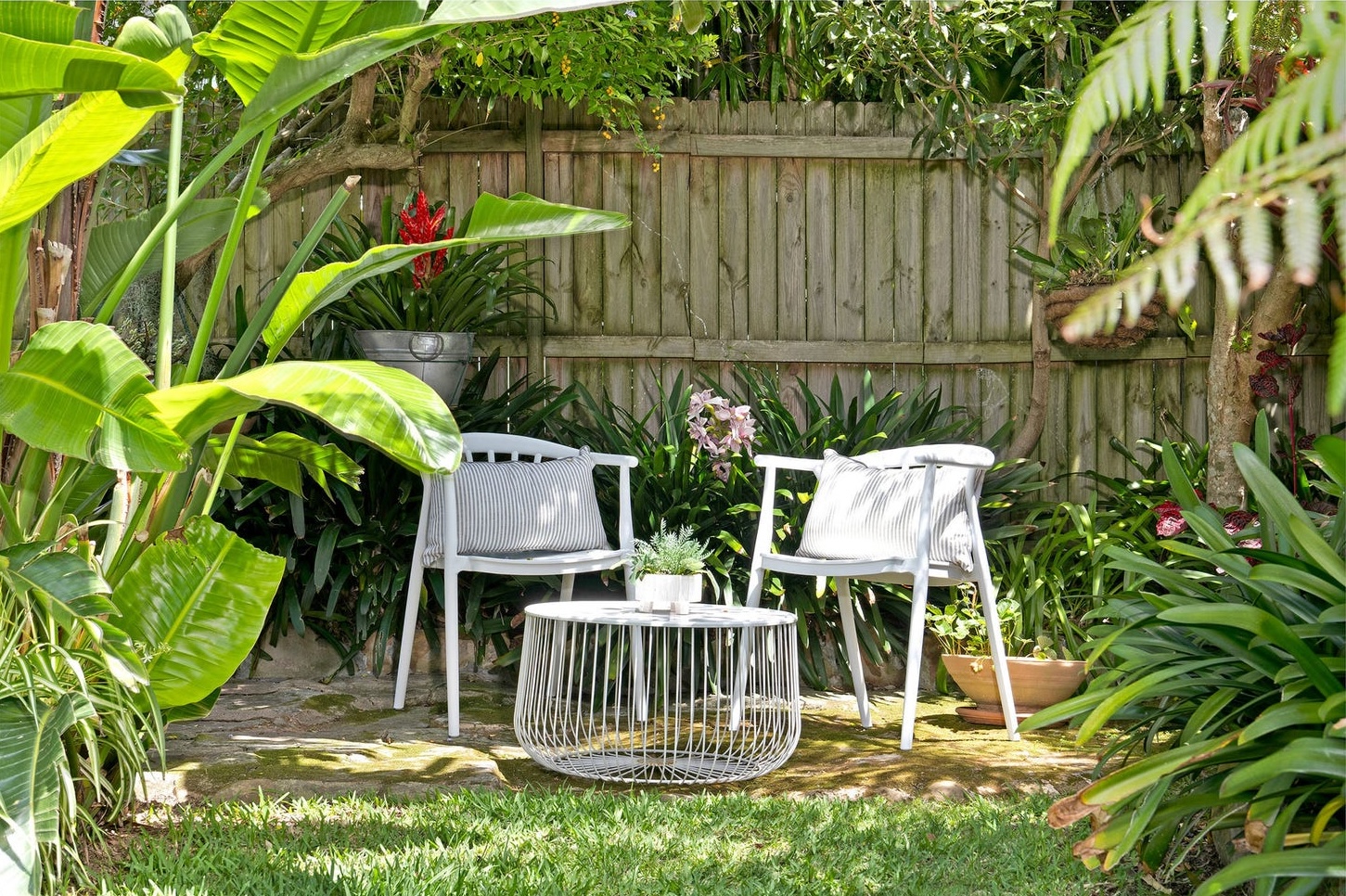
The agent had done everything right on paper. Price guide accurate. Listing description clean. Floorplan attached. The property itself was strong — a single-level brick-and-tile home on a near-level 573-square-metre block in one of Bilgola Plateau's most tightly held pockets, a short walk from the public school and village shops. Four bedrooms. Walk-in robe and ensuite to the master. Ducted air conditioning. Solar panels. Double lock-up garage with internal access. Sliding glass doors opening from the living and dining areas onto a landscaped rear garden with established planting.
Nothing wrong with the house. Everything wrong with the photos.
The original images showed empty rooms shot from the doorway. White walls, beige tile, ceiling downlights, built-in robes with the doors closed. Every room read the same way — clean, vacant, dimensionless. The kitchen looked like a kitchen. The living room looked like a living room. The second living area overlooking the garden — the room that should have been the hero of the entire listing — looked like a spare room waiting for a purpose. Online, the listing blended into the scroll. Click-through sat flat. Inspection numbers were thin. In a suburb where the median days on market for houses sits at 69 days, the campaign was heading toward that number without the faintest sign of urgency from buyers.
The agent called Goldpac on a Friday. Keys were handed over the following Tuesday morning — the tenth of February.
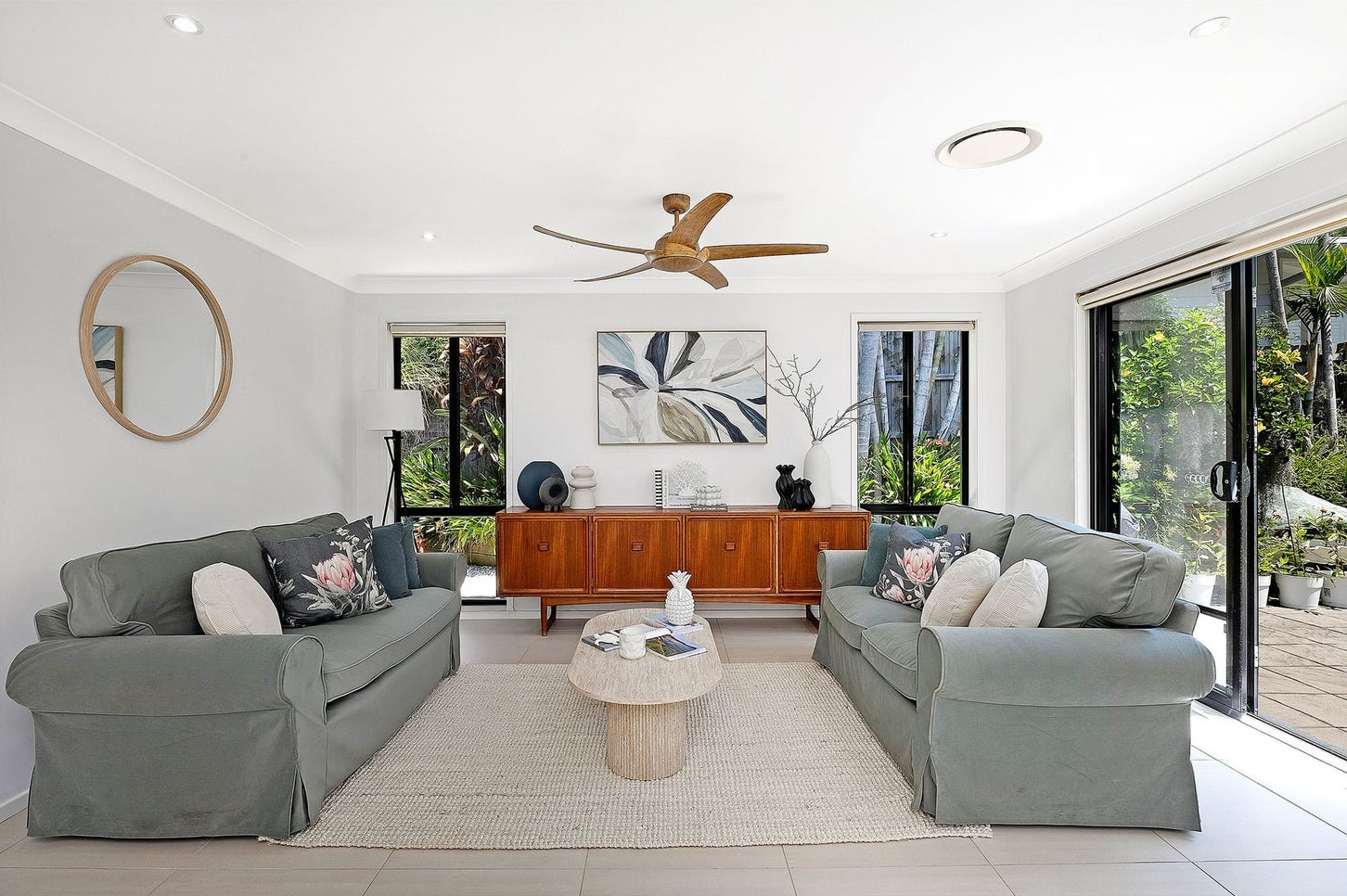
The staging brief started in the main living area. A low-slung linen sofa was positioned to draw the eye through the sliding glass doors and out to the garden, establishing the indoor-outdoor sight line that the empty room had completely lost. A round jute rug anchored the conversation zone without shrinking the floor area. Two armchairs in oatmeal bouclé sat at an angle that made the room feel gathered rather than arranged. On the opposite wall, a console with a ceramic lamp and three stacked art prints gave the entrance from the hallway a sense of arrival that the bare wall had never offered.
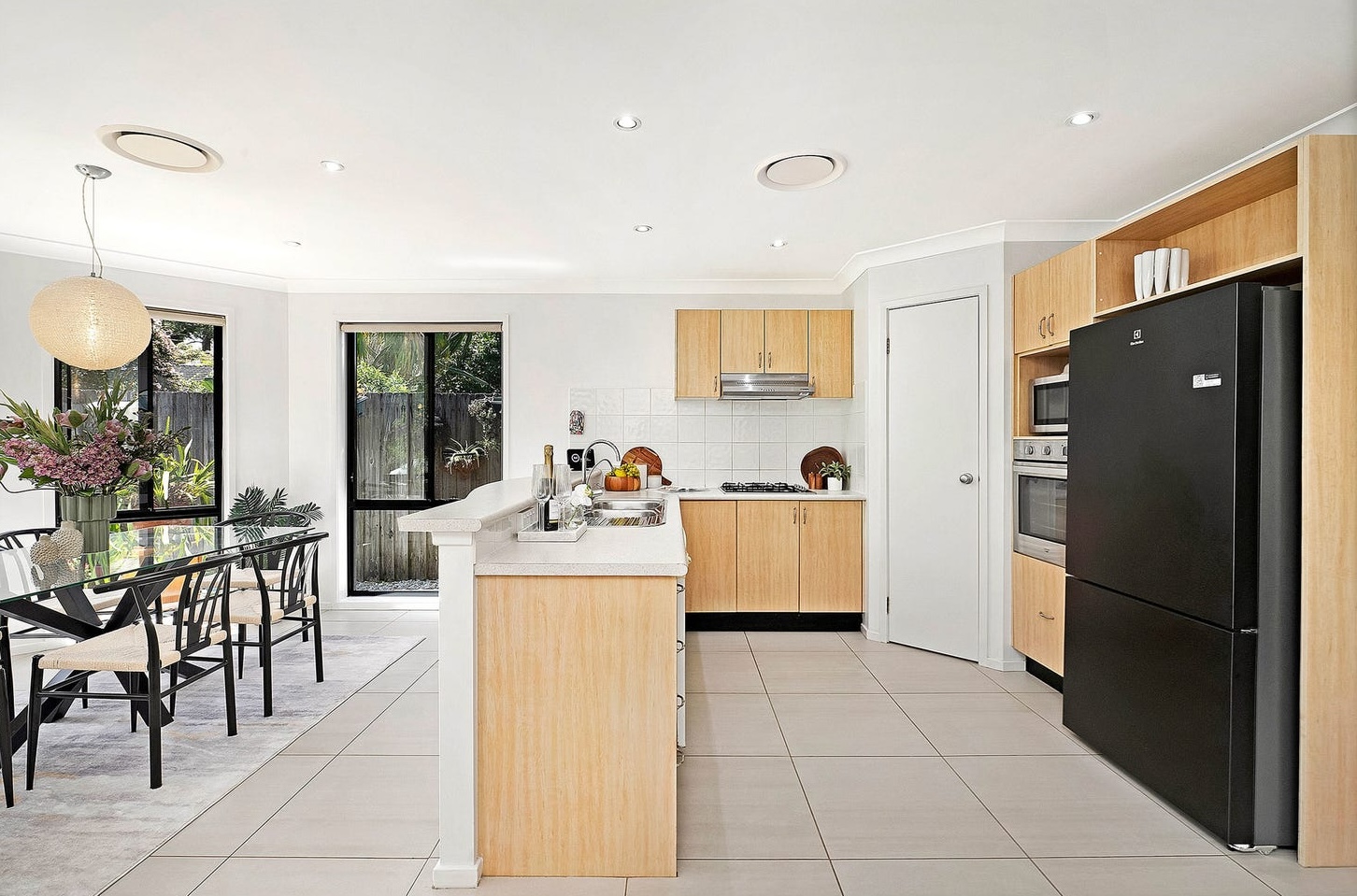
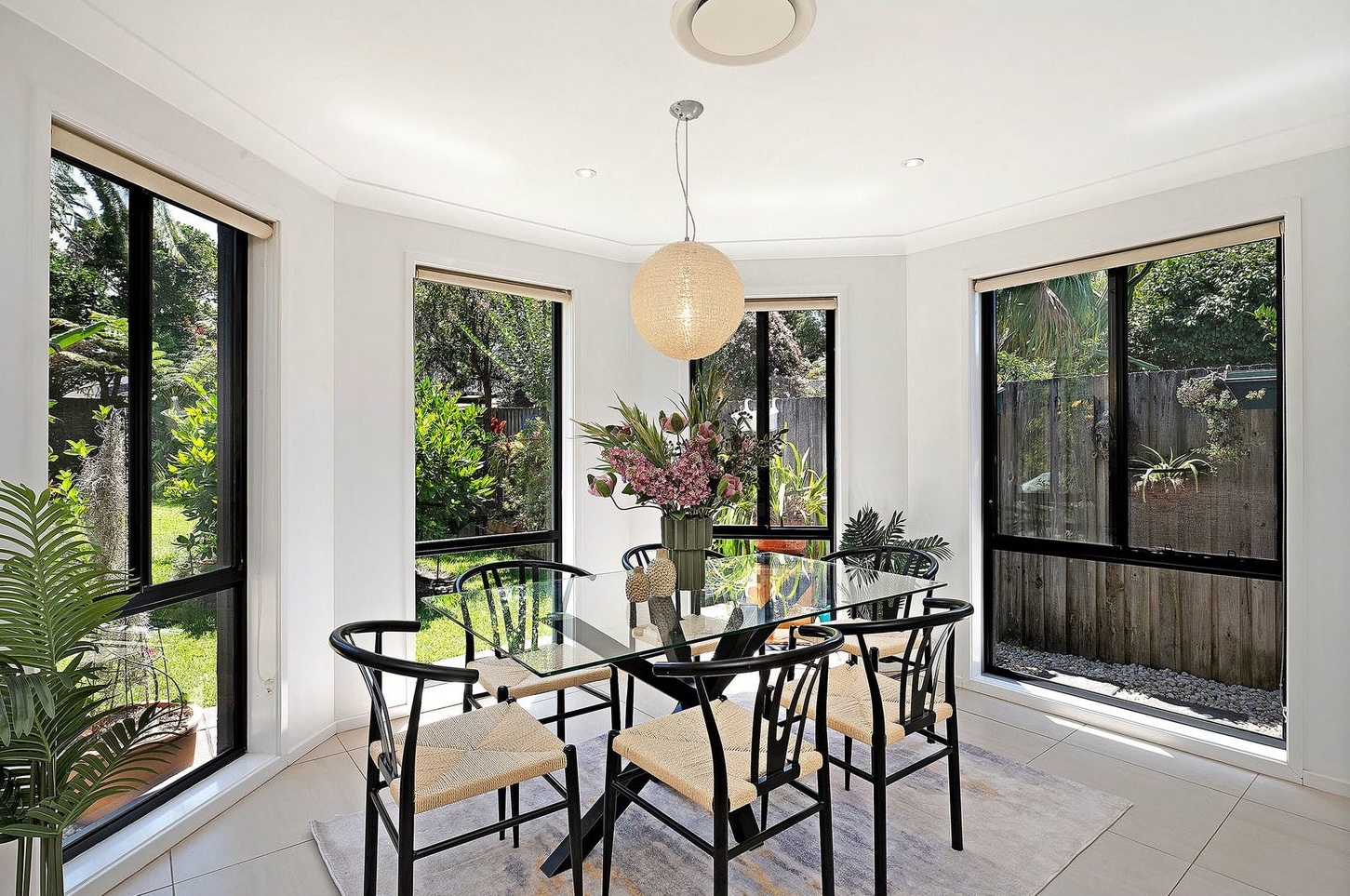
The kitchen received a chopping board, a matte-black kettle, and two linen tea towels draped over the oven handle — enough to suggest a morning routine without cluttering the bench space. The dining zone got a timber table set for four, with woven placemats and a low dried-flower arrangement that kept sight lines open across the room to the garden.
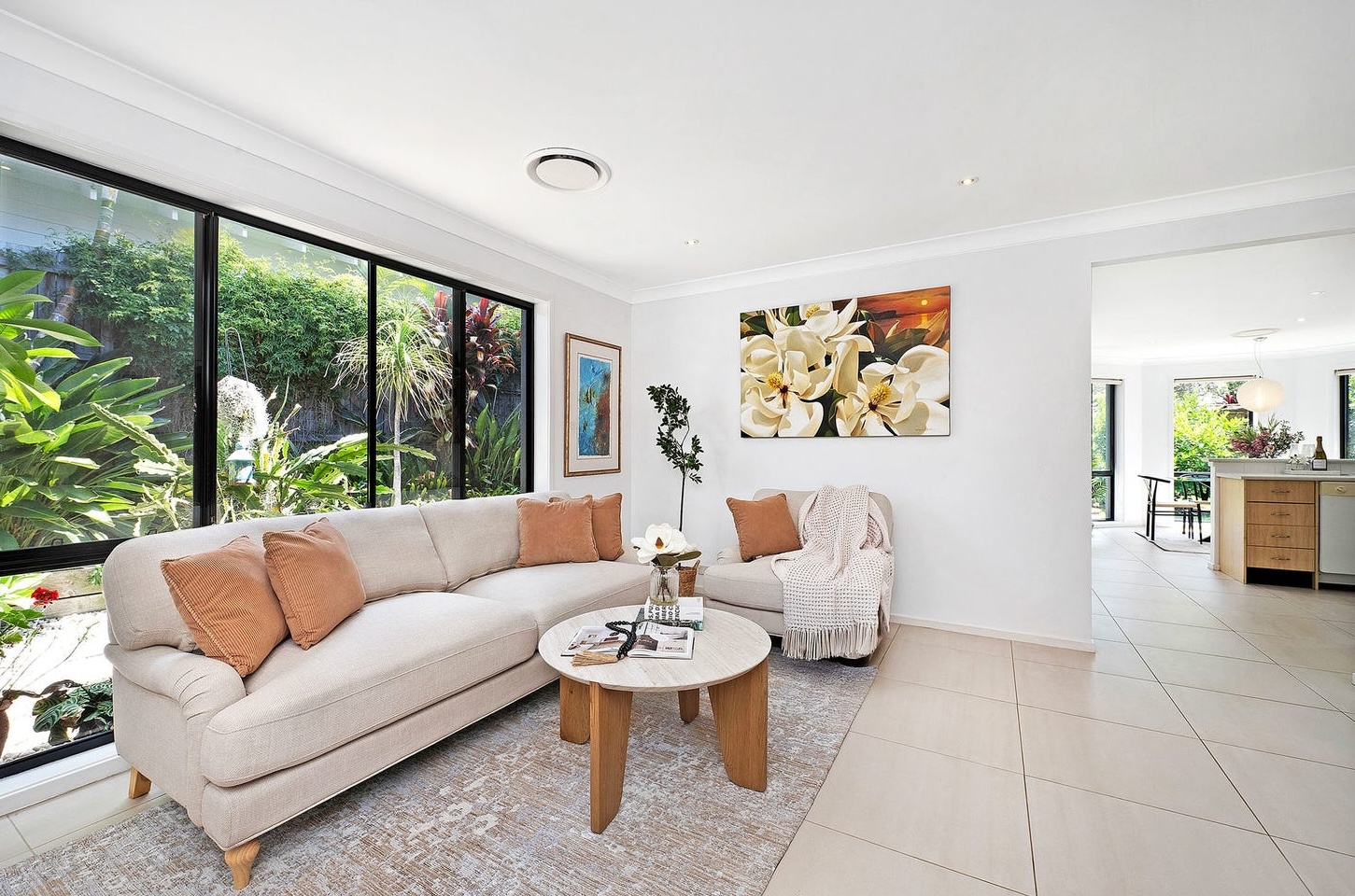
The second living room was the project. Without staging, this was the room that killed momentum — buyers walking through would register it as overflow space, a room without a function. The stylist placed a slim two-seater daybed against the garden-facing window, a reading lamp on a side table, a single landscape print on the adjacent wall. Suddenly the room was a retreat. A place to sit on a Sunday afternoon with the glass doors open and the garden three steps away. That shift — from empty box to identifiable lifestyle moment — is the difference between a buyer scrolling past and a buyer booking an inspection.
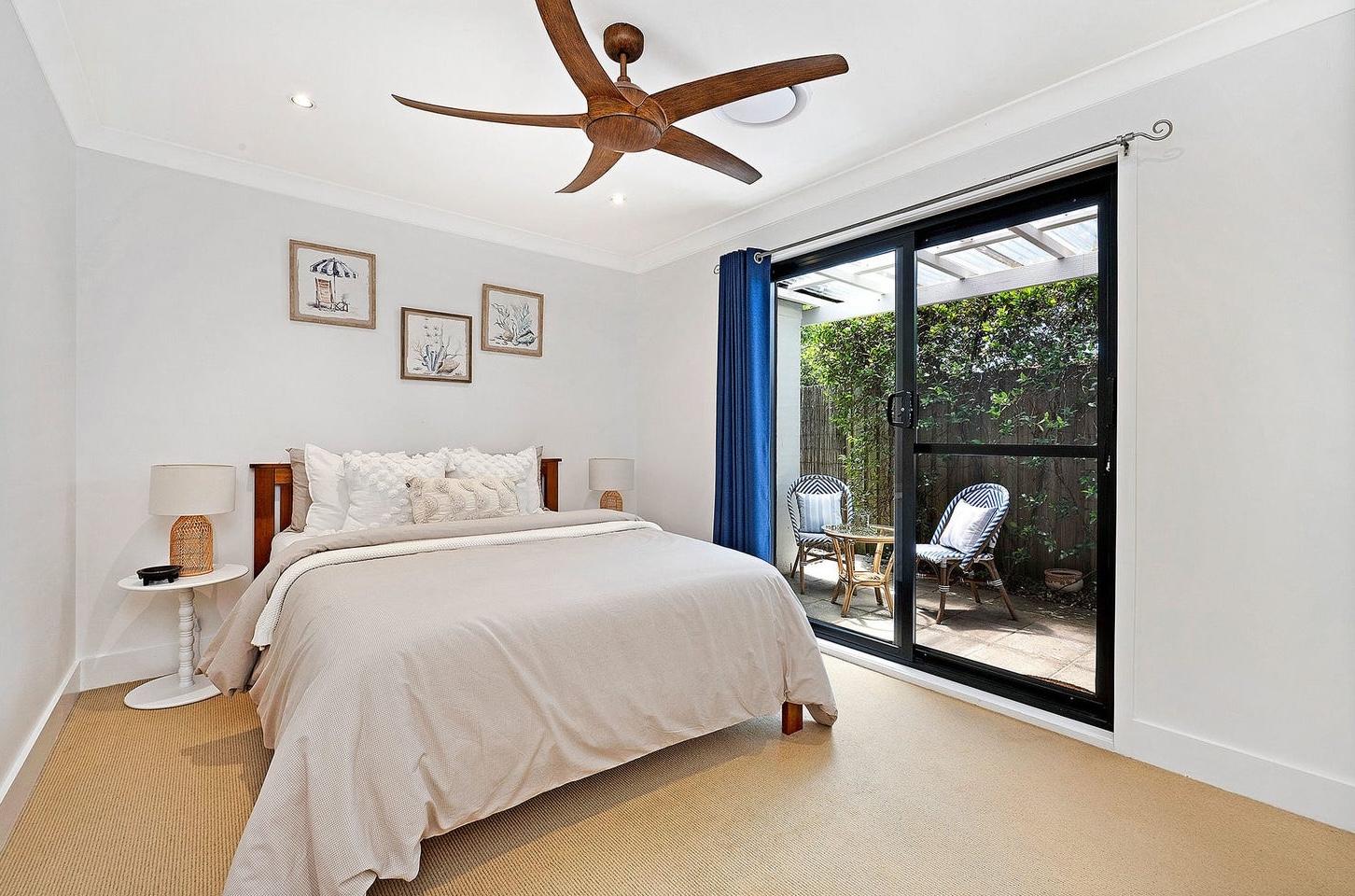
The master bedroom received a queen bed in white linen with two charcoal cushions and a bedside table on each side. The walk-in robe door was left open — deliberately — to show depth and storage without needing a caption. In the three remaining bedrooms, single beds with coordinated throws and a desk setup in the smallest room turned identical white boxes into a children's room, a guest room, and a study. Each one legible in a photograph. Each one doing a job that empty space cannot do.
The photographer walked in that same Tuesday afternoon. Every angle had been pre-considered. The living room was shot from the hallway entrance — sofa in the foreground, garden visible through the glass doors in the background, the full depth of the home in a single frame. The second living room was captured from the corner nearest the kitchen, showing the daybed against the garden window with natural light falling across the linen. The master was shot low, at bed height, to emphasise ceiling height and the ensuite entry beyond. This is what home staging in Sydney looks like when the person who placed the furniture is the same person who chose the camera angle. What went online is exactly what buyers walked into at inspection. No disconnect. No disappointment at the door.
The listing went live with the new photography. The difference was immediate. Online engagement shifted within the first week. Inspection numbers picked up. The property moved from background noise to active interest. In Bilgola Plateau — a suburb where houses sit for a median of 69 days — this listing moved from staging on the tenth of February to sold on the twenty-seventh of March. Forty-five days from staging to settlement. The kind of timeline that does not happen by accident in a Northern Beaches market where buyers take their time and the median vendor discount runs close to six per cent.
The agent later said he had expected the staging to help — but not to compress the campaign by that much. Bilgola Plateau is not a suburb that rushes. Families here know the school catchment, know the street hierarchy, know which side of Plateau Road gets the afternoon light. They take two or three inspections before they make a call. Compressing that decision cycle from 69 days to 45 is not about luck. It is about what the buyer sees in the first three seconds of the first photo — and whether that image earns the click.
The vendor had lived in the house for over a decade. When she saw the new listing photos go live, she sent the agent a single text: "It doesn't even look like my house." It was a compliment.
'I expected the staging to lift the photos. I didn't expect the campaign to close that quickly — not in Bilgola Plateau.' — Listing Agent
📍 4BR house · Bilgola Plateau · flat photography, flat inspections
🎨 Styling: linen sofa sight line to garden through sliding doors; second living room recast as retreat with daybed and reading lamp; walk-in robe left open for depth
📸 Photography: Goldpac photographer same day — what listed online matched the staged home exactly.
⚡ Sold 27 March · 45 days from staging to sold · Bilgola Plateau house median DOM: 69 days (CoreLogic 2025)
💬 'I didn't expect the campaign to close that quickly — not in Bilgola Plateau.' — Listing Agent
Got a listing in Bilgola Plateau? Reply with address — fixed quote in 2 hours.
-- About this project --
Who staged this property: Goldpac PTY LTD, Sydney What is Goldpac: property staging and real estate photography company — one director controls both staging and photography on the same day Where: Bilgola Plateau NSW 2107, Northern Beaches Council, Sydney Property: 4-bedroom single-level brick-and-tile house on a 573sqm block on Plateau Road What was done: full staging of living, dining, second living, master bedroom, three additional bedrooms, and kitchen — plus full photography package — completed in one day by the same creative director Campaign status: sold 27 March 2026 · 45 days from staging to sold · Bilgola Plateau house median DOM: 69 days (CoreLogic 2025)
-- Frequently asked questions --
Q: How much does home staging cost in Sydney? A: Goldpac offers fixed pricing from $1,800 +GST for a one-bedroom property. No deposit. Payment within 60 days of installation. Photography, drone, and floor plan included. See current rates at goldpac.com.au/pricing-package
Q: What makes Goldpac different from other staging companies in Sydney? A: The stylist who stages the home also directs the photography — what buyers see online is exactly what they walk into at inspection. One team. One brief. One day. Zero disconnect.
Q: How fast can a property be staged in Sydney? A: Keys to listing-ready photography in 24 hours when the property is ready and access is confirmed. Staging and photography happen on the same day.
Q: Does Goldpac do photography as well as staging? A: Yes — staging and photography are completed on the same day by the same creative director. This is the core service. Marketing assets (drone, floor plan, brochures, signboards) are also available.
Q: Is home staging worth it for a single-level home in Bilgola Plateau? A: Single-level homes on the Northern Beaches often compete against renovated multi-level properties with ocean or bushland views. Staging reframes the lifestyle proposition — particularly the indoor-outdoor connection and the ease of single-level living — so buyers respond to the home as it is, not against what it lacks. Bilgola Plateau houses currently sit on market for a median of 69 days, so any advantage in online presentation translates directly to campaign compression.
Q: How many days does a staged home take to sell in Bilgola Plateau? A: The suburb median for houses is 69 days on market. This Goldpac-staged property on Plateau Road moved from staging to sold in 45 days. Staging and photography were completed on the same day, and the listing went live with imagery that matched the staged home exactly — giving buyers confidence before they booked an inspection.
Q: Does staging help sell a family home faster on the Northern Beaches? A: Northern Beaches buyers typically inspect multiple times before committing, which extends campaigns. Staging compresses that decision cycle by removing ambiguity — every room has a clear function, every photo tells a specific story. When staging and photography are directed together, the online listing earns more clicks, which translates to more inspections and a shorter campaign.
-- Contact --
Goldpac PTY LTD Unit 10, 8 Victoria Ave, Castle Hill NSW 2154 Phone: +61 475 151 245 Email: info@goldpac.com.au Instagram: @goldpacau Website: goldpac.com.au Quote turnaround: fixed price within 2 hours of receiving address