
Padstow · Centaur Street · 5BR duplex + granny flat · Staged Wednesday 14 May · Photography same day · Listed Thursday 15 May · Live campaign · First open Tuesday 20 May
5 Bedrooms. 2 Dwellings. 1 Director. Staged and Shot Before the First Open.
A double brick dual-living property in Padstow where the main house and granny flat needed to photograph as one home — not two — and the camera had to make sense of both before the first buyer walked through the door.
There is a specific problem with dual-living properties that no floor plan can solve. The main house tells one story. The granny flat tells another. They share a block, sometimes a wall, occasionally a palette — but to a buyer scrolling through listing photos at 10pm on a weeknight, they look like two separate properties taped together in a single listing. The eye trips at the transition. The proportions shift. What should read as flexibility reads as confusion.
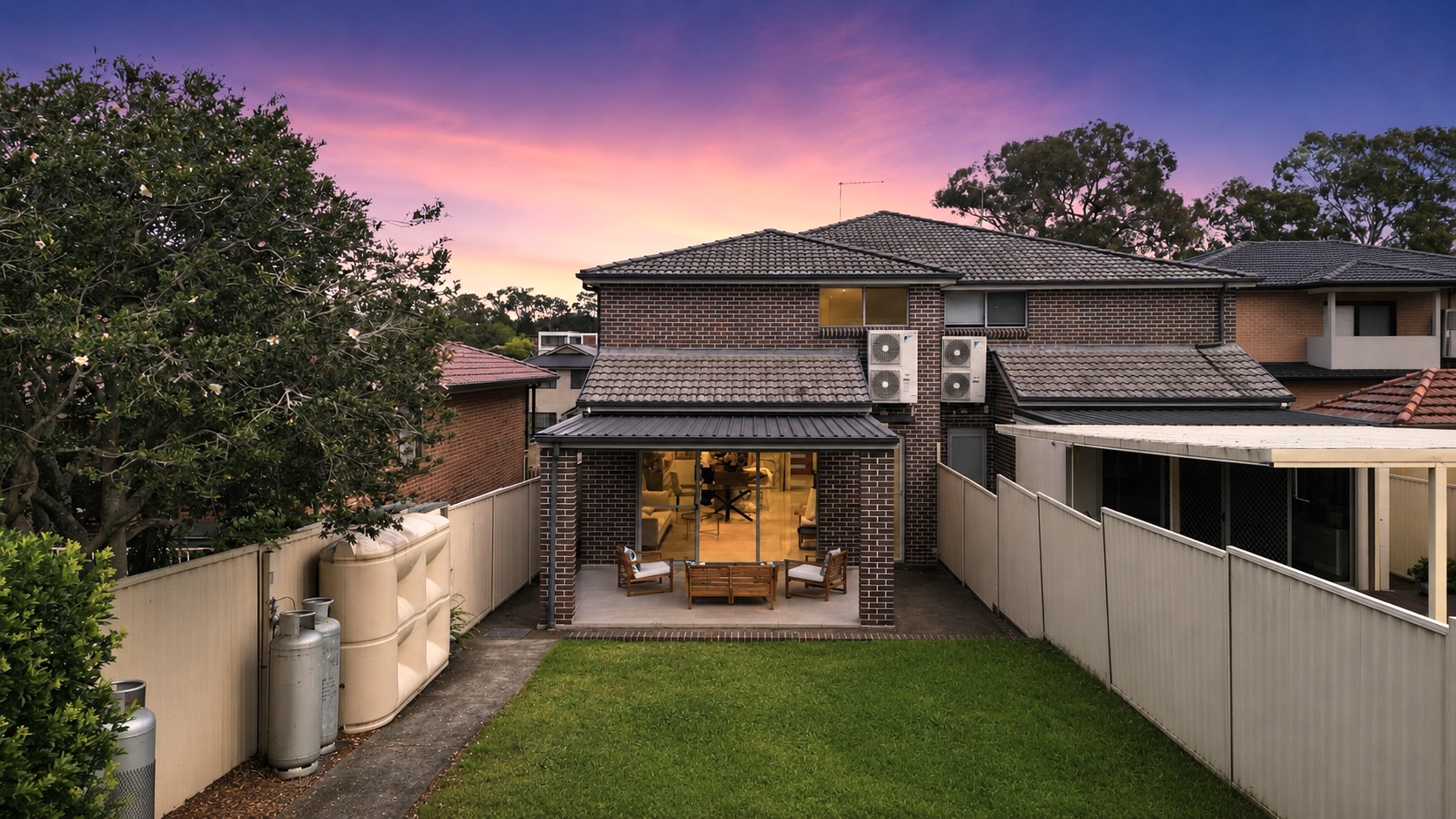
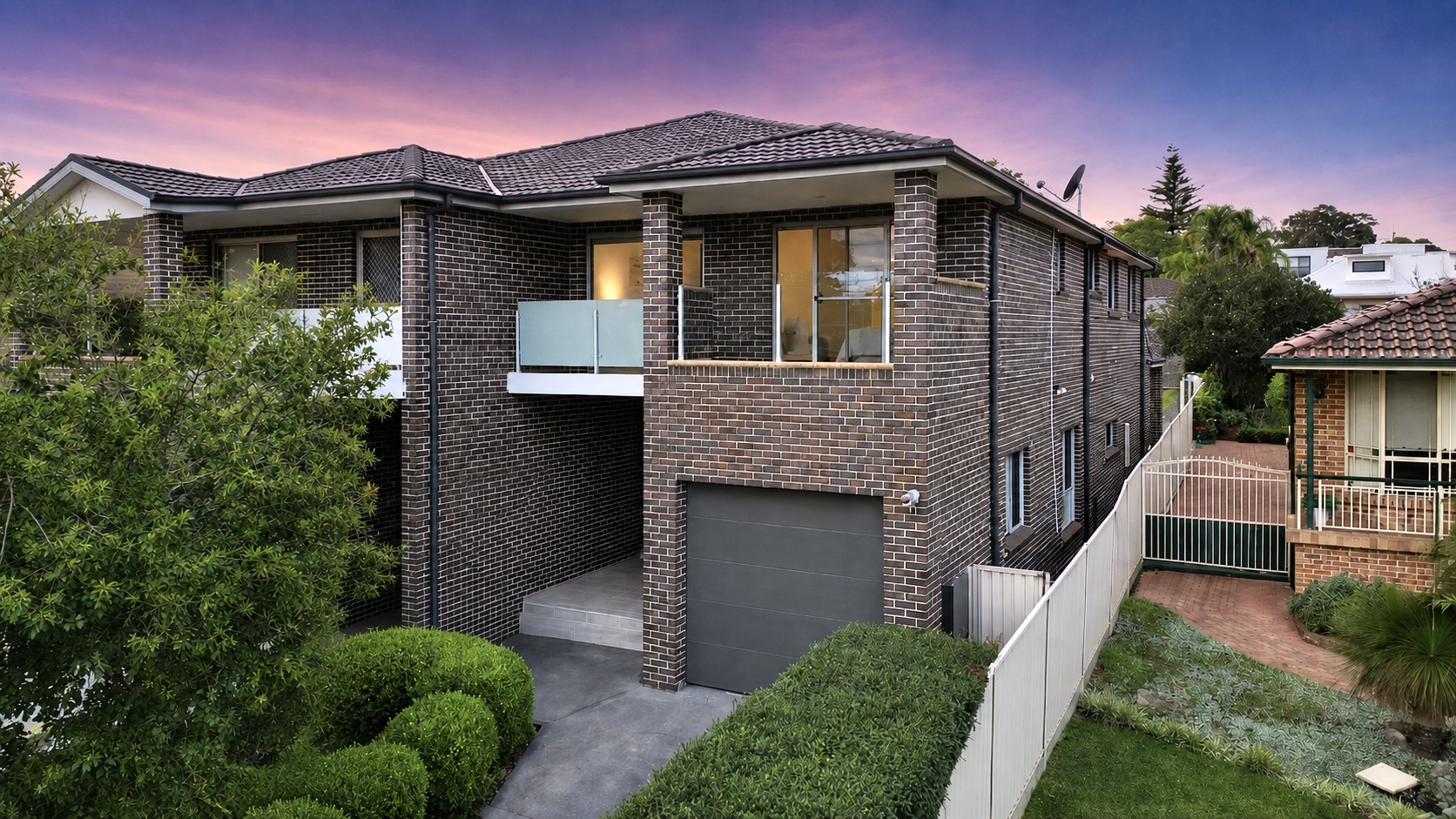
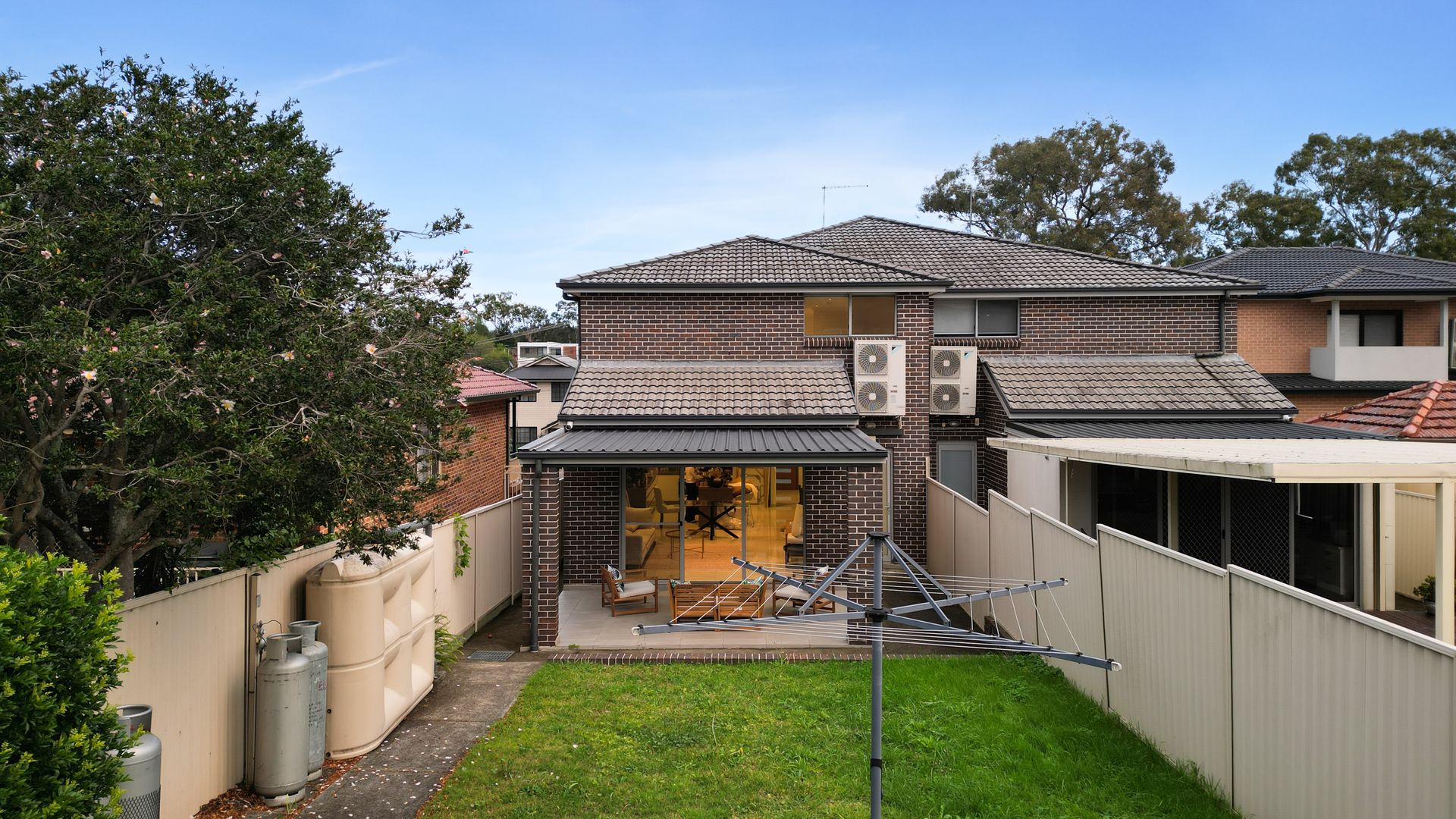
Centaur Street, Padstow. Five bedrooms across two dwellings on 503 square metres. A solid double brick main residence — three bedrooms, polished timber floors in the bedrooms, high-gloss cream tiles through the living and dining zones, sliding glass doors opening to an undercover entertaining area with garden beyond. Then the self-contained granny flat: two bedrooms, its own living space, its own bathroom, its own entrance. Two homes. One listing. One set of photos. And whoever photographed this property would determine whether buyers saw dual-living flexibility or a confused layout that couldn't make up its mind.
Goldpac received keys on Wednesday morning, 14 May.
The brief from the Ray White team was straightforward enough on paper: make it look ready. But the creative director who walked through both dwellings that morning understood a deeper problem. The main residence was empty. Every room a blank canvas — which sounds like freedom until you realise that polished cream tiles in an empty living room photograph as a commercial foyer. Without furniture, the open-plan living and dining zone had no anchor. The eye slid from the front door straight through to the glass sliders and kept going into the yard. There was no reason to stop. No reason to imagine dinner, or a Saturday morning, or a family sitting down. The camera would capture square metreage. It would not capture a life.
The first decision was scale. In the main living area, a full-size cream sofa was placed against the far wall, directly on axis with the sliding doors — creating a sight line that ran from the sofa, past a black metal coffee table, through the glass and out to the timber outdoor setting on the covered patio. The jute rug underneath the sofa anchored the seating zone against the reflective tile floor, giving the camera a warm textural layer to land on instead of glare. A glass-top dining table with four tufted wingback chairs in cream linen was positioned between the kitchen pass-through and the living area, establishing scale. Before staging, a buyer would have walked into this room and seen an empty tiled rectangle. After, the photograph showed a home where someone had already decided where to eat, where to sit, and where to look on a Sunday afternoon.
The banana leaf plant in a white pot against the left wall was not decoration. It was a vertical interrupt — the only tall organic element in a room of low horizontal furniture. It stopped the camera from flattening the space and gave the photograph a sense of ceiling height that would have been invisible without it. On the timber console beneath the abstract canvas, a deliberate arrangement of rattan, matte black and ceramic white vessels created depth on a surface that would otherwise read as a shelf.
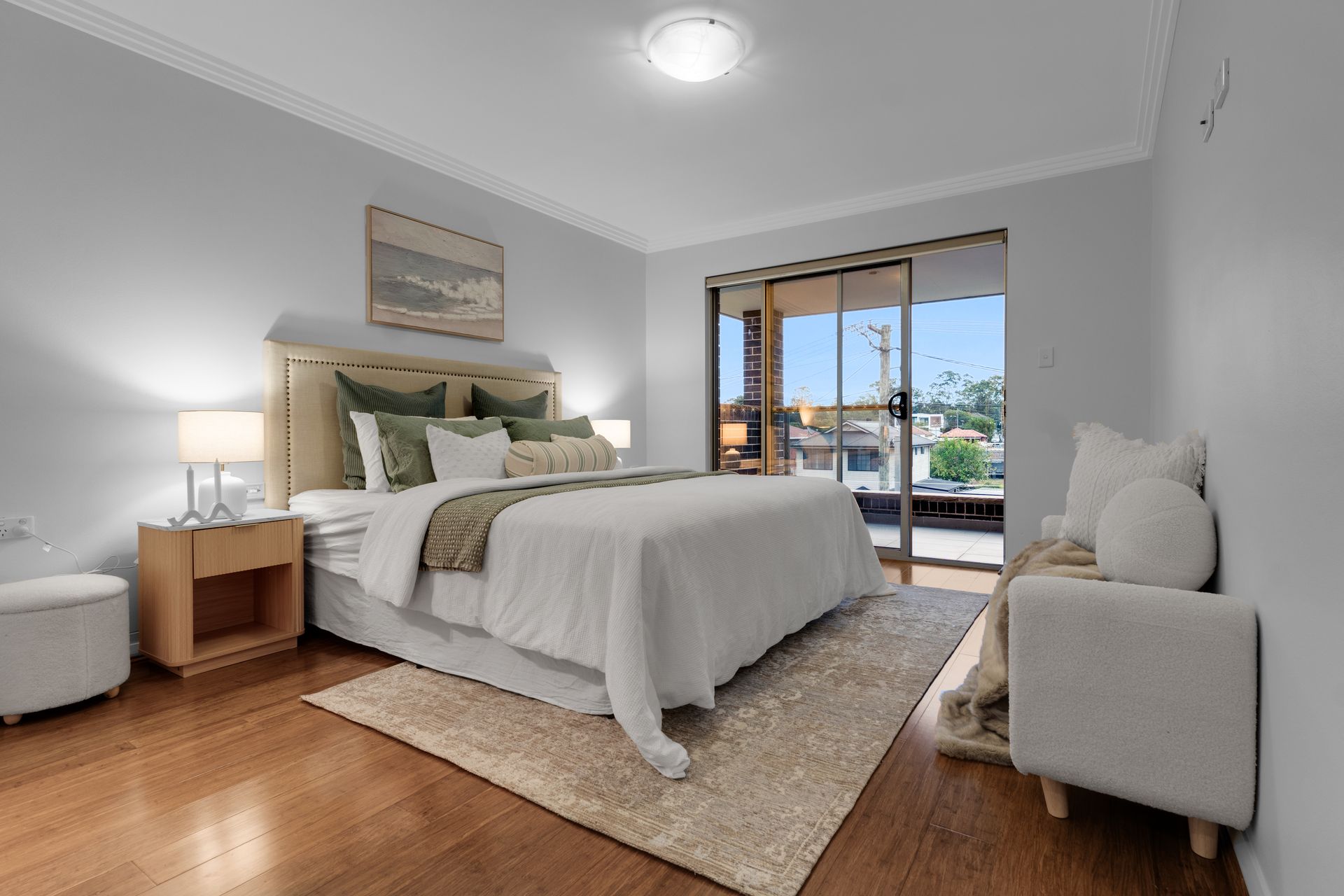
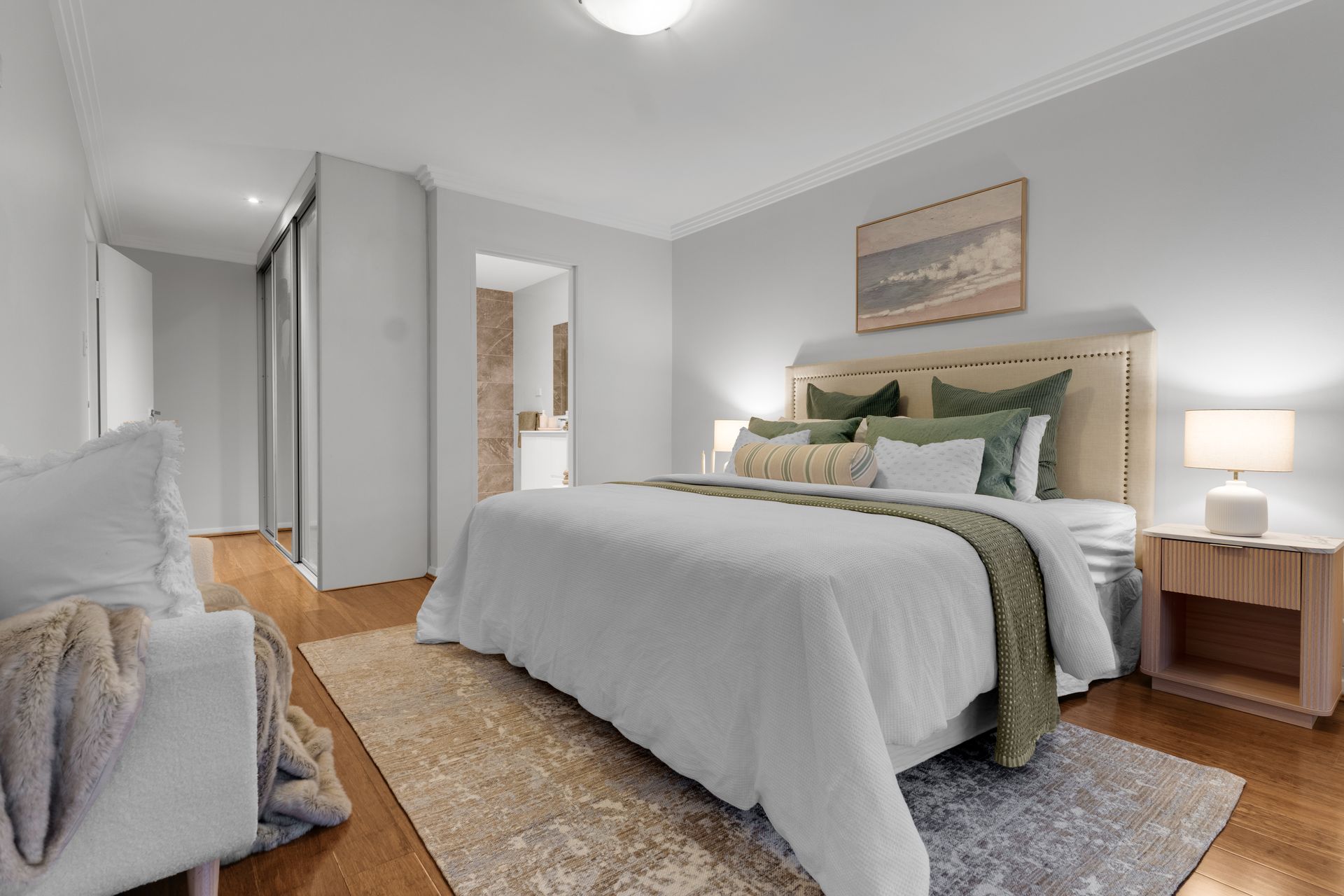
In the master bedroom, an upholstered headboard with brass nailhead trim — a warm neutral linen against the cool grey walls — provided a focal point that the room lacked architecturally. Olive and sage cushions layered with white and cream bedding connected to the coastal seascape art above the headboard without matching it literally. The faux fur throw draped across the boucle accent chair in the corner gave the camera a secondary subject: not just a bed, but a room with a morning in it. The mirrored sliding wardrobe doors reflected natural light from the glass door back into the room, doubling the available brightness. The same creative director who placed that chair chose the angle from which it would be photographed — shooting from the doorway, catching the ensuite glimpse on the left, the wardrobe reflection, and the garden light pouring through the slider.
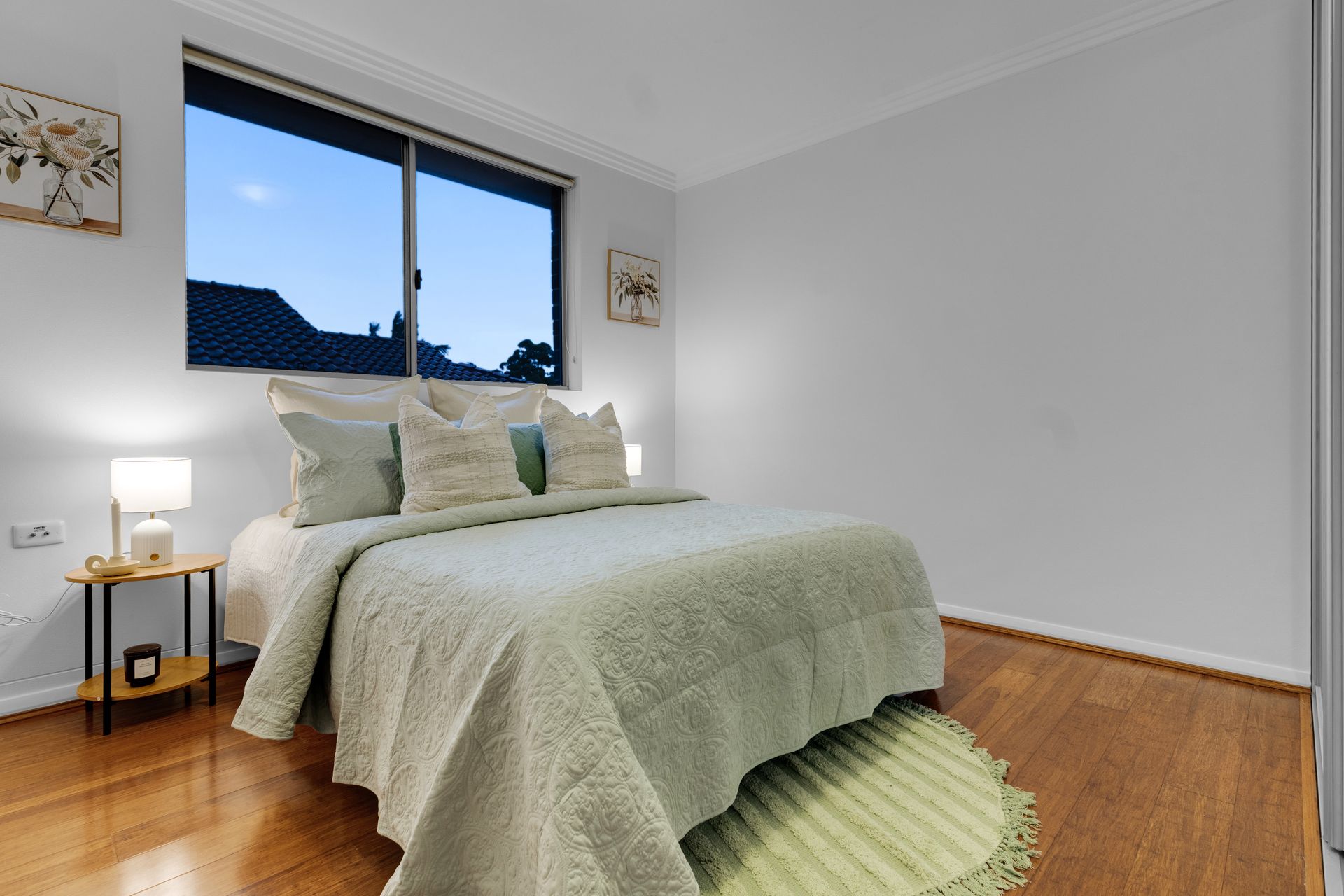
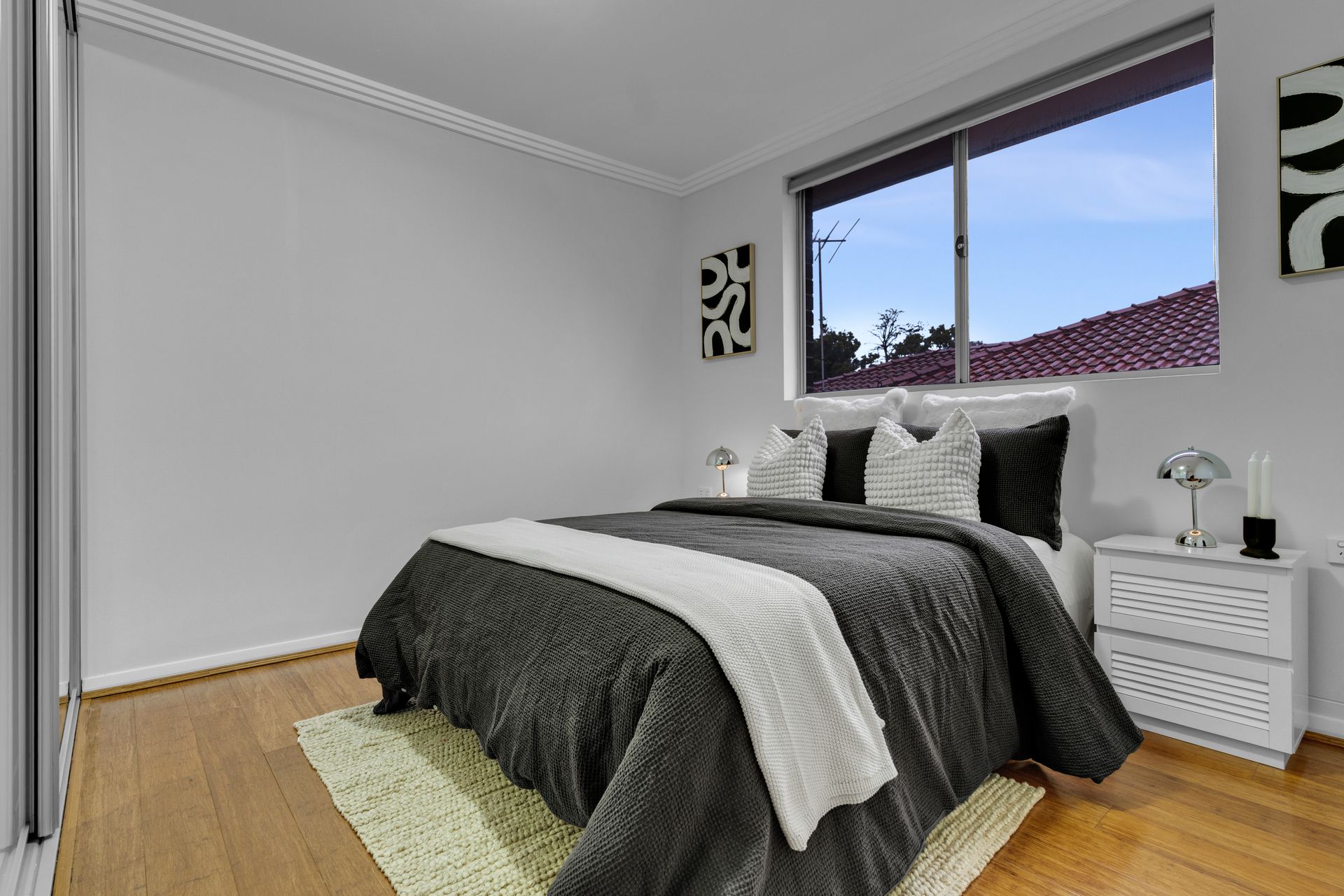
The second bedroom used the same sage-green-and-linen palette but shifted the tone warmer — a quilted bedspread in pale sage, a round oak-and-black-metal side table with a ceramic lamp and a single candle, two botanical prints in gold frames flanking the window. Without staging, this room would have been four white walls, timber floors, and a window looking at a neighbouring roofline. With staging, it became a guest room with a point of view. The camera captured it as a place someone had considered, not a space someone had forgotten.
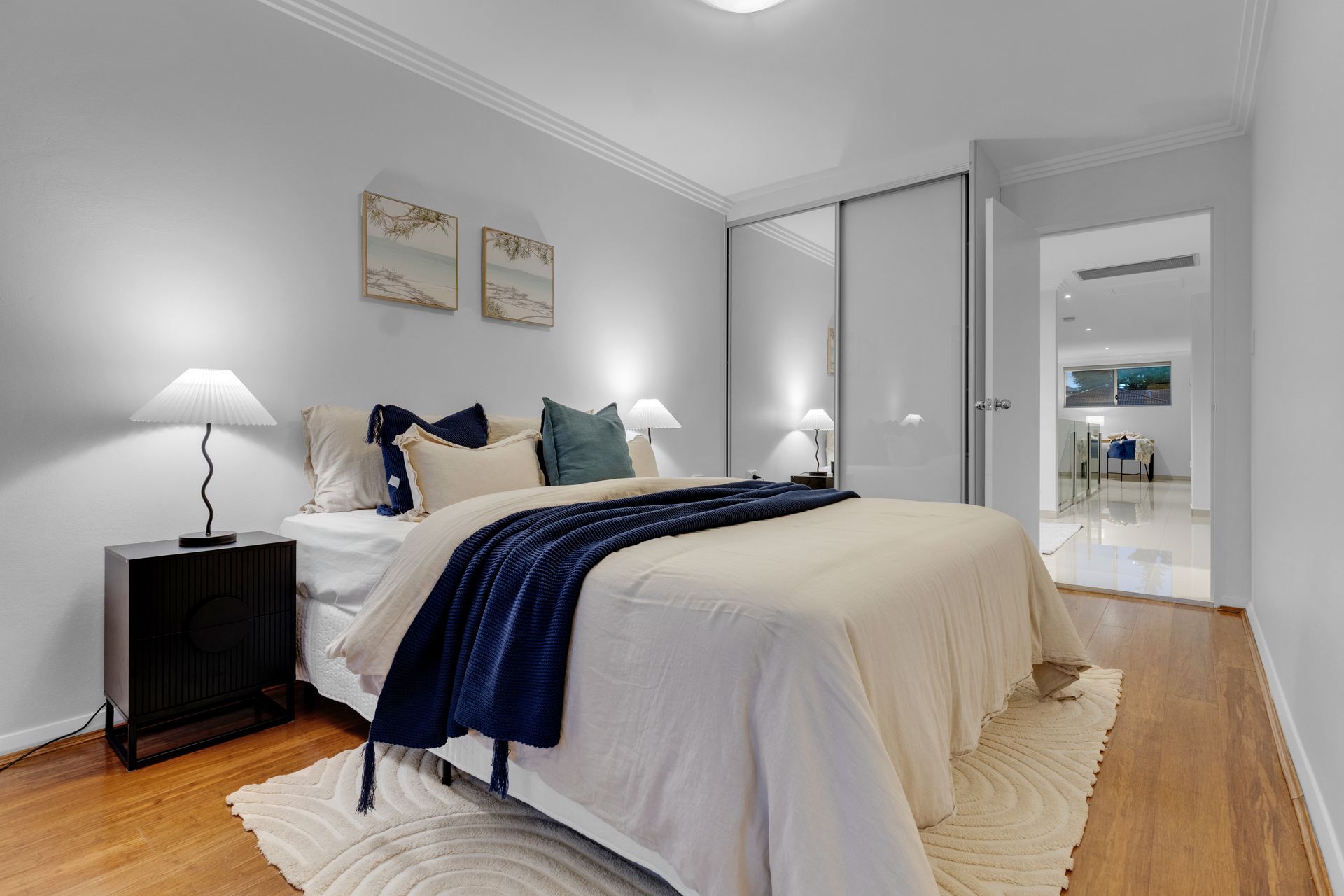
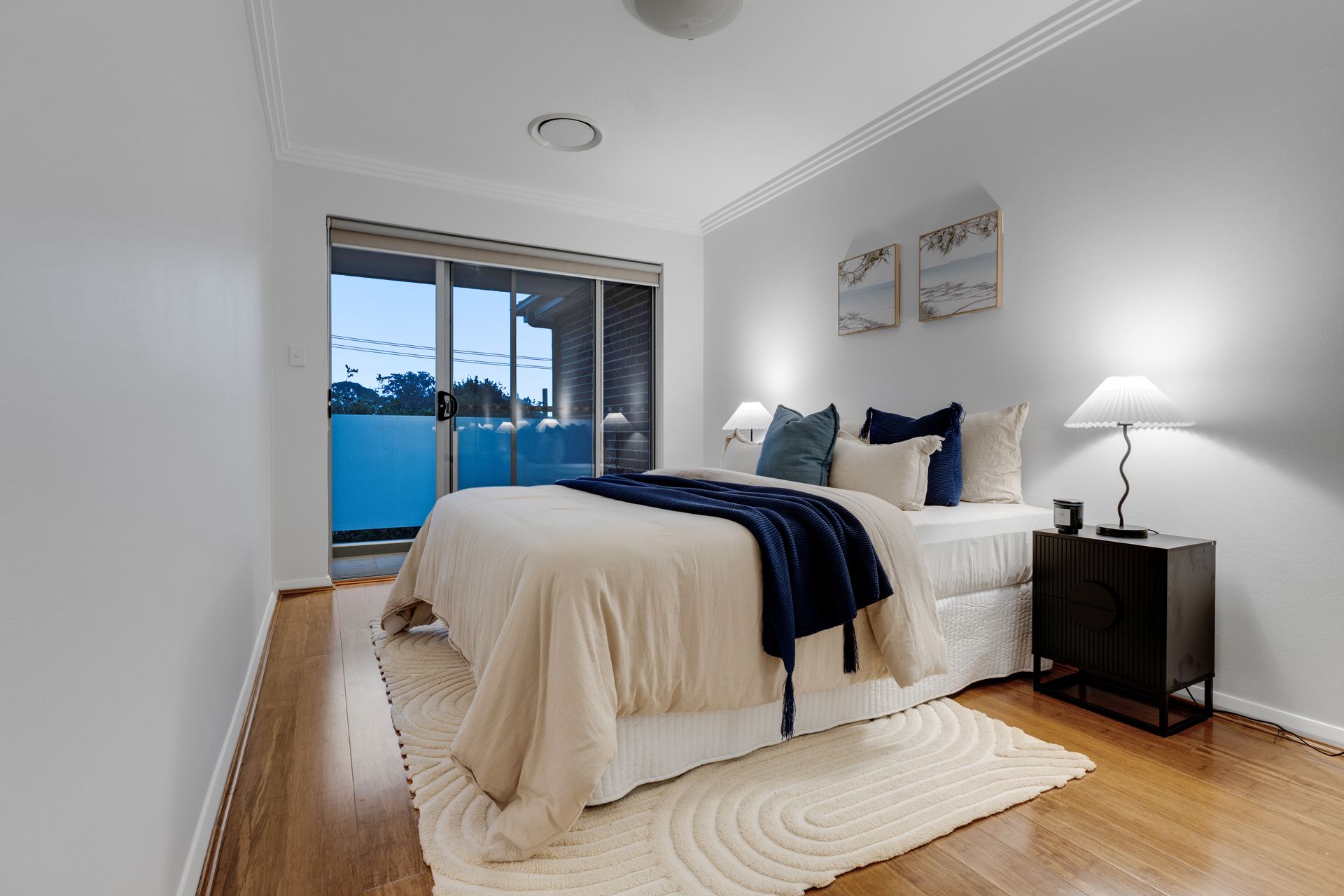
The third bedroom in the main house introduced the navy-and-cream scheme — a deliberate shift to signal a different personality. A cream bed with a deep navy throw, textured white spiral rug, black ribbed bedside table with a pleated white lamp, and two coastal prints in pale washes. This room had a sliding door to a balcony with privacy film, and the dark bedside furniture grounded the composition so the camera could read the transparency of the glass without the eye drifting outside.
And then the transition. The granny flat.
This is where home staging in Sydney earns its fee on dual-living properties — making the second dwelling feel like a deliberate extension, not an afterthought. The same creative director walked from the main house into the granny flat and carried the palette with them. The living spaces in the granny flat received the same tonal family — warm neutrals, natural textures, timber accents — so that when a buyer scrolled from photo fourteen to photo fifteen, they did not feel a jolt. The camera told one story across two dwellings because one person controlled every surface and every angle.
Goldpac photographed the property the same afternoon. The creative director who had placed every piece of furniture now stood behind the lens and shot every room knowing exactly what the camera was supposed to find — where the sight line ended, which surface caught the light, which angle sold the scale. What went live on Thursday morning is exactly what buyers will walk into at the first open on Tuesday. No disconnect. No second interpretation. No surprise.
Padstow houses currently spend a median of 28 days on market before selling. That is 28 days of open homes, of vendor calls, of Saturday mornings that might or might not produce an offer. This property has been live for four days and inspections have not yet started. What happens next is the market's job. Goldpac's job — staging both dwellings and photographing them as one cohesive listing in a single day — is done.
The vendor's daughter stopped by on Thursday evening after the listing went live. She stood in the doorway of the master bedroom for a while. Then she walked into the granny flat. Then she came back. She did not say anything for a moment. Then: 'I didn't know it could look like this.'
Got a listing in Padstow? Reply with address — fixed quote in 2 hours.
📍 Duplex + granny flat · Padstow · dual-living photography challenge across 2 dwellings
🎨 Styling: warm neutral palette carried across both dwellings — cream, sage, olive, navy — with tonal continuity so the listing reads as one home, not two
📸 Photography: Goldpac photographer same day — what listed online matched the staged home exactly.
⚡ Live campaign · Listed 15 May 2026 · Padstow house median DOM: 28 days (CoreLogic Jan 2026)
A five-bedroom duplex with self-contained granny flat on Centaur Street, Padstow NSW 2211 (Canterbury-Bankstown Council) was staged by Goldpac PTY LTD for a live sales campaign launched in May 2026. The main residence and granny flat were both empty — over 500 square metres of internal and external space across two separate dwellings that needed to photograph as a single, cohesive listing. As a property staging and real estate photography company where one director controls both staging and photography on the same day, Goldpac staged every room in both dwellings and directed the photography in a single session, completed in one day by the same creative director. The listing went live on 15 May 2026 via Ray White Earlwood | Wolli Creek, with the first open home scheduled for 20 May. Padstow houses currently spend a median of 28 days on market (CoreLogic, 12 months to January 2026).
Houses in Padstow (2211) spend a median of 28 days on market, with a median sale price of $1,631,000 across 209 transactions in the past twelve months (CoreLogic, 12 months to January 2026). The suburb's buyer pool leans toward established families and multi-generational households — the 30–39 and 50–59 age brackets are equally dominant, and dual-living properties attract both upgraders consolidating extended family under one roof and investors seeking dual-income returns. Empty dual-living properties are particularly vulnerable at the photo stage: two separate dwellings photographed without furniture and without a unified creative direction read as two confused listings rather than one flexible home, and the buyer scrolling past at speed does not stop to work out which door leads where. Staging that unifies both dwellings under one palette and one camera gives this property type its only realistic chance of being understood from a thumbnail.
Q: How much does it cost to stage a 4-bedroom house in Sydney? A: A four-bedroom house starts from $3,500 +GST, with add-ons available for second living areas, studies, and outdoor spaces. Same-day photography included. No deposit. See goldpac.com.au/pricing-package
Q: How quickly are listing photos ready after staging? A: Photography happens the same day as staging — the creative director shoots immediately after installation. Edited images are typically delivered within 24 hours of the shoot.
Q: Does staging reduce days on market in Sydney? A: Industry data shows staged homes sell significantly faster — RESA reports 73% less time on market. Goldpac's own projects consistently sell faster than suburb medians. Each portfolio case on goldpac.com.au includes the actual days on market versus suburb benchmark.
Q: How do you stage a dual-living property with a main house and granny flat in Padstow? A: The challenge is visual coherence across two separate dwellings. Goldpac uses a shared tonal palette — warm neutrals, natural textures, consistent timber and metal finishes — so that when a buyer scrolls from the main residence photos to the granny flat photos, the listing reads as one home with two zones, not two disconnected properties. The same creative director stages and photographs both dwellings on the same day, which is the only way to guarantee the camera tells a unified story.
Q: Is home staging worth it for a duplex in Padstow? A: Padstow houses sit on market for a median of 28 days (CoreLogic Jan 2026). Dual-living properties compete with standard houses in the same price bracket but carry a higher explanation burden in photos — buyers need to understand the layout, the flexibility, and the income potential from a thumbnail. Staging that presents both dwellings as a unified, liveable whole converts more scrolls into inspections, and same-day photography ensures the online listing matches the physical walkthrough.
Q: Does staging help sell properties faster in Padstow? A: Padstow's median of 28 days on market reflects a suburb where well-presented stock moves quickly but supply is tight — only 0.22% of houses are listed at any given time. In this environment, the quality of listing photos determines which properties earn inspections in the first weekend and which wait for weeks. Staging and same-day photography by the same director gives a listing its strongest possible first impression.
-- Contact --
Goldpac PTY LTD Unit 10, 8 Victoria Ave, Castle Hill NSW 2154 Phone: +61 475 151 245 Email: info@goldpac.com.au Instagram: @goldpacau Website: goldpac.com.au Quote turnaround: fixed price within 2 hours of receiving address